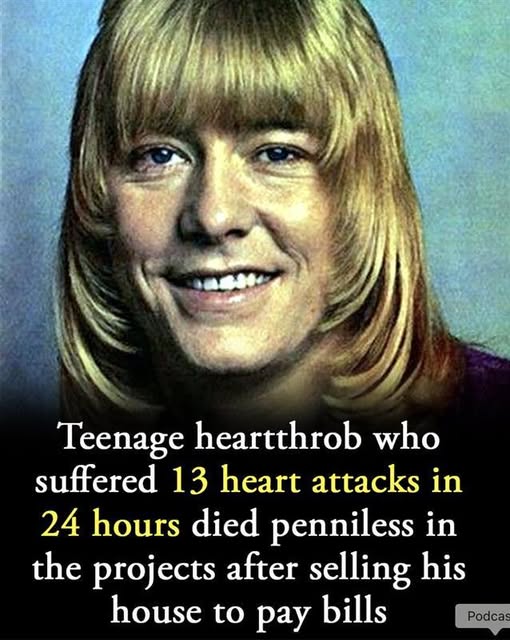
In the early 1970s, few voices cut through the noise of popular music with the same force and confidence as Brian Connolly’s. As the charismatic frontman of The Sweet, he embodied the glitter, swagger, and unapologetic excess of glam rock at its peak. With platinum blond hair, dramatic stage presence, and a vocal range that balanced pop sweetness with raw power, Connolly became a teenage heartthrob almost overnight. Songs like “The Ballroom Blitz,” “Fox on the Run,” and “Block Buster!” dominated radio waves, while screaming fans filled arenas across Europe and beyond. At their height, The Sweet sold more than 50 million records worldwide and secured thirteen UK Top-20 singles, an achievement that cemented their place in music history. To the public, Connolly’s life looked like an endless celebration—success, money, admiration, and creative freedom all wrapped in sequins and spotlights. Yet behind the carefully constructed image of glamour and invincibility, the foundations were already cracking, quietly preparing the ground for one of rock music’s most tragic reversals of fortune.
Brian Connolly’s story did not begin in comfort or certainty. Born Brian MacManus in Scotland in 1945, he was abandoned as an infant and later adopted, a formative experience that shaped his sense of identity long before fame entered the picture. As he grew older, he learned that he was the half-brother of actor Mark McManus, a revelation that added another layer to his complicated personal history. Music became both refuge and ambition. By the mid-1960s, Connolly was immersed in London’s club scene, performing wherever he could, refining his voice and stagecraft in an era when opportunity often depended on relentless persistence. The formation of The Sweet marked a turning point, as the band fused irresistible pop melodies with heavier rock elements, helping define the glam-rock sound that would dominate the decade. Success came fast and hard, leaving little time to adjust. For Connolly, the sudden elevation from club performer to global star carried expectations he was never fully equipped to manage, especially given his unresolved emotional wounds and the industry’s permissive attitude toward excess.
As fame intensified, so did the pressure. Endless touring, promotional demands, and the unspoken requirement to remain perpetually entertaining took their toll. Alcohol, initially a social lubricant and coping mechanism, gradually became a dependency. Connolly later spoke candidly about how things spiraled, acknowledging that what began as manageable indulgence slowly consumed his life. By the late 1970s, internal tensions and personal struggles led him to leave The Sweet in 1979, a decision that effectively severed him from the platform that had sustained his career. His solo efforts failed to gain traction, and the absence of commercial success deepened his sense of displacement. The industry that had once celebrated him moved on quickly, offering little support as his health deteriorated. Fame, it became clear, was conditional and fleeting, while its consequences lingered long after the applause faded.
The collapse of Connolly’s physical health was both sudden and devastating. In 1981, he suffered multiple heart attacks within a short period—reportedly as many as thirteen in twenty-four hours—leaving him partially paralyzed and with permanent nerve damage. The damage extended beyond his body. Mounting medical bills and a crushing tax burden forced him to sell his home in 1983, stripping away one of the last symbols of his former success. Despite his declining condition, Connolly refused to disappear quietly. He formed Brian Connolly’s Sweet, continuing to tour smaller venues across Europe, often performing for a fraction of what he once earned. These tours were physically punishing, but they represented his determination to remain connected to music and to an audience, however reduced. What might have appeared as stubbornness was, in many ways, survival—music was the last thread tying him to identity, purpose, and dignity.
The mid-1990s offered a brief, fragile resurgence. Connolly released a solo album, Let’s Go, in 1995, and welcomed a son with his partner, Jean, bringing a measure of personal joy into a life long marked by instability. Yet his body was failing rapidly. A 1996 documentary, Don’t Leave Me This Way, captured a stark and unfiltered portrait of a man confronting his own decline. Gone was the glittering frontman; in his place stood someone painfully aware of what fame had given and taken away. The film showed Connolly grappling with regret, resilience, and an unwavering honesty about his circumstances. His final performance came in December of that year, a quiet farewell that bore little resemblance to the explosive shows of his youth. Two months later, on February 9, 1997, he died at just 51 years old from liver and kidney failure following repeated heart attacks, living penniless in public housing after selling everything he once owned.
Brian Connolly’s life is a stark reminder of how unforgiving the machinery of fame can be. His story is not simply one of excess or personal failure, but of an industry and culture that celebrate stars intensely and abandon them just as quickly. The contrast between his early adoration and his final years in obscurity underscores the fragile nature of success when it is not matched with protection, support, and long-term care. Yet to frame his life solely as a tragedy would be incomplete. Connolly’s voice, energy, and contribution to music remain indelible, continuing to ignite joy decades later. His resilience in the face of illness and loss speaks to a quiet strength often overlooked. The glitter may have faded, but the music endures, reminding listeners not only of what he achieved, but of the human cost behind the spotlight—and the importance of remembering those who gave everything to create moments of collective joy.