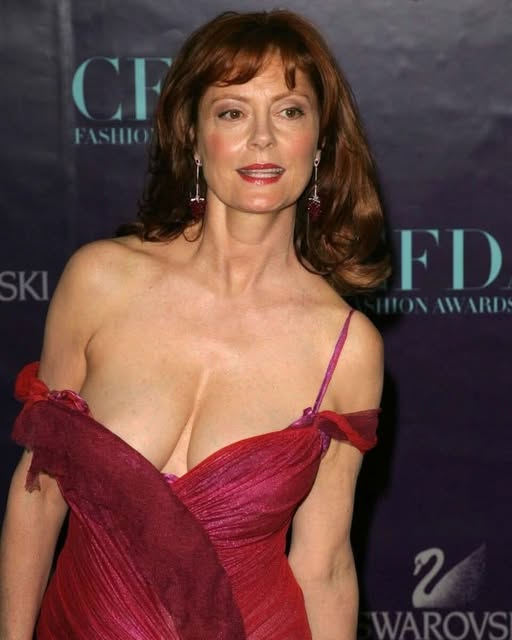
Susan Sarandon, one of Hollywood’s most iconic and outspoken actresses, recently found herself in the spotlight—not for a new film, but for her fashion choices. At 78, Sarandon has built a career that spans decades, from her breakout role as Janet Weiss in the 1975 cult classic The Rocky Horror Picture Show to critically acclaimed performances in Thelma & Louise and Dead Man Walking, for which she won an Academy Award. She has always been unapologetic, both on-screen and off, and her personal style is no exception. Known for supporting body positivity and advocating for social causes, Sarandon embodies the idea that confidence and self-expression do not have an expiration date.
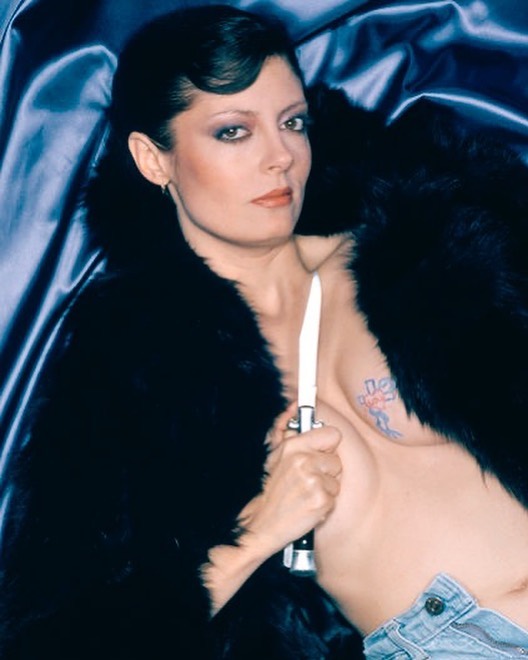
The controversy began at a recent red carpet event, where Sarandon wore a white jacket over a black bra. Critics called her outfit “totally inappropriate,” reflecting society’s often rigid expectations for older women’s attire. Rather than defending herself verbally, Sarandon responded with her signature wit and boldness: she shared a throwback photo of herself in her underwear, celebrating her body and proving that confidence doesn’t diminish with age. Her message was clear—what is “appropriate” is hers to define, and public opinion cannot dictate her self-expression. In doing so, Sarandon reminded the world that clothing is a form of personal storytelling, not a measure of worth or respectability.
Age, for Sarandon, is a lens through which to reassess priorities rather than a limitation. She explained in interviews that recognizing the value of time fundamentally shifts perspective: trivial criticisms or societal judgments no longer merit energy. “When you have an understanding that time is precious—you have a tendency not to waste energy on the small stuff and only to surround yourself with people who are vital, curious, brave, and adventurous,” she said. Her approach highlights the importance of intentional living, showing that the confidence to wear what feels right is inseparable from a mindset that values authenticity over external validation.
Sarandon also emphasizes that beauty and well-being are as much about habits as appearance. She recommends laughing frequently, maintaining regular exercise, eating well, and protecting skin from the sun—simple, sustainable practices that enhance both health and longevity. Beyond that, she acknowledges the benefit of having a professional hair and makeup team to complement natural aging. Her message underscores that aging gracefully is not about denying time or altering oneself to meet external expectations but combining self-care with self-acceptance, humor, and joy.
The criticism Sarandon faced reflects broader societal attitudes toward aging women, particularly when it comes to fashion and public visibility. Older women are often pressured to dress “modestly” or “appropriately,” a standard rarely applied to men. Sarandon’s response challenges these stereotypes, encouraging both older and younger generations to redefine what is permissible at any age. By wearing what she chooses and celebrating her body openly, she reframes aging as a stage of empowerment rather than decline, demonstrating that personal style and courage can outshine societal judgment.
Ultimately, Susan Sarandon’s reaction is emblematic of her larger philosophy: life is too short to be constrained by minor criticisms or outdated norms. Her fashion choices, humor, and openness about aging and self-expression offer a blueprint for living boldly, embracing authenticity, and redefining societal expectations. At 78, Sarandon is not just surviving the spotlight; she is reshaping it, proving that confidence, self-respect, and a willingness to laugh at convention are the true hallmarks of enduring influence and beauty.