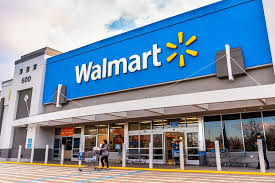
For many families, the news arrived not through official channels or careful preparation, but through a piece of paper taped unceremoniously to glass doors. Shoppers expecting an ordinary trip for groceries, prescriptions, or school supplies instead found a notice announcing that their Walmart location would soon close permanently. There were no community meetings, no phased transitions, and little time to adjust. Across the United States, 22 Walmart stores were slated for closure in 2026, spanning large metropolitan areas and smaller urban neighborhoods alike. In a single moment, thousands of employees learned that their jobs had an expiration date, while customers realized that a store woven into their daily routines was about to disappear. What corporate statements describe as “strategic realignment” or “underperforming locations” felt on the ground like abandonment, sudden and impersonal, leaving people grappling with shock rather than understanding.
In many city neighborhoods, Walmart had long functioned as more than a retail outlet. It was a central hub for necessities, especially in areas where alternatives were scarce or nonexistent. In Chicago, several of the closing locations served communities already classified as food deserts, where access to affordable groceries and pharmacies was limited even before the closures were announced. These stores were not simply convenient; they were essential. Public transportation routes were designed with them in mind. Seniors depended on nearby pharmacies for medications. Families stretched tight budgets because Walmart’s prices were often the only ones they could consistently afford. When such a store shuts down, the consequences extend far beyond inconvenience. Residents must travel farther, spend more, and navigate systems that are often inaccessible or unreliable, compounding existing inequalities and deepening everyday hardship.
The impact is equally severe in cities like Richmond, where the Brook Road Neighborhood Market is scheduled to close on July 28. For employees, the closure represents not just the loss of a paycheck, but the unraveling of stability built over years. Many workers structured their lives around predictable schedules, health benefits, and the promise of steady employment in an economy where such assurances are increasingly rare. Finding comparable work nearby is not guaranteed, particularly for those without reliable transportation or specialized training. For customers, the loss reshapes daily life in quieter but equally profound ways. A quick walk or short bus ride for affordable staples becomes a longer, costlier journey. Prices rise. Choices shrink. Walmart executives point to poor financial performance as justification, but for those affected, the reasoning feels detached from reality. A store may underperform in corporate metrics while still performing an essential social function for the people who rely on it.
These closures expose a deeper vulnerability in the modern retail ecosystem. Over the past several decades, large chains like Walmart have come to dominate the provision of everyday necessities, offering groceries, clothing, prescriptions, and even financial services under one roof. This concentration brings short-term benefits—lower prices, convenience, jobs—but it also creates long-term dependence. As smaller local businesses struggle to compete and gradually disappear, communities are left with fewer alternatives. When a corporate giant decides a location no longer meets profitability targets, it can withdraw swiftly, leaving behind a void that smaller retailers are rarely positioned to fill. City governments and nonprofits often lack the resources to respond quickly, and the infrastructure built around the store—transport routes, employment patterns, consumer habits—suddenly becomes obsolete.
Beyond the economic fallout, there is an emotional dimension that corporate analyses rarely capture. For many residents, Walmart had come to symbolize reliability, a fixture assumed to be permanent amid constant social and economic change. Its logo represented predictability, the assurance that certain needs could always be met in one familiar place. The announcement of closures shattered that illusion, replacing it with a sense of betrayal and disposability. Customers speak of misplaced trust, while workers describe feeling like numbers erased from a spreadsheet. The message implicit in the closures is difficult to ignore: corporate loyalty is conditional, and communities matter only insofar as they remain profitable. This realization is particularly painful in neighborhoods that have already endured disinvestment, where promises of revitalization have too often ended in retreat.
The 2026 Walmart closures also reflect broader shifts in retail strategy and economic priorities. Companies increasingly emphasize efficiency, automation, and shareholder returns, often at the expense of long-term community investment. Physical stores are evaluated not for their social impact, but for their contribution to quarterly performance. When margins tighten, locations serving lower-income populations are often the first to go, reinforcing cycles of inequality. What remains is a stark lesson about the risks of allowing essential services to concentrate in the hands of a few massive corporations. When those corporations pull out, the damage is not abstract. Jobs vanish. Access disappears. Stability erodes. Families are left to rebuild around empty buildings that once promised permanence but delivered only a closing date taped to a door.