Europe is confronting a reality it long preferred to manage at arm’s length: the assumptions that shaped its security after the Cold War no longer apply. For decades, peace was treated not as a fragile condition requiring constant reinforcement, but as a durable outcome guaranteed by diplomacy, economic integration, and the implicit protection of NATO’s American pillar. That confidence has been shaken profoundly. Russia’s full-scale invasion of Ukraine did more than redraw borders by force; it shattered the belief that large, conventional war on European soil belonged to history books. Today, the tone across European capitals has changed. Discussions once framed in abstract language about cooperation and values now revolve around readiness, stockpiles, transport corridors, and timelines. The urgency is not driven by the certainty of war, but by the growing consensus that unpreparedness itself has become the greatest strategic risk.
For much of the post–Cold War era, Europe’s security model rested on a delicate balance. Diplomacy was prioritized, economic interdependence was assumed to be a stabilizing force, and defense spending steadily declined as social investment took precedence. NATO remained the ultimate guarantor, but the expectation was clear: the United States would lead in moments of crisis. That framework is now visibly strained. The war in Ukraine has dragged on longer and at higher intensity than many initially expected, exposing gaps in ammunition production, logistics, and rapid deployment capabilities across Europe. At the same time, signals from Washington have become more explicit. American leaders have stressed that Europe must shoulder a greater share of its own defense burden, not only financially, but industrially and operationally. This shift has forced European policymakers to confront an uncomfortable truth: reliance without resilience is no longer viable.
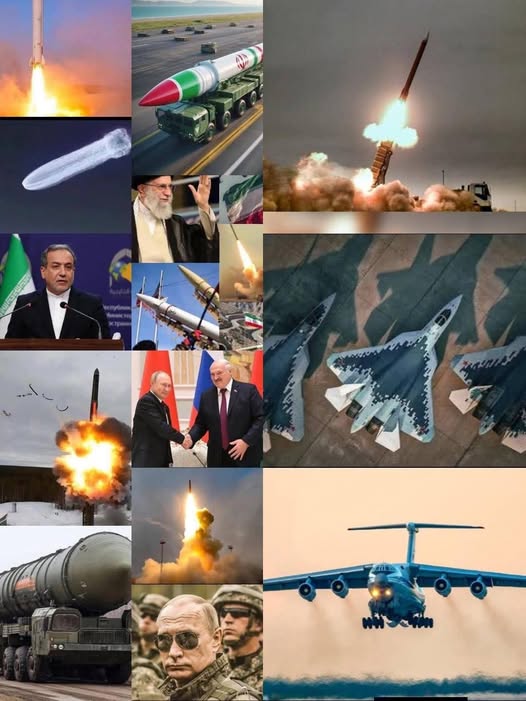
The invasion of Ukraine marked a psychological rupture as much as a strategic one. It demonstrated that territorial conquest, once considered obsolete in Europe, remains a live threat. It also revealed how quickly assumptions can collapse under pressure. European leaders who once hesitated to speak openly about war are now issuing blunt warnings. Russian President Vladimir Putin has framed the conflict as a long-term confrontation with the West, while NATO officials have cautioned that Russia could test the alliance’s resolve within the coming years. Germany’s defense minister, Boris Pistorius, famously described the summer of 2025 as potentially Europe’s “last summer of peace,” a phrase that resonated across the continent not because it predicted inevitable conflict, but because it captured the narrowing window for preparation. These statements reflect a new willingness to acknowledge risk publicly, breaking with decades of strategic understatement.
At the institutional level, the European Union has begun translating this awareness into policy. In late 2024, the EU approved a €90 billion loan package to support Ukraine, signaling both long-term commitment and recognition that the conflict directly affects European security. European Commission President Ursula von der Leyen has outlined a series of initiatives aimed at strengthening deterrence by 2030, emphasizing readiness rather than reaction. Defense spending across the EU surpassed €300 billion in 2024, a figure that would have been politically unthinkable only a decade earlier. Programs such as Readiness 2030 focus on the practical realities of modern defense: the ability to move troops and equipment across borders within hours, interoperability between national forces, and the elimination of bureaucratic bottlenecks that could delay a response in a crisis. ReArm Europe, meanwhile, seeks to coordinate industrial output, ensuring that Europe can produce what it needs at scale rather than scrambling for supplies once tensions escalate.
Despite these efforts, a critical gap remains between policy and public readiness. Surveys reveal a striking disconnect between strategic planning and popular willingness to defend EU borders. A Euronews poll found that roughly three-quarters of respondents said they would not be willing to fight, underscoring how deeply peace has shaped European identity. This reluctance is not uniform. Concern is highest in countries closest to Russia, including Poland, Lithuania, and Denmark, where historical memory and geographic proximity sharpen perceptions of threat. In these regions, security is not an abstract concept but a lived concern, influencing everyday conversations and political priorities. Elsewhere, especially in Western and Southern Europe, the idea of war still feels distant, creating challenges for leaders trying to mobilize support for costly and sometimes uncomfortable measures.
Eastern and Northern European states have responded with notable speed and seriousness. Lithuania, Latvia, Estonia, Poland, Finland, and Sweden have expanded civil defense programs, reinforced borders, and issued clear public guidance on emergency preparedness. Sweden’s decision to redistribute its “If Crisis or War Comes” guide to every household in 2025 was particularly symbolic, reviving Cold War–era practices adapted for modern realities. Online search trends across the region show citizens actively seeking information on shelters, supplies, and contingency planning, reflecting a grassroots shift toward preparedness. These measures are not about spreading panic, but about normalizing resilience, embedding the idea that security is a shared responsibility rather than a distant government function.
Europe now stands at a decisive crossroads. The era of strategic complacency has ended, replaced by a sobering recognition that peace requires sustained investment, coordination, and public engagement. The coming years will test whether the continent can transform heightened awareness into durable capability before external pressures intensify further. This is not merely a question of budgets or military hardware, but of political will and social cohesion. If Europe succeeds, it may emerge more autonomous, resilient, and credible as a security actor. If it fails, the cost will not be measured only in vulnerability, but in the loss of agency over its own future. The choices made now will shape European security not just for the next crisis, but for decades to come.