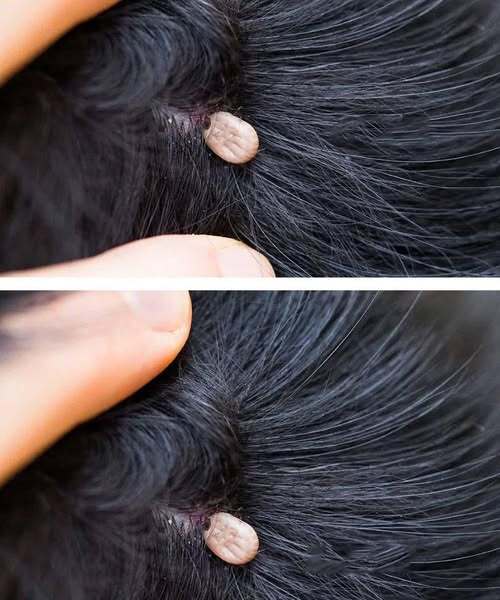
Running fingers through a child’s hair is usually a gentle, thoughtless act, one rooted in care and routine. Parents do it while helping with homework, tucking children into bed, or simply offering comfort. It is an action so familiar that it rarely invites concern. That is why the sudden discovery of a firm, unfamiliar lump can feel so deeply unsettling. In an instant, calm gives way to alarm. The mind races, scanning through possibilities that range from harmless debris to something far more serious. The shock is not only physical but emotional, as the realization sets in that something foreign has been present without notice. This moment transforms a loving gesture into an urgent confrontation with the unknown, forcing parents to pause, focus, and search for answers they never expected to need.
What makes the discovery especially disturbing is the appearance of the object itself. A pale beige or grayish lump does not resemble a scab, a mole, or any natural part of the body. It appears almost artificial, like something placed there deliberately, and its refusal to move when touched adds to the fear. Parents often lean closer, adjusting the light, parting strands of hair with growing unease. The longer they look, the clearer it becomes that this is not just dirt or dried shampoo. The shape, texture, and attachment point raise red flags, and with them comes the creeping realization that the object may be alive. For many, this is the moment when the word “tick” surfaces, bringing with it a rush of dread shaped by half-remembered warnings and unsettling stories.
Ticks are often imagined as tiny, easily spotted insects that would surely be noticed immediately. The reality is far more deceptive. Once a tick attaches and begins feeding, its body changes dramatically. What starts as a small, flat creature can swell into a rounded, smooth lump that barely resembles an insect at all. This transformation confuses even attentive parents, making identification difficult until the tick reaches a size that can no longer be ignored. Its stillness adds to the illusion, as engorged ticks often remain motionless, blending into the scalp and mimicking harmless growths. This visual ambiguity is one of the reasons ticks can go unnoticed for days, quietly feeding while appearing almost inert.
The scalp, particularly in children, is an ideal hiding place for ticks. Hair provides warmth, shelter, and camouflage, while the skin beneath offers easy access to blood. Children, by nature, are explorers. They play on the ground, run through grass, sit beneath trees, and interact with pets, all without the cautious awareness that adults develop over time. A tick does not announce itself with pain or irritation when it attaches. Its bite is designed to be subtle, allowing it to remain undetected for as long as possible. This silent intrusion is what makes the discovery so unsettling. Parents often replay recent days in their minds, searching for clues, wondering when and where the tick found its opportunity.
Beyond the physical shock, the emotional impact of finding a tick on a child can be overwhelming. Fear surfaces immediately, often accompanied by guilt. Parents question their vigilance, wondering how they missed it and whether they failed to protect their child. Thoughts jump ahead to potential illnesses, even before any symptoms appear. The uncertainty is heavy, fueled by stories of tick-borne diseases and warnings encountered in passing. Even when the child appears perfectly fine, the presence of the tick creates a lingering sense of vulnerability. It is a stark reminder that some risks are invisible, slipping quietly into daily life without warning.
Understanding what the lump is brings a complicated mix of relief and unease. Identifying it as a tick provides clarity, replacing vague fear with a defined problem, but it also introduces new questions. How long was it attached? Does its size indicate prolonged feeding? What is the safest way to remove it? Parents are often torn between acting immediately and fearing that a wrong move could make things worse. This hesitation reflects a deeper desire to regain control in a situation that feels suddenly precarious. Knowledge becomes both a comfort and a responsibility, guiding the next steps while underscoring the seriousness of the moment.
Ultimately, the experience leaves a lasting impression. Discovering a tick in a child’s hair is not just an isolated incident; it is a lesson in awareness and attentiveness. It highlights how quietly nature can intersect with everyday life and how easily something small can provoke significant fear. While the initial shock may fade, the memory lingers, encouraging parents to be more observant, more informed, and more prepared. In moving from panic to understanding, families gain not only practical knowledge but also a deeper appreciation for vigilance, transforming a frightening discovery into an experience that strengthens awareness rather than fear.