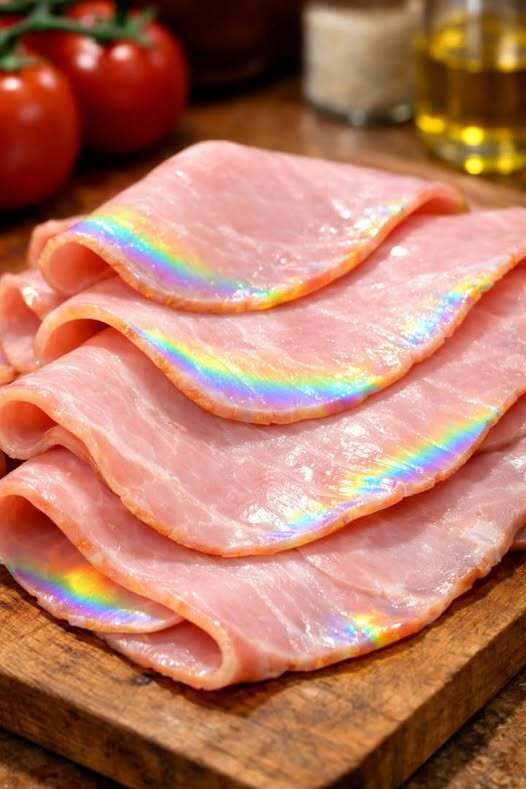
Many people experience a moment of hesitation when they open a pack of deli ham and notice a rainbow-like shimmer across the slices. The shifting blues, greens, and purples can look metallic or unnatural, prompting questions about whether the meat is chemically treated, contaminated, or simply spoiled. While the sight can be alarming, it is often harmless and more a quirk of science than a health hazard. Understanding the phenomenon, however, requires looking beyond color alone and learning how to evaluate deli ham using a combination of visual, tactile, and olfactory cues to ensure safety.
The iridescent sheen observed on deli ham is usually caused by light interacting with the finely aligned muscle fibers in thinly sliced meat. When light hits the surface at specific angles, it splits into different wavelengths, creating a spectrum of colors similar to soap bubbles or oil on water. Moisture from the meat and curing agents such as sodium nitrite can intensify the effect, making it particularly noticeable in commercially prepared slices. This visual occurrence does not indicate spoilage, bacteria, or chemical contamination; it is simply a physical property of the meat interacting with light, and it is common across many cured or processed meats.
Although the rainbow shimmer itself is generally harmless, food safety concerns arise when this visual effect is misinterpreted. Spoiled meat displays additional warning signs that extend beyond unusual color. Fresh deli ham should be pink and firm, maintaining a uniform tone without gray, green, or blotchy areas. Texture is equally important: meat that feels sticky, slimy, or tacky signals bacterial growth. Smell provides a critical cue—any sour, sulfurous, or ammonia-like odor is a clear indicator that the meat has gone bad and should be discarded immediately. Paying attention to these combined cues ensures that visual anomalies like iridescence do not lead to unnecessary anxiety or consumption of unsafe food.
Storage practices and timing are equally essential in maintaining deli ham safety. Once opened, the meat becomes susceptible to bacteria even when refrigerated, and pathogens such as Listeria monocytogenes can proliferate without visible changes to color or texture. Generally, sliced deli ham should be consumed within three to five days of opening. Properly sealed packaging and consistent refrigeration slow microbial growth but do not completely prevent spoilage. Consumers are advised to check expiration dates, keep ham in airtight containers, and avoid leaving it at room temperature for extended periods to minimize the risk of foodborne illness.
Understanding the interplay between visual effects and safety requires a holistic approach. Sight alone can be misleading, particularly with iridescent meat. By combining observation of color with texture and smell, consumers can make informed decisions about whether deli ham is safe to eat. Relying on one factor in isolation may result in unnecessary waste or, conversely, inadvertent consumption of spoiled meat. Educational resources and consumer awareness campaigns increasingly emphasize this comprehensive approach, highlighting how science explains harmless phenomena while reinforcing fundamental food safety practices.
Ultimately, the rainbow shimmer on deli ham is a normal and visually striking feature of certain cured meats, but it should never replace careful evaluation of freshness. When handled and stored properly, deli ham remains safe and enjoyable for several days after opening. By understanding why the sheen occurs, recognizing the key indicators of spoilage, and practicing attentive storage, consumers can enjoy cold cuts with confidence. Awareness of these factors ensures that the visual curiosity of rainbow-hued ham enhances, rather than compromises, both the culinary experience and personal food safety.