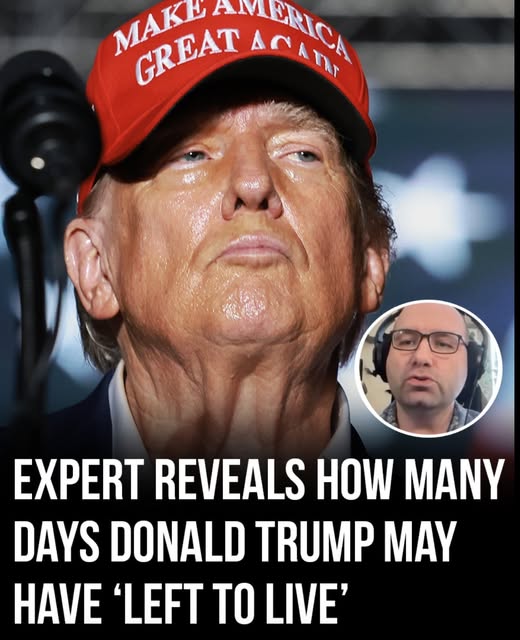
Questions about Donald Trump’s health have followed him for much of his political life, resurfacing whenever age, stamina, or visible physical changes intersect with the demands of leadership. Trump has long projected an image of strength and vitality, frequently dismissing concerns about his physical condition and insisting he feels better than ever. Yet as he approaches his 80th birthday on June 14, public attention has sharpened. As the oldest individual ever sworn into the presidency, Trump’s health is no longer a peripheral curiosity but a subject of sustained public interest, intensified by the broader national conversation about aging leaders and transparency in government.
The most recent wave of speculation gained traction after Trump appeared at the World Economic Forum in Davos, where photographs and video footage showed noticeable bruising on his hands. While an initial explanation attributed the marks to a minor incident, the images quickly circulated online, prompting renewed scrutiny. For supporters, the focus on bruising and body language felt exaggerated and invasive. For critics, it raised familiar questions about whether visible signs might point to underlying issues. In an era where every public appearance is dissected frame by frame, even minor physical details can become symbols onto which broader anxieties are projected, especially when the subject is a figure as polarizing and closely watched as Trump.
The discussion escalated further after comments made by Adam James, a licensed physical therapist with 14 years of clinical experience, during an appearance on The David Pakman Show. Speaking under his online name “Epistemic Crisis,” James emphasized that he had never examined Trump and had no access to his medical records. His observations, he stressed, were based solely on publicly available footage and professional experience. Despite those caveats, his remarks quickly drew attention because of their specificity and severity. James pointed to Trump’s gait during public appearances, describing what he interpreted as asymmetry, occasional balance instability, and a swinging leg motion that, in other clinical contexts, can be associated with neurological weakness.
James also referenced instances of slurred speech, apparent confusion around names or details, and repetitive language patterns. In his view, these behaviors could align with certain forms of cognitive decline. He speculated that the presentation resembled frontotemporal dementia, a progressive neurological condition that affects personality, judgment, and language. James explained that this condition often carries an average life expectancy of seven to twelve years following diagnosis, though progression varies widely. Based on what he described as the apparent pace of change, he controversially suggested Trump could have as little as two to four years to live. He repeatedly noted that this was not a diagnosis, but an estimate drawn from pattern recognition rather than confirmed medical evidence.
Such claims immediately sparked backlash and concern among medical professionals and commentators alike. Physicians and ethicists routinely caution against diagnosing any individual—public figure or otherwise—without direct examination, imaging, and comprehensive medical history. Remote speculation, even when framed carefully, risks overstating certainty and can blur the line between professional commentary and conjecture. In Trump’s case, no official diagnosis of frontotemporal dementia or any other neurological disorder has been released by his physicians. Trump himself has consistently stated that he feels strong, capable, and mentally sharp, and his medical team has not corroborated claims of serious cognitive or neurological illness.
Beyond the medical debate lies a deeper cultural tension. James also raised concerns about what he described as reduced impulse control, citing Trump’s public statements on sensitive topics and impulsive rhetoric. He suggested such behavior could theoretically be linked to changes in the frontal lobes of the brain, which govern judgment and self-regulation. Others counter that Trump’s communication style has been consistent for decades and reflects personality rather than pathology. Age-related risks, including cardiovascular or renal issues, are common discussion points for any older adult, but access to elite medical care complicates assumptions about prognosis. The line between reasonable concern and speculative alarmism remains sharply contested.
Ultimately, the controversy says as much about society as it does about Trump. Aging leadership, public trust, and the right to medical privacy collide in moments like this, leaving voters to navigate incomplete information and competing interpretations. While experts urge caution against drawing conclusions from appearances alone, public curiosity persists, fueled by the high stakes of political power and longevity. For now, Trump continues to project confidence and resilience, while critics scrutinize each public appearance for signs that reinforce their concerns. Whether this debate fades or intensifies will likely depend less on speculation and more on future medical disclosures—or the continued absence of them—leaving the question suspended between observation, belief, and uncertainty.