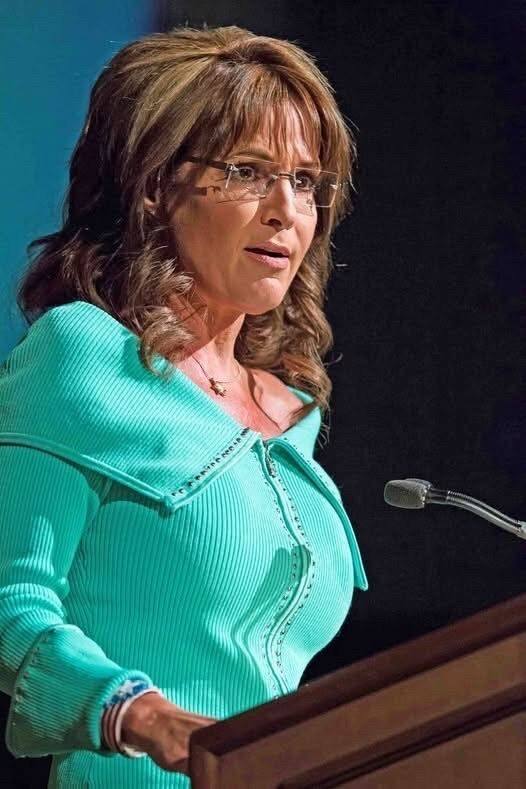
Sarah Palin was once unavoidable in American public life, bursting onto the national stage in 2008 with a combination of charisma, grit, and unfiltered confidence that instantly made her one of the most recognizable figures in modern politics. When John McCain selected the then-little-known governor of Alaska as his running mate, she became a cultural phenomenon almost overnight, admired by supporters and scrutinized by critics with equal intensity. Yet while her public persona projected toughness and certainty, her private life remained anchored in a marriage she often described as foundational. For years after stepping away from the national spotlight, Palin’s name surfaced less in political headlines and more in stories of personal upheaval, revealing how profoundly her identity had been intertwined with a relationship she believed would last a lifetime.
Raised in the rugged rhythms of Alaska after being born in Idaho, Palin’s early life reflected the values she would later champion publicly: self-reliance, community, and resilience. At Wasilla High School, she excelled academically and athletically, crediting basketball with shaping her confidence and discipline. It was there that she met Todd Palin, a quiet, hardworking young man whose steadiness contrasted with her high energy. Their relationship developed organically, grounded in shared routines rather than grand gestures. In 1988, unable to afford a formal wedding, they eloped at the courthouse, recruiting two witnesses from a nearby retirement home. The modest beginning became a story Palin often retold as proof that commitment mattered more than spectacle. Together they built a family of five children and a life woven into Alaska’s demanding landscape, balancing work, parenting, and ambition long before national attention arrived.
As Palin’s career evolved—from local journalism to public service and ultimately to the governor’s office—Todd remained largely in the background, earning the nickname “First Dude” for his unconventional role. He worked in the oil fields, competed in the grueling Iron Dog snowmobile race, and handled increasing responsibilities at home as Palin’s public obligations expanded. When the 2008 presidential campaign thrust the family into relentless scrutiny, their marriage was often portrayed as a symbol of endurance. They navigated deeply personal moments under public glare, including their daughter Bristol’s teenage pregnancy, with a united front that reinforced the image of a resilient partnership. To outsiders, their marriage seemed not only intact but strengthened by adversity, a narrative Palin herself often embraced.
The reality, however, proved far more fragile. In 2019, after more than three decades together, Palin learned through an attorney’s email that Todd was filing for divorce. The abruptness of the message stunned her. She later described the experience as emotionally devastating, likening it to a physical wound and expressing disbelief that a marriage she viewed as a sacred covenant could end without conversation or counseling. Todd cited incompatibility, while Palin publicly maintained that she wanted to fight for reconciliation. The divorce was finalized in March 2020, closing a chapter that had defined much of her adult life. The end of the marriage left her grappling not only with heartbreak, but with the collapse of a personal narrative she had long presented as unbreakable.
In the aftermath, Palin spoke candidly about the lingering pain and the difficulty of redefining herself outside a partnership that had shaped her identity for decades. Contact with Todd became minimal, focused primarily on co-parenting their youngest son, Trig. While Todd moved forward with a new relationship away from Alaska, Palin faced the challenge of healing under continued public observation. Over time, however, companionship emerged from an unexpected place. A longtime friend, former professional hockey player Ron Duguay, offered support during visits to New York. What began as casual familiarity gradually deepened into a relationship Palin described as safe, steady, and emotionally grounding. Unlike her marriage, this connection developed away from shared history and expectation, allowing her space to rebuild without pressure.
Rebuilding after a public divorce is rarely simple, especially with adult children and grandchildren watching closely. Yet Palin’s response has followed a familiar pattern: persistence. She returned to political life, running for Alaska’s at-large congressional seat, with Duguay openly supporting her efforts. While her public image remains polarizing, her personal journey has softened in tone, marked less by certainty and more by reflection. From a courthouse elopement witnessed by strangers to a marriage that ended with an impersonal email, Palin’s story underscores how even the most outwardly resilient lives can fracture quietly. Finding love again has not erased the past, but it has offered her something different—companionship without illusion, and a future defined less by what was lost than by what remains possible.