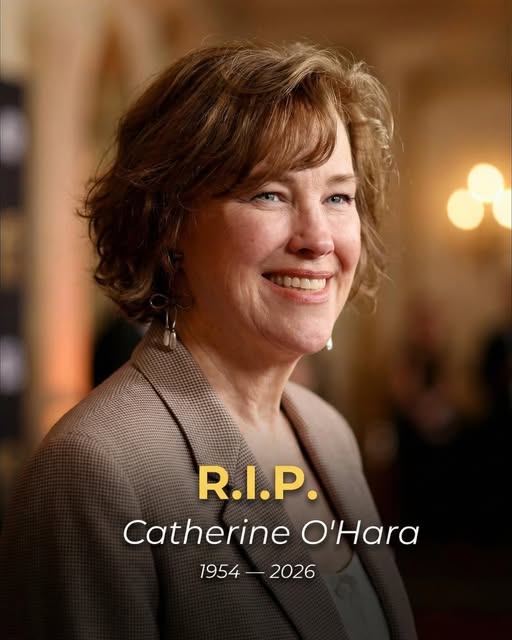
The world of film and television has long been shaped by performers whose influence extends far beyond laughter, and Catherine O’Hara stands among the most quietly transformative of them all. Her gift has never been limited to comedy alone; it lies in her ability to reveal humanity through humor, to let vulnerability coexist with absurdity, and to make even the most exaggerated characters feel recognizably real. Across decades, genres, and shifting cultural tastes, O’Hara has cultivated a career rooted not in spectacle but in emotional truth. Audiences do not merely watch her performances—they recognize something of themselves within them. That rare connection, forged through warmth, precision, and instinct, has made her one of the most admired and enduring figures in modern entertainment.
Born in Toronto in 1954 to a large Irish-Canadian family, O’Hara grew up in a household defined by practicality, discipline, and a strong work ethic rather than artistic expectation. Creativity was welcomed, but it was not treated as a guaranteed path to success. This grounding would later shape her professional choices, giving her a steadiness and humility that set her apart in an industry often driven by ambition alone. Her early fascination with performance emerged through school theater and community involvement, where she discovered not only a love of acting but an intuitive understanding of timing, character, and emotional rhythm. When she joined Toronto’s Second City troupe, she entered a demanding environment that prized originality and resilience. Rejection was common, confidence was tested daily, and success was never assured. Yet it was here that O’Hara’s distinctive voice began to take shape—one marked by fearlessness, curiosity, and an almost anthropological attention to human behavior.
Her rise to prominence through SCTV marked a defining chapter in her career and in the history of sketch comedy itself. Working alongside future legends, O’Hara distinguished herself not by dominating scenes, but by elevating them. She possessed an uncanny ability to disappear into characters while simultaneously revealing their emotional core. Whether portraying social climbers, eccentrics, or authority figures undone by their own pretensions, she brought empathy to satire, allowing humor to emerge from recognition rather than ridicule. This balance became her signature. While many performers sought visibility or instant fame, O’Hara focused on craft, collaboration, and creative fulfillment. That philosophy guided her transition into film, where she avoided typecasting by choosing roles that allowed complexity to flourish, even within mainstream projects. She proved that commercial success and artistic integrity need not exist in opposition.
For many audiences, Catherine O’Hara first became unforgettable as the frazzled yet devoted mother in Home Alone, a performance that could easily have slipped into caricature but instead resonated with warmth and sincerity. In a film built around spectacle and slapstick, she anchored the story emotionally, making the chaos feel personal and the stakes real. Yet her filmography extends far beyond that iconic role. Collaborations with directors who valued character-driven storytelling allowed her to explore a wide range of tones, from dark comedy to understated drama. She demonstrated that comedy is not the absence of seriousness but another way of telling the truth. This philosophy reached new heights decades later with her portrayal of Moira Rose in Schitt’s Creek—a character extravagant on the surface yet deeply human beneath the wigs, accents, and theatricality. Moira’s journey from detachment to belonging mirrored the show’s emotional arc, and O’Hara’s performance transformed what could have been satire into something profoundly resonant.
What makes O’Hara’s work so enduring is not merely technical excellence but emotional intelligence. She understands that people are contradictory, that dignity and foolishness often coexist, and that growth is rarely linear. Her characters evolve not through grand gestures but through subtle shifts—changes in posture, tone, and self-awareness. Off-screen, she has maintained a reputation for professionalism, loyalty, and discretion, prioritizing long-term collaboration over fleeting visibility. She has never chased relevance, yet relevance has consistently found her. New generations continue to discover her work, drawn not by nostalgia alone but by the timelessness of her approach. In an industry often obsessed with reinvention, O’Hara’s consistency feels radical. She has shown that longevity is built not on reinvention for its own sake, but on deepening one’s understanding of people.
Catherine O’Hara’s legacy is ultimately defined by authenticity. Her career demonstrates that success does not require a straight path, loud self-promotion, or relentless ambition. Instead, it can be built through patience, discernment, and a willingness to trust one’s instincts. She has expanded the cultural understanding of comedy as a form of empathy, proving that laughter can coexist with depth, and that humor can illuminate rather than obscure emotional truth. Long after trends shift and spotlights move on, her performances remain—alive with intelligence, generosity, and heart. In that enduring presence lies her greatest achievement: a body of work that continues to comfort, challenge, and connect audiences, reminding us that the most powerful art often feels like recognition rather than performance.