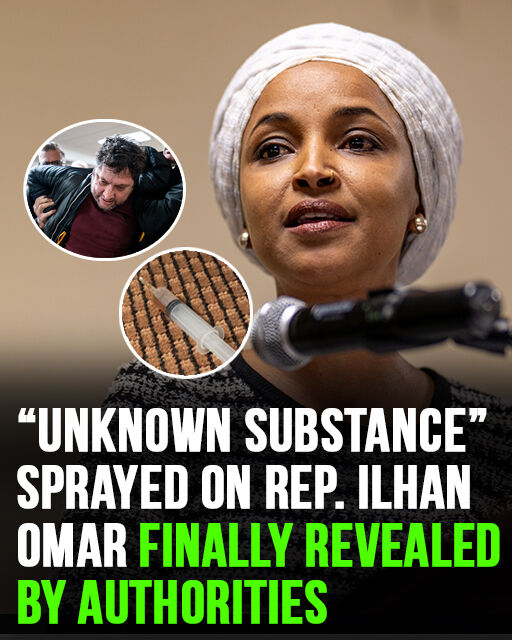
The Minneapolis town hall intended as a routine forum for dialogue quickly transformed into a tense, alarming spectacle. Attendees, expecting ordinary constituent questions and civic interaction, were confronted by a man who approached Representative Ilhan Omar and sprayed a liquid from a syringe-like device. Confusion and panic spread instantly, folding chairs abandoned and murmurs rising as staff and security personnel rushed to intervene. Hazmat procedures were activated, and the stage area was temporarily treated as a potential hazardous site. In moments, a civic discussion became an emergency response, highlighting the fragility of open political engagement when symbolic threats intersect with public gatherings. The psychological impact of the moment rippled across the audience, underscoring how an object, harmless in itself, can function as a catalyst for fear and uncertainty, leaving all present to reconsider the safety of political spaces previously taken for granted.
Omar’s response was calm, deliberate, and measured, transforming the narrative from a moment of fear into an example of resilience. Escorted to safety by staff but declining medical intervention, she returned to the microphone to continue addressing constituents, demonstrating poise under pressure. This choice reframed the incident, emphasizing the importance of steadfastness in the face of symbolic violence. By refusing to allow panic to define the experience, Omar shifted the focus to personal courage and civic responsibility, reminding the public that acts of intimidation, however psychologically effective, do not have to silence the voices of public servants. Observers noted that this rare display of composed bravery highlighted both the human dimension of political life and the emotional toll of constant scrutiny and threats faced by visible leaders.
Authorities quickly confirmed that the substance was nothing more than apple cider vinegar: non-toxic, harmless, and non-corrosive. While the immediate physical danger was absent, the attack’s true significance lay in its symbolic power. The syringe represented threat, uncertainty, and the latent anxiety associated with potential chemical hazards. Security experts explained that even inert substances, presented in the context of intimidation, exploit primal fears and provoke strong reactions. The incident underscored a growing phenomenon in political life: symbolic intimidation, where objects and gestures carry psychological weight far exceeding their material risk. The attack forced all present to weigh the potential for harm, highlighting the increasingly complex dimensions of public safety, perception, and psychological vulnerability in civic engagement settings.
The broader political and social context amplified the moment’s resonance. Omar, a high-profile and frequently scrutinized member of Congress, has faced a long history of threats, harassment, and political vitriol, often stemming from her identity, religion, and outspoken positions on policy. The incident exposed how rhetoric and partisan hostility can escalate into actions designed to intimidate and disrupt democratic processes. Comments from former President Donald Trump dismissing the event as “probably staged” further illustrate the challenges public figures face when threats are minimized or politicized. The attack became a case study in how inflammatory discourse can generate tangible fear, demonstrating the direct link between verbal antagonism, societal polarization, and the potential for psychological or symbolic violence against elected officials.
Experts emphasized that events like this accelerate trends toward increased security measures at political gatherings, including stricter screening, physical barriers, and limited accessibility. While these precautions improve safety, they simultaneously reduce the intimacy and accessibility that define town halls and constituent engagement. This tension underscores the fragile balance between ensuring protection and preserving democratic openness. Psychological intimidation, such as the use of a harmless syringe, can achieve effects equal to or greater than conventional violence, instilling fear and altering behavior without inflicting physical harm. Public officials and security teams are increasingly aware that preventing symbolic threats requires foresight, training, and consideration of how perception shapes participation in civic life.
The Minneapolis incident, though resolved without injury, left lasting implications for how Americans consider democracy, safety, and public interaction. Surveillance footage, witness statements, and suspect background checks are crucial for prosecution and understanding motive, but the broader lesson is about resilience, accessibility, and the responsibilities of both officials and citizens. The syringe, the hazmat suits, and Omar’s calm presence became emblematic of a new reality: public figures must continually navigate the tension between visibility and vulnerability, courage and caution, engagement and self-preservation. While the substance itself was harmless, the psychological imprint and national conversation it ignited illustrate that even non-toxic acts can disrupt public life, challenge norms, and redefine expectations for safety, civility, and democratic participation in contemporary America.