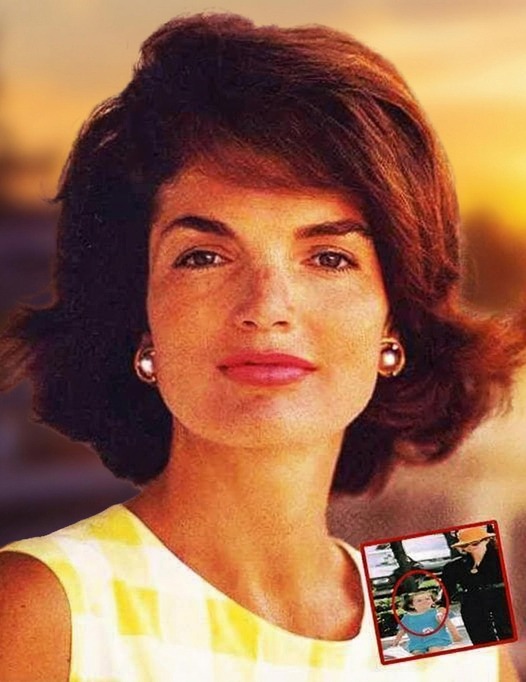
Jacqueline Kennedy Onassis remains one of the most enduring figures in American cultural memory, admired not only for her elegance and fashion sense but for her intellect, restraint, and profound understanding of history, art, and public life. As First Lady, she transformed the White House from a political residence into a living museum, emphasizing preservation, education, and cultural heritage at a time when the nation was searching for identity and confidence on the global stage. Her televised tour of the White House revealed not just taste, but scholarship, signaling that beauty and intellect could exist together without spectacle. Even after the trauma of her husband’s assassination, Jacqueline demonstrated remarkable composure, shielding her children from relentless public scrutiny while quietly redefining her own life beyond the role history assigned her. She later built a respected career in publishing, championing literature and authors with the same seriousness she once devoted to diplomacy and art, proving that her influence extended far beyond Camelot.
That legacy did not end with her passing. It moved forward through her children, particularly Caroline Kennedy, and now continues through her grandchildren, including Rose Kennedy Schlossberg. Born into one of America’s most recognizable families, Rose grew up surrounded by history, public service, and high expectations, yet she was largely protected from the spotlight during her formative years. Caroline Kennedy made deliberate choices to raise her children with a sense of normalcy, emphasizing education, curiosity, and independence over public visibility. As a result, Rose’s identity developed quietly, shaped more by ideas and creativity than by celebrity. When she began to appear in public as a young adult, observers quickly noted her resemblance to Jacqueline—similar features, expressions, and an unmistakable poise—but those surface comparisons soon gave way to interest in who she was becoming on her own terms.
Education played a central role in that development, echoing the values Jacqueline herself held dear. Rose attended a highly regarded preparatory school before enrolling at Harvard University, where she earned a degree in English. Her academic focus reflected a deep interest in language, narrative, and the power of storytelling—fields closely aligned with her grandmother’s lifelong passion for books, history, and thoughtful communication. At Harvard, Rose was known not for social prominence but for intellectual engagement, creative exploration, and a sharp sense of humor. Rather than positioning herself as a public figure in training, she immersed herself in ideas, writing, and collaborative projects, allowing her voice to emerge organically rather than strategically.
After graduation, Rose did not follow the predictable path often assumed for members of political dynasties. Instead of law school, diplomacy, or a formal role in government, she gravitated toward creative work that allowed her to examine contemporary life with irony and insight. She co-created and starred in the web-based comedy series End Times Girls Club, a satirical take on survivalism, modern anxiety, and female friendship in uncertain times. The project blended humor with social commentary, reflecting a distinctly modern sensibility while still rooted in observation and wit. Through comedy, Rose explored how people cope with fear, preparedness culture, and societal pressure—topics far removed from traditional Kennedy narratives, yet deeply relevant to her generation. Her work suggested an inherited curiosity about the world, expressed not through speeches or policy, but through creative storytelling.
Though Rose has largely avoided the spotlight, she has not entirely distanced herself from public life or civic engagement. Like many members of her family, she has participated in political campaigns and advocacy efforts in a supportive, behind-the-scenes capacity. Her involvement has tended to emphasize voter engagement, civic responsibility, and social awareness rather than personal ambition. This approach mirrors a broader shift within the Kennedy lineage, where influence is increasingly exercised through cultural contribution and quiet activism rather than formal office. Rose’s choices suggest a conscious balance: honoring the family tradition of public service while preserving personal autonomy and creative freedom. She appears comfortable contributing without centering herself, a trait often associated with Jacqueline Kennedy’s own understated strength.
Although Jacqueline Kennedy Onassis passed away in 1994, when Rose was still very young, their connection has remained meaningful within the family narrative. Relatives have spoken about the affection between grandmother and granddaughter, and Rose herself has expressed admiration for Jacqueline’s values, resilience, and intellectual curiosity. Rather than attempting to replicate her grandmother’s image, Rose seems to embody the deeper elements of her legacy—thoughtfulness, cultural engagement, and a refusal to be confined by public expectation. In her style, which favors simplicity over spectacle, and in her career choices, which prioritize substance over visibility, echoes of Jacqueline’s philosophy are quietly present. The resemblance, both physical and temperamental, feels less like imitation and more like continuity.
Today, Rose Kennedy Schlossberg represents a modern evolution of a storied legacy. She is not a symbol frozen in nostalgia, nor a public figure defined by ancestry alone. Instead, she stands as an example of how inherited influence can be transformed into something personal, relevant, and contemporary. By choosing creativity over politics, humor over formality, and privacy over constant exposure, she demonstrates that legacy does not demand replication. It invites interpretation. Jacqueline Kennedy Onassis remains an enduring presence in American history not because she sought permanence, but because she lived with intention. In that sense, Rose carries her grandmother’s influence forward not by revisiting the past, but by engaging thoughtfully with the present—quietly, intelligently, and entirely on her own terms.