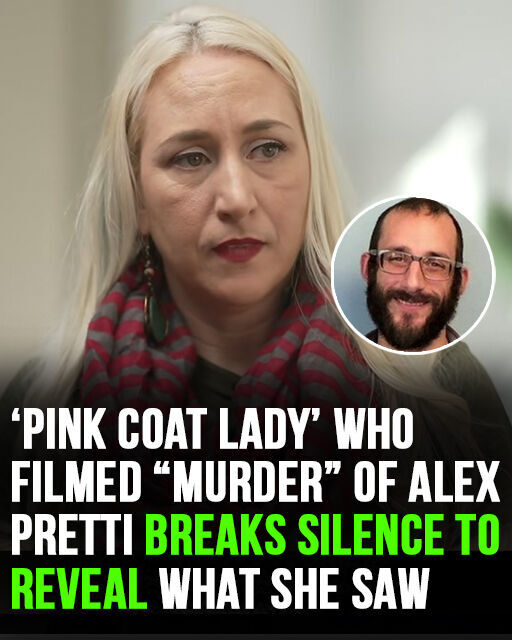
Stella Carlson never imagined that an ordinary morning would place her at the center of a national reckoning over federal authority, civil liberties, and the fragile role of civilians as witnesses. On January 24, she left her home in Minneapolis focused on simple responsibilities, driving toward a church where she was scheduled to help with a children’s event. Her thoughts were practical and familiar, grounded in routine. That sense of normalcy was shattered when she heard a sound that had taken on an entirely new meaning in her neighborhood: whistles. In recent weeks, those sharp, urgent notes had ceased to be casual signals. They had become warnings. Residents used them to alert one another to the presence of immigration enforcement officers, a grassroots response born from fear, loss, and a growing belief that vigilance was necessary for survival. Following a previous fatal encounter involving federal agents, community members had learned to treat the sound as an alarm demanding attention. When Carlson heard the whistles that morning, she slowed her car instinctively, sensing that something serious was unfolding nearby. As she approached, she saw federal vehicles clustered together, agents moving with urgency, civilians retreating, and an atmosphere charged with confusion and tension. Without intending to, she had crossed into a moment that would permanently alter her understanding of safety, citizenship, and the cost of witnessing power in action.
The scene Carlson encountered immediately unsettled her. Federal agents were converging rapidly, voices overlapped, and movement felt erratic rather than controlled. One person was already pinned to the ground, surrounded by officers, while nearby an agent struck the window of a vehicle attempting to leave the area. The operation felt volatile, unpredictable, and far removed from any sense of calm authority. Carlson hesitated, unsure whether to continue driving or stop. That hesitation led to a brief but pivotal interaction. She made eye contact with a man standing near the roadway who appeared to be directing people away from the chaos. His gestures were calm, deliberate, and reassuring, signaling for her to pull into a nearby parking space. Trusting his composure, she followed his guidance, parked, and stepped out of her car. At that moment, she did not know his name or his story. She saw only someone attempting to reduce harm, someone focused on safety rather than confrontation. That man was Alex Pretti, though Carlson would only learn his identity after the encounter had turned irreversible. In retrospect, she would recall his steadiness as one of the most haunting aspects of the day, a quiet presence amid escalating disorder.
Carlson stepped onto the sidewalk with her phone already in hand, guided not by impulse but by preparation shaped through collective fear. Like many in her neighborhood, she had adapted to an environment where federal enforcement felt increasingly aggressive and unpredictable. Residents had begun carrying whistles themselves, sharing strategies, and mentally rehearsing what to do if they encountered agents. The goal was not resistance, but documentation and mutual protection. Cameras, they believed, were often the only defense against false narratives and unchallenged force. Carlson did not approach the agents or interfere. She stood back, recording quietly, understanding her role as that of a witness rather than a participant. She later described Pretti as attentive and purposeful, helping a woman who had been pushed down and maintaining awareness of those around him. To her, he appeared calm and non-threatening, someone acting out of concern rather than hostility. There was no visible aggression, no frantic movement, no display of danger. What Carlson saw was an ordinary citizen responding to a chaotic situation with care, not someone seeking confrontation. Her camera continued to record, preserving a perspective that would soon stand in stark contrast to official claims.
The escalation came swiftly and without warning. Agents moved toward Pretti, voices sharpened, and within moments he was forced to the ground. Carlson kept recording, struggling to understand how the situation had transformed so suddenly. She later stated that she never saw Pretti threaten anyone or reach for a weapon. She did not know at the time that he was legally carrying a concealed firearm. In the confusion, an agent removed the gun from its holster, and shortly afterward gunshots rang out. Carlson understood immediately that the moment had crossed a line beyond which nothing could be undone. Drawing on her professional experience working with hospice patients, she recognized the gravity of what she was witnessing without needing graphic detail. What troubled her just as deeply was what followed. Agents remained positioned over Pretti’s body in ways that felt procedural rather than urgent. To Carlson, there was an absence of care, an absence of visible effort to preserve life. The stillness that settled afterward was not calm but hollow, filled with shock and disbelief. She stood there holding her phone, aware that she had just documented the end of a man’s life and that the meaning of what she captured would soon be contested.
When Carlson’s footage began circulating online, it collided head-on with official statements from federal authorities. High-ranking officials asserted that Pretti had posed an immediate threat, claiming he had brandished a weapon and framing the shooting as a necessary act of self-defense. These assertions were delivered with confidence and quickly echoed across early media coverage. Yet the video told a different story. Shot from only a few feet away, it showed no clear evidence of Pretti drawing his firearm or threatening agents. The gap between what viewers could see and what they were being told ignited outrage almost immediately. Journalists, civil rights advocates, legal experts, and ordinary citizens demanded explanations. Carlson herself rejected language suggesting confusion or accident, insisting that what she witnessed reflected a profound misuse of power. Her voice, paired with the footage, intensified a nationwide debate about transparency, accountability, and the credibility of official narratives when independent evidence exists. The video became more than documentation; it became a challenge to authority, forcing uncomfortable questions into the public sphere.
The consequences of Carlson’s decision to record extended far beyond viral attention. Her footage became central to calls for formal investigations, policy reviews, and political scrutiny of the federal operation in Minneapolis. Advocates pointed to the video as proof of why civilian documentation is essential, particularly in communities that feel targeted or over-policed. At the same time, the incident exposed the risks faced by witnesses themselves. Carlson acknowledged fears of retaliation, surveillance, or legal scrutiny simply for having recorded the event. She emphasized that holding a phone and wearing a whistle were not acts of defiance, but adaptations to an environment where residents felt unprotected. The image of ordinary people preparing to document encounters with the state reflected a broader unease about the balance between enforcement and civil liberties. For Carlson, recording was not about heroism or attention. It was about responsibility, a refusal to allow an official version of events to overwrite what she had seen with her own eyes.
In the weeks that followed, Carlson’s account continued to shape public understanding of Alex Pretti’s death. Her experience became a touchstone in debates about federal authority, the rights of bystanders, and the moral obligations of witnesses. She spoke openly about the emotional weight of replaying the footage and recounting the event, acknowledging that she never anticipated carrying such a burden. Yet she remained resolute in her belief that truth mattered more than comfort or fear. By stopping, recording, and later speaking out, she ensured that the incident could not be quietly reframed or forgotten. Her story stands as a reminder that accountability often begins with ordinary people making difficult choices in moments they never sought. In an era where power is frequently exercised in public but explained behind closed doors, the presence of a civilian witness, armed only with a phone and the resolve to document, can alter the course of history and force answers where silence might otherwise prevail.