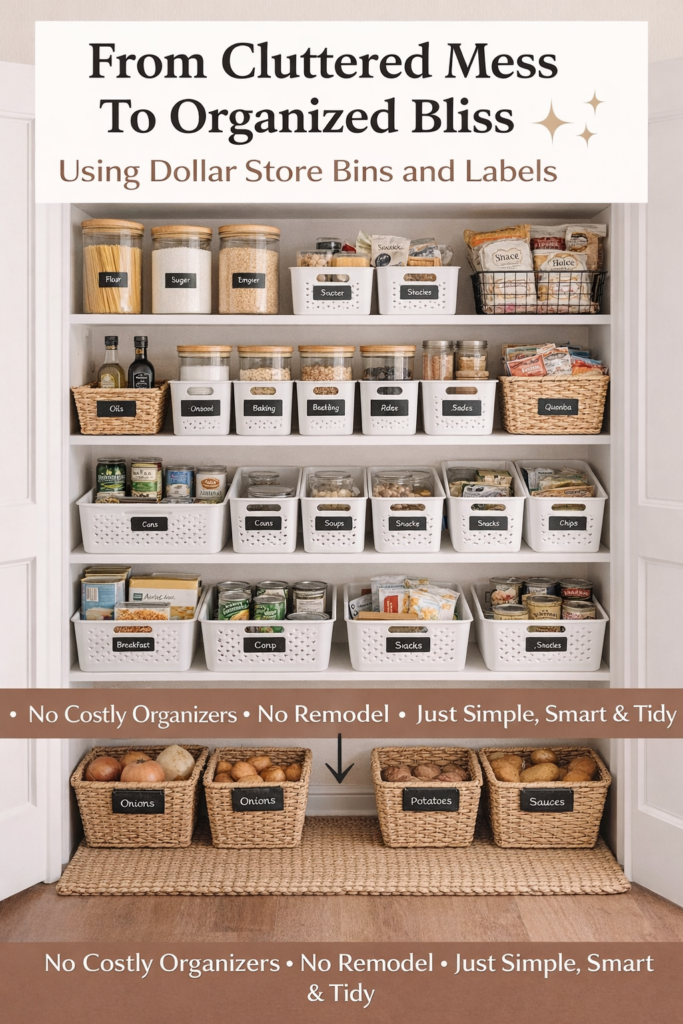
For many women, especially those who have spent decades caring for families, managing households, and adapting to constant change, the pantry quietly becomes one of the most overlooked spaces in the home. What begins as small, seemingly harmless placements—a bag of rice here, a few cans stacked haphazardly there—gradually evolves into a source of daily frustration. Items are purchased twice because they cannot be found, shelves feel crowded yet empty simultaneously, and the simple act of preparing a meal becomes unnecessarily stressful. This clutter is not a personal failing nor a sign that expensive solutions are required; it is the natural consequence of a life moving faster than the systems intended to support it. When one woman decided to tackle her pantry using nothing more than a few dollar store bins and a thoughtful plan, she unintentionally sparked a movement that resonated deeply with women over fifty-five who recognized their own kitchens and challenges in her story.
The genius of her approach lay in its simplicity. She began by emptying the pantry completely, granting herself permission to start fresh. With every item visible, patterns quickly emerged: expired goods, duplicates, and shelves that had never been optimized for daily use. She grouped items not by aesthetics but by function—baking supplies near the counter, breakfast foods at eye level for easy access, snacks contained neatly for quick retrieval. The dollar store bins were chosen for practicality rather than cost: uniform, lightweight, and flexible, they provided structure without rigidity. Labels added clarity without judgment. Suddenly, the pantry transformed from a chaotic storage closet into a supportive, calming part of the kitchen. Every item had a home, every space had purpose, and the once-overwhelming room became a source of satisfaction and ease.
What captured the attention of so many women was the attainability of this makeover. It was not a glossy influencer project or a young homeowner chasing perfection. This was a practical, achievable transformation performed by someone who understood real kitchens, real budgets, and real lives. For women over fifty-five—many of whom are downsizing, simplifying, or seeking less visual noise—this change represented more than organization. It symbolized peace of mind. Opening the pantry no longer provoked stress; instead, it offered clarity and calm. Knowing exactly what was on hand reduced waste, simplified meal preparation, and restored a sense of control. The emotional impact of this small victory—often overlooked in a world obsessed with dramatic change—was profound.
As before-and-after photos circulated, thousands of women connected with the story. They shared decades of kitchen habits, inherited routines, and the quiet stress of clutter that had gone unaddressed. Many had assumed that organization required youth, energy, or a large budget. Witnessing someone their age succeed with modest tools challenged those beliefs. The pantry makeover became less about storage and more about mindset, illustrating that meaningful improvement does not require radical action. With a few hours, a small budget, and deliberate intention, a noticeable shift in daily life was achievable. The process reinforced the idea that order and calm are accessible at any stage, without the need for expensive products or dramatic redesigns.
The practical benefits extended beyond aesthetics. Meal planning became simpler because ingredients were visible and accessible. Grocery shopping grew more intentional, reducing impulse purchases and forgotten items. Cleaning became faster and easier as shelves were decluttered and organized. Perhaps most importantly, the pantry stopped serving as a reminder of unfinished tasks and instead became a symbol of accomplishment. For women navigating retirement, changing family dynamics, or redefining their sense of home, these small victories carry significance. They demonstrate that domestic spaces can evolve alongside their owners, adapting to current needs rather than adhering to outdated routines or cluttered habits.
Ultimately, this pantry transformation resonated because it honored experience rather than ignoring it. It did not demand a total reset of life; it invited one small, meaningful refresh within a familiar space. The dollar store bins were merely tools—the true change came from reclaiming intention, mindfulness, and purpose in daily routines. In a culture that equates improvement with spending more or doing more, this story reminded thousands of women that clarity, beauty, and calm are often found in the simplest choices. Sometimes, all it takes is one organized shelf, one labeled bin, and the quiet realization that it is never too late to make your home work better for you.