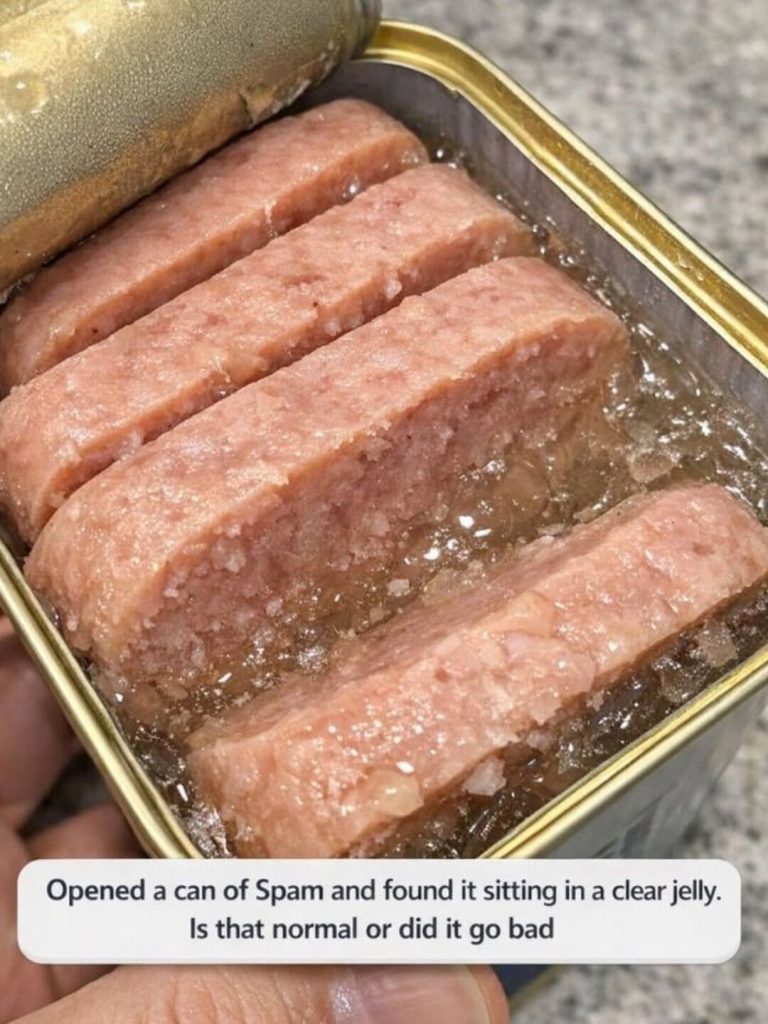
Spam is one of those pantry staples that sparks strong reactions, yet it remains a familiar presence in kitchens around the world. Almost everyone who has opened a can has paused at the same sight: a clear, jelly-like layer resting on top of the meat. For many people, that moment brings instant doubt. Is this supposed to be here? Has it spoiled? The answer is far less alarming than it appears. That jelly is completely normal and is actually a sign that the product was processed correctly. Spam is made primarily from pork shoulder and ham, both of which are rich in natural proteins and collagen. During the cooking process inside the sealed can, these proteins break down and combine with rendered fat to form gelatin. When the can cools after cooking, that gelatin solidifies into a clear or pale jelly. It’s the same process that turns homemade stock into gel in the refrigerator. The presence of this jelly does not mean the food has gone bad, nor does it indicate contamination. On its own, the jelly is harmless and safe to eat or cook with, provided the can and the meat show no other signs of spoilage.
That said, the fact that jelly is normal does not mean every can of Spam is automatically safe. Like all canned foods, Spam relies on an airtight seal to stay shelf-stable for long periods. When that seal is compromised, dangerous bacteria can grow without obvious warning. Improper storage, physical damage during shipping, or long-term exposure to moisture can all weaken a can. This is why it’s important to perform a quick but thorough check every time you open one, even if it has been sitting in your pantry for months without issue. Food safety experts often recommend a simple three-step approach: inspect the can itself, examine the meat and jelly visually and by touch, and then rely on your sense of smell. These steps take less than a minute but dramatically reduce the risk of foodborne illness. Canned meat is generally very safe, but when it fails, it’s not something you want to gamble with.
The first and most important step is checking the condition of the can before you even think about the contents. A safe can should feel solid and firm, with smooth sides and intact seams. The top and bottom should be flat, not puffed outward. Small cosmetic dents on the sides may not always be dangerous, but dents along seams or sharp creases are a red flag because they can compromise the seal. Rust, especially near seams or the lid, is another warning sign. When you open the can, it should do so normally, without releasing pressure or spraying liquid. A hissing sound, a bulging lid, or liquid spurting out can indicate gas buildup from bacterial growth. This is the single most serious warning sign. If you notice bulging, pressure, or leaking when opening the can, you should stop immediately and discard the entire can without tasting the contents. These conditions can signal the presence of harmful bacteria such as those that cause botulism, which is rare but extremely dangerous. Even if the meat looks fine, a compromised can is never worth the risk.
Once the can is open and appears structurally sound, the next step is to examine the Spam and its jelly closely. Normal jelly should be clear or lightly amber in color and have a smooth, gelatinous texture. It should rest on the surface of the meat and hold its shape when cold. The meat itself should appear uniformly pink, firm, and slightly springy to the touch. Spam is designed to be solid, not crumbly or sticky. Signs of spoilage become evident when the jelly turns cloudy, milky, greenish, or dark brown, or when it develops bubbles or foam. Slimy textures or odd separation within the jelly can also indicate bacterial activity. The meat should never show gray, green, or brown patches, nor should it feel excessively soft, mushy, or tacky. Texture is just as important as appearance. If anything looks unusual or unappetizing in a way that goes beyond normal variation, do not try to confirm it by tasting. Visual abnormalities are enough reason to throw the can away.
The smell test is the final and often most decisive step. Your nose is highly sensitive to spoilage, sometimes even before your eyes can detect it. Fresh Spam has a mild, slightly salty, meaty aroma that should not be sharp or offensive. Any sour, rancid, metallic, or otherwise unpleasant odor is a clear signal that the product is no longer safe. Even if the can was intact and the jelly looked clear, a bad smell means the contents should be discarded immediately. Some harmful bacteria do not always cause dramatic visual changes, but they almost always produce odors that register as “wrong.” Never taste canned meat to check if it’s okay; tasting does not neutralize bacteria and can expose you to toxins. When in doubt, err on the side of caution. Throwing away one can of Spam is far safer than risking serious illness.
Many people also wonder whether the jelly itself can be eaten or if it should be removed before cooking. The answer is simple: it’s completely edible. That jelly is just gelatin derived from the meat’s natural proteins and fats, and it melts away when heated. When you fry, bake, or grill Spam, the jelly liquefies and either cooks off into the pan or reabsorbs into the meat, often improving moisture and flavor. Some people even find that Spam with plenty of jelly cooks up juicier than a drier-looking can. If the jelly appears slightly watery, that is usually not a problem either. Temperature fluctuations during storage can cause gelatin to loosen, turning it softer or more liquid. As long as the color is clear and the smell is normal, watery jelly is still safe.
In the end, clear jelly in Spam is not a defect or a warning—it’s simply part of how the product is made. It’s evidence that the meat was cooked, sealed, and cooled as intended. The real danger signs have nothing to do with the presence of jelly and everything to do with the condition of the can, the appearance and texture of the meat, and the smell when opened. If the can is intact, the meat is firm and pink, the jelly is clear, and the smell is mild, the Spam is safe to eat and enjoy. For nearly a century, Spam has earned its place as a reliable pantry staple, and that familiar layer of jelly is just part of its design and history. It may look strange at first, but now you know what it means—and when it’s time to trust it, and when it’s time to throw it away.