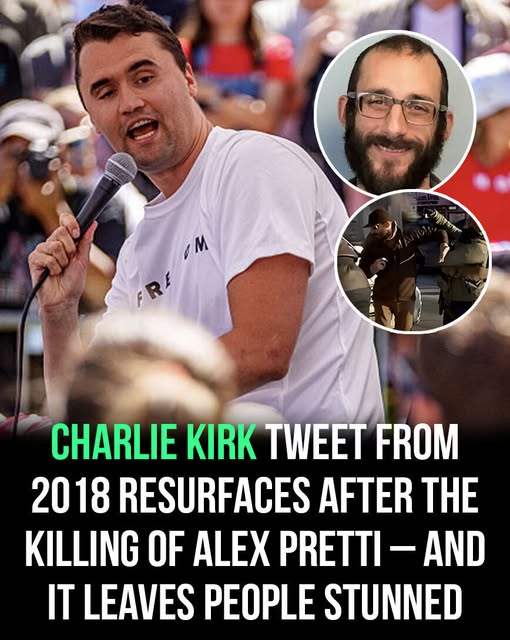
The death of Alex Pretti in Minneapolis has become far more than a tragic encounter between a civilian and federal agents; it has evolved into a defining moment in the ongoing American struggle over power, rights, and trust in institutions. In the immediate aftermath of the shooting, official statements from the Department of Homeland Security framed the event as a necessary act of self-defense, asserting that an ICE agent fired only after fearing for his life when Pretti allegedly approached with a firearm. Yet almost as quickly as that narrative emerged, it began to fracture under public scrutiny. Videos circulated online appeared to contradict key elements of the government’s account, showing Pretti holding what looked like a phone rather than a weapon and being subdued on the ground before shots rang out. His family’s grief soon turned into outrage, as they accused federal authorities of spreading what they called “sickening lies” and demanded transparency about how and why their son died. As details continued to emerge, the shooting stopped being viewed as an isolated incident and instead became a symbol of something larger: a deepening crisis of confidence in law enforcement, particularly federal agencies operating in tense, politically charged environments. The fact that Pretti was an ICU nurse, someone whose profession centered on saving lives, only sharpened the emotional contrast and amplified public reaction. For many Americans, his death felt like yet another confirmation that encounters with the state can turn lethal with frightening speed, even for those who do not appear to pose an immediate threat.
Into this already volatile atmosphere resurfaced a tweet written years earlier by conservative activist Charlie Kirk, stating that the Second Amendment exists not for hunting or even personal self-defense, but as a safeguard against government tyranny. On its own, the quote had long circulated within ideological debates about gun rights, but in the context of the Pretti shooting, it took on renewed and unsettling significance. Shared widely across social media platforms, the statement was interpreted in radically different ways depending on the reader’s worldview. Some saw it as a grim warning, arguing that incidents like Pretti’s death illustrate precisely why skepticism of government power is not paranoia but prudence. Others viewed the tweet as an inflammatory provocation, a reckless framing that could be used to justify hostility toward law enforcement or even violence against federal agents. The timing of its resurgence was no accident; it reflected how quickly political language can be repurposed to make sense of breaking events, especially when those events tap into longstanding fears. Kirk’s words did not cause the outrage, but they crystallized it, giving voice to a sentiment that has been simmering for years: the fear that the balance between citizen and state has tilted too far, and that accountability mechanisms are no longer sufficient to restrain those empowered to use force.
The government’s defense of the agent involved has relied heavily on established legal standards surrounding the use of deadly force, particularly the notion of a “reasonable belief” of imminent danger. According to DHS officials, the presence of a firearm alone was enough to justify the agent’s actions, especially in a chaotic and rapidly evolving situation. To bolster this claim, authorities released images of a customized Sig Sauer P320 pistol and a loaded magazine they allege belonged to Pretti. Yet this disclosure raised as many questions as it answered. The weapon is widely used by military and law enforcement personnel, leading critics to ask whether its existence automatically transforms any encounter into a lethal one, regardless of context. Legal experts and civil rights advocates have pointed out that the standard for deadly force is not merely the possibility of danger, but the immediacy and inevitability of it. If, as some footage suggests, Pretti had already been disarmed and restrained, then the justification for firing becomes far less clear. Supporters of the agent counter that split-second decisions cannot be judged with the benefit of hindsight, emphasizing the inherent risks officers face. This clash of interpretations underscores a fundamental problem: the same facts can be read in dramatically different ways depending on one’s assumptions about authority, fear, and responsibility.
Beyond the specifics of the shooting itself, the Pretti case has ignited broader political conflict, drawing in national figures and intensifying already polarized narratives. Allies of the Trump administration have rallied to ICE’s defense, framing the incident as a tragic but unavoidable consequence of enforcing immigration laws in an increasingly hostile environment. They argue that undermining federal agents through public criticism only emboldens lawlessness and endangers officers’ lives. On the other side, protesters and civil liberties groups see the shooting as part of a disturbing pattern in which federal power is exercised with minimal oversight and devastating consequences. The rare court order issued to preserve evidence in the case has been interpreted by many as a sign that even the judiciary recognizes the gravity of public concern and the potential for misconduct. Meanwhile, statements from political leaders have done little to calm tensions. Calls to defend democracy coexist uneasily with warnings against armed protest, creating a confusing and contradictory public discourse. In this environment, facts struggle to assert themselves, often drowned out by suspicion, anger, and ideological certainty.
What makes the resurfaced Kirk quote particularly potent is that it reframes the Pretti shooting not simply as a question of whether one agent acted lawfully, but as a referendum on the legitimacy of federal authority itself. For those already inclined to distrust government institutions, the incident appears to validate the belief that power, once granted, will inevitably be abused. For others, the invocation of “tyranny” feels dangerously exaggerated, a rhetorical escalation that risks eroding the social contract and normalizing hostility toward public servants. This tension reflects a deeper American paradox: a nation founded on resistance to oppressive rule now struggles to define where vigilance ends and paranoia begins. The Second Amendment, long a flashpoint in cultural and political battles, becomes a vessel for these anxieties, carrying meanings far beyond its text. In the wake of Pretti’s death, it is no longer just about firearms, but about whether citizens believe the systems meant to protect them can still be trusted to tell the truth and accept accountability when they fail.
As investigations continue and more evidence is examined, the full truth of what happened to Alex Pretti may eventually emerge, though history suggests it may never fully satisfy all sides. What is already clear, however, is that the shooting has left an indelible mark on the national consciousness. It has exposed how fragile trust has become, how quickly official narratives are questioned, and how readily past statements are revived to give shape to present fears. The debate sparked by the incident will not be resolved solely by court findings or internal reviews; it will persist because it speaks to unresolved questions at the heart of American democracy. How much power should the government wield in the name of security? What safeguards are necessary to prevent that power from turning lethal without cause? And how can a society committed to both liberty and order reconcile those ideals when they appear to collide? In this sense, the Pretti case is not just about one life lost, but about a nation still struggling to agree on the meaning of justice, the limits of authority, and the fragile line between protection and oppression.