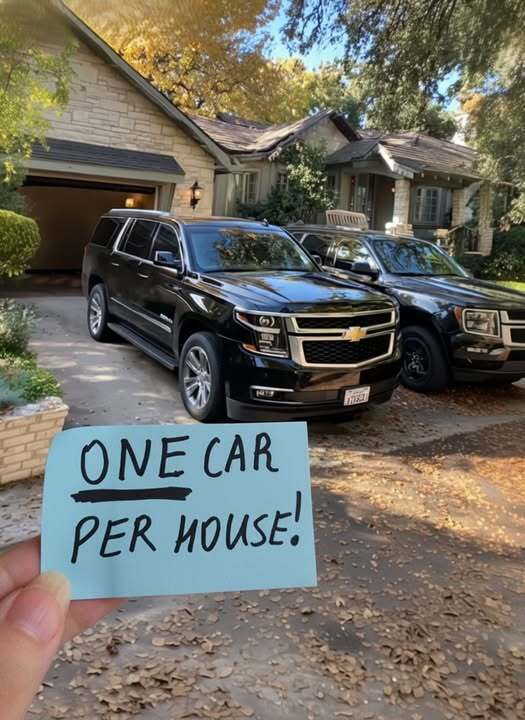
Jack and I moved into the neighborhood with expectations so ordinary they felt almost boring: quiet evenings, polite nods to neighbors we might never truly know, and the comfort of blending into a place where nothing dramatic ever seemed to happen. The rental house was simple and bright, its most practical feature a wide driveway that easily accommodated both our cars without blocking sidewalks, spilling into the street, or inconveniencing anyone. On our very first afternoon, before the last box was opened, Lindsey appeared at our door carrying a tray of cookies and wearing a smile that was friendly in the way customer service friendliness often is—warm, polished, and slightly performative. She spoke enthusiastically about how “close-knit” the neighborhood was, how proud everyone was of appearances, and how the homeowners’ association made sure everything stayed orderly. As the conversation unfolded, the tone subtly shifted. Her gaze drifted repeatedly toward our driveway, and she explained, carefully and with emphasis, that the HOA enforced a one-car-per-driveway rule, even for renters. The explanation lingered longer than necessary, repeated with warnings about fines and towing, until it became clear this was not casual information but a message. We nodded politely, accepted the cookies, and dismissed the encounter as the harmless behavior of someone who enjoyed feeling involved. At the time, we couldn’t imagine that this carefully staged introduction was less a welcome and more a prelude, or that Lindsey had already decided she would be the one to ensure we “understood our place” in the neighborhood hierarchy.
The following days reinforced our initial dismissal. We unpacked, explored nearby stores, and settled into routines that felt reassuringly normal. Both cars stayed in the driveway, parked neatly and unobtrusively, and nothing happened. No official notices appeared, no HOA letters arrived, and no neighbors complained. That silence seemed to confirm our suspicion that Lindsey’s concern was rooted more in control than in any meaningful rule enforcement. Then, one early morning, we were jolted awake by the low, grinding sound of engines idling too close to the house. At first, we assumed it was nearby construction, but the noise didn’t fade. Jack pulled back the curtain and went completely still. Two tow trucks were parked in our driveway, hazard lights flashing, chains already being looped beneath our cars. Panic set in immediately. We rushed outside, barely dressed, demanding an explanation. One driver, calm and businesslike, told us he had authorization from the HOA to tow both vehicles for violating parking regulations. There had been no warning, no citation, no opportunity to fix anything. As our disbelief turned into anger, I noticed Lindsey across the street, standing in her bathrobe with a coffee mug, watching with quiet satisfaction. She wasn’t surprised. She was waiting. In that moment, it became painfully clear that this wasn’t about maintaining standards or following procedure. It was about power, and she had decided to wield it in the most aggressive way available.
The hours that followed were a blur of phone calls, stress, and unexpected expenses. Retrieving the cars cost hundreds of dollars, required time off work, and left us feeling violated in a place that was supposed to feel safe. But once the initial shock wore off, frustration hardened into determination. We began digging into the HOA documents, contacting our landlord, and asking questions that, in hindsight, we should have asked sooner. What we uncovered changed the entire dynamic. The one-car-per-driveway rule did exist, but enforcement procedures were clear: written notice, a grace period, and escalation only after noncompliance. None of those steps had been followed. Even more revealing was Lindsey’s actual role. She was not an HOA officer, not a board member, and not authorized to initiate towing. She was a volunteer “watch” participant whose only power was to report concerns, not enforce them. By calling the towing company directly, she had bypassed established procedures and exposed the HOA—and our landlord—to liability. Our landlord’s reaction was swift and furious. Formal complaints were filed, documentation submitted, and what Lindsey likely believed would be a quiet act of dominance became an administrative and legal headache entirely of her own making.
The fallout unfolded more quietly than the towing itself, but it was far more consequential. The HOA board initiated an internal review, and in the process, neighbors we had barely met began sharing their own experiences. Notes left on windshields, cameras angled toward driveways, constant reports over trivial issues—Lindsey’s behavior, it turned out, was a pattern. The towing incident simply forced it into the open. The board issued a formal apology to us, reimbursed every dollar we had spent retrieving our cars, and levied fines against Lindsey for unauthorized enforcement actions. She was removed from any volunteer role and warned that further interference could result in legal consequences. The transformation was striking. The woman who had stood smugly in her robe watching tow trucks haul away our cars now avoided eye contact entirely, retreating indoors whenever we arrived home. The authority she had tried so hard to assert collapsed almost overnight, replaced by a quiet isolation she had brought upon herself.
Life in the neighborhood settled into something unexpectedly better after that. Instead of tension, there was a subtle shift toward mutual respect. Neighbors smiled more openly, some stopping to introduce themselves properly for the first time, as if relieved that an unspoken problem had finally been addressed. The experience taught us how easily community rules can be twisted when individuals mistake vigilance for authority, and how important it is to understand your rights before assuming compliance is your only option. Homeowners’ associations, for all their formal language and rigid structures, are still run by people, and people can misuse systems when they believe no one will challenge them. Lindsey’s attempt at control cost her money, credibility, and the social standing she seemed to value most. For us, the ordeal was stressful and expensive, but it also reinforced an essential lesson: calm persistence, documentation, and a willingness to question improper actions can restore balance even in rigid systems.
In hindsight, the tow trucks in our driveway marked more than an unpleasant morning; they exposed how fragile neighborhood harmony can be when rules become tools of intimidation rather than cooperation. What began with cookies and rehearsed smiles revealed a deeper culture of entitlement and surveillance that many suburban communities quietly tolerate until someone pushes too far. Lindsey pushed too far, and the consequences landed squarely on her. We still park both cars in the driveway, legally and without issue, a small daily reminder that authority without accountability is temporary. The experience didn’t sour us on community living, but it did sharpen our understanding of boundaries. In places governed by rules, common sense and fairness still matter, and when overreach meets resistance grounded in facts, meddling has a way of backfiring harder than anyone anticipates.