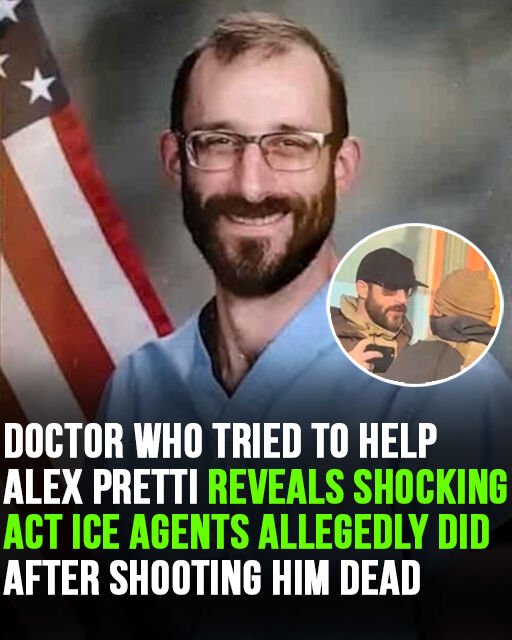
The fatal shooting of Alex Pretti in Minneapolis has ignited widespread national debate over federal immigration enforcement, law enforcement authority, and the obligations of officers to provide aid when lives hang in the balance. Pretti, a 37-year-old intensive care nurse and U.S. citizen, was killed during an encounter with ICE agents amid protests against expanded immigration crackdowns linked to the Trump administration. The case drew intense attention when a physician who witnessed the aftermath submitted a sworn statement to federal court alleging that agents, rather than immediately administering life-saving care, focused on counting Pretti’s bullet wounds. If accurate, the claim raises urgent questions about priorities at the scene, adherence to basic emergency protocols, and whether procedural concerns overshadowed the immediate duty to preserve human life. The allegation resonates powerfully because it touches both the moment of lethal force and the critical seconds immediately afterward—seconds that could have meant the difference between life and death.
Pretti’s death occurred less than a month after the high-profile killing of Renee Nicole Good, another 37-year-old involved in a confrontation with ICE agents in Minneapolis, amplifying local and national scrutiny. In Pretti’s case, multiple videos circulated online showing ICE agents surrounding him, forcing him to the ground, and firing multiple shots. Federal authorities quickly stated that the agent involved acted in self-defense and that Pretti was armed. Local officials, however, contested this narrative, noting that Pretti held a valid permit and no evidence indicated he fired at officers. The discrepancy between official accounts and eyewitness observations has intensified public skepticism, highlighting the critical importance of transparent, independent investigations when lethal force is applied by federal personnel. The shooting has become emblematic of tensions over immigration enforcement and the public’s expectation that officers balance authority with life-preserving responsibilities.
The physician’s statement offers one of the most detailed accounts of the moments immediately following the shooting. According to the witness, Pretti did not appear to be attacking anyone or brandishing a weapon before agents fired multiple shots. After the shooting, the doctor attempted to assist, but agents seemed preoccupied with documenting bullet wounds rather than providing standard first-aid interventions such as checking for a pulse, clearing airways, or administering CPR. This observation, if verified, is deeply troubling to both medical professionals and human rights advocates, as it suggests that procedural or investigative priorities may have outweighed the urgent need to render care. The statement underscores a critical question: when law enforcement uses lethal force, does the immediate duty to preserve life remain central, or is it subordinated to other operational or legal concerns?
Federal officials have strongly contested claims that agents neglected Pretti’s care, with some asserting that he posed a significant threat at the time of the encounter. Statements describing Pretti as attempting to “massacre law enforcement” were quickly challenged by his family and local officials, who emphasize his lifelong dedication to saving lives as a nurse. This stark contrast between the physician’s eyewitness account and official statements has intensified public debate and fueled concerns about transparency. For many observers, the tension between sworn testimony and federal narratives reflects a broader trust gap in law enforcement and federal agencies, especially regarding incidents involving lethal force. Credibility and procedural clarity, in these cases, are as vital as the physical evidence itself.
The broader context of Minneapolis’s strained relationship with federal enforcement cannot be overlooked. Expanded ICE operations in the city have generated ongoing protests and heightened anxiety among residents, many of whom criticize what they describe as militarized tactics with insufficient oversight or coordination with local authorities. Advocates argue that the physician’s allegations symbolize systemic dehumanization in federal operations, where procedural or enforcement priorities may eclipse the welfare of individuals. Supporters of ICE counter that agents operate under dangerous conditions and must secure a scene before rendering aid, yet most law enforcement standards still emphasize providing or facilitating medical attention once threats are neutralized. The case has raised pressing questions about training, oversight, and whether federal protocols adequately prioritize human life during high-risk operations.
As investigations and potential legal proceedings unfold, the death of Alex Pretti is shaping into a pivotal moment for national discussions about use-of-force standards, civil rights, and federal accountability. The physician’s court-submitted statement ensures the allegations are examined under oath rather than dismissed as rumor or social media speculation. Civil rights organizations are calling for independent inquiries, the release of body-camera footage, and clear timelines documenting the period from the shooting to the arrival of medical responders. Beyond one tragic death, the case highlights how power is exercised, how lethal force is deployed, and whether human life remains the central concern once a suspect or perceived threat is subdued. In a nation deeply divided over immigration, policing, and institutional trust, Pretti’s death and the shocking claims surrounding it have intensified demands for accountability, transparency, and a reevaluation of how enforcement operations are conducted in public spaces.