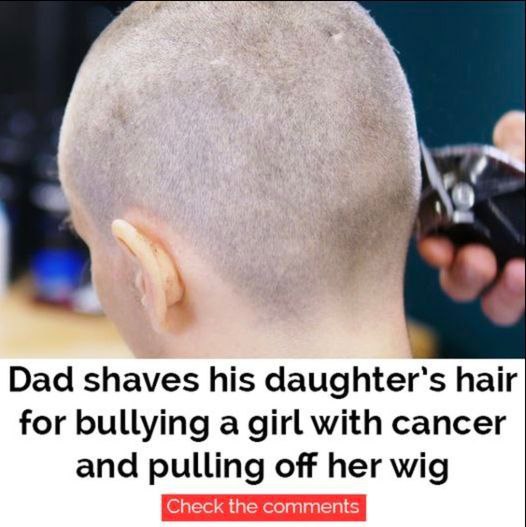
No matter how deeply parents want to believe their children are immune to cruelty, the uncomfortable truth is that every child is capable of causing harm, sometimes without fully grasping the weight of their actions. Childhood is not a straight path toward kindness and wisdom but a complicated process marked by errors, emotional blind spots, and painful lessons. Even in loving homes built on strong values, children test boundaries, mirror behaviors they see around them, and make choices that surprise or devastate the adults who raised them. These moments are not proof of parental failure; they are evidence of the unfinished nature of growing up. Learning how words and actions affect others requires more than rules and lectures—it often requires confronting the consequences of real harm. When that harm is directed at someone already suffering, such as a child battling cancer, the moral stakes become impossible to ignore. In those moments, parents are forced to make decisions that balance love for their child with responsibility to the broader human values they hope to instill.
Bullying is often dismissed as a phase, a momentary lapse in judgment, or something children will simply outgrow. Yet for the victims, especially those already facing serious illness, bullying compounds suffering in ways that can leave lasting scars. A child battling cancer is already navigating fear, pain, isolation, and uncertainty far beyond their years. When cruelty enters that space, it strips away what little sense of safety and normalcy remains. Words meant as jokes, exclusion framed as social hierarchy, or mockery rooted in appearance or weakness can cut deeper than adults often realize. In this case, the father’s discovery that his daughter had bullied a classmate undergoing cancer treatment shattered any temptation to minimize the behavior. It reframed the incident not as a childish mistake to be quietly corrected, but as a profound moral failure that demanded a response equal to the harm caused. The question he faced was not whether to punish his child, but how to ensure she truly understood the weight of her actions and the humanity of the person she had hurt.
The father’s decision to take tough, public-facing action was controversial precisely because it rejected the instinct to shield one’s child from discomfort. Many parents instinctively defend, excuse, or quietly discipline behind closed doors, hoping to preserve their child’s self-esteem or social standing. This father chose a different path, one rooted in the belief that accountability is an act of love rather than rejection. His response was designed not to humiliate, but to interrupt a dangerous pattern before it hardened into character. By forcing his daughter to confront the reality of her behavior—its cruelty, its context, and its consequences—he sent a clear message that empathy is not optional and that compassion matters most when it is inconvenient. Critics argued that the punishment was too harsh, that children should not be burdened with adult-level moral reckoning. Supporters countered that shielding children from the seriousness of their actions teaches them the opposite lesson: that harm can be explained away if it is uncomfortable to face.
What made this case resonate so deeply was not just the punishment itself, but what it represented about modern parenting. In an era where social media often amplifies outrage and reduces complex situations to sound bites, the father’s action sparked a broader conversation about how society handles wrongdoing by children. Are we raising kids to prioritize empathy, or merely to avoid consequences? Are apologies meaningful if they are not paired with understanding and change? Discipline, at its best, is not about control or power, but about guidance—about helping children connect their behavior to real human impact. The father’s approach emphasized that consequences are not the opposite of love; they are one of its most difficult expressions. By refusing to look away or soften the truth, he modeled moral courage, demonstrating that caring for your child sometimes means allowing them to feel discomfort, shame, and responsibility in order to grow beyond it.
Equally important is the lesson this situation offers to the bullied child and their family. When adults take bullying seriously and respond decisively, it communicates that victims are seen, believed, and valued. For a child fighting cancer, whose life is already shaped by hospital visits and medical uncertainty, knowing that cruelty will not be tolerated can restore a measure of dignity and trust. It affirms that their suffering matters and that their community is willing to protect them, not just in words but in action. This validation can be profoundly healing, counteracting the isolation that illness and bullying often create. It also sends a message to other children watching closely: kindness is enforced not through slogans, but through standards. Silence, after all, is its own form of complicity, and when adults fail to intervene meaningfully, cruelty becomes normalized.
In the end, this father’s tough action is less about punishment and more about legacy. Childhood mistakes are inevitable; what defines us is how we respond to them. By confronting his daughter’s behavior head-on, he chose long-term character over short-term comfort, empathy over image, and responsibility over denial. His decision reminds us that parenting is not about raising perfect children, but about raising accountable humans who understand that their actions ripple outward into the lives of others. In a world where cruelty often goes unchecked and empathy is treated as optional, this story stands as a difficult but necessary reminder: love sometimes looks like firmness, growth often begins with discomfort, and the most valuable lessons are the ones we least want to teach.