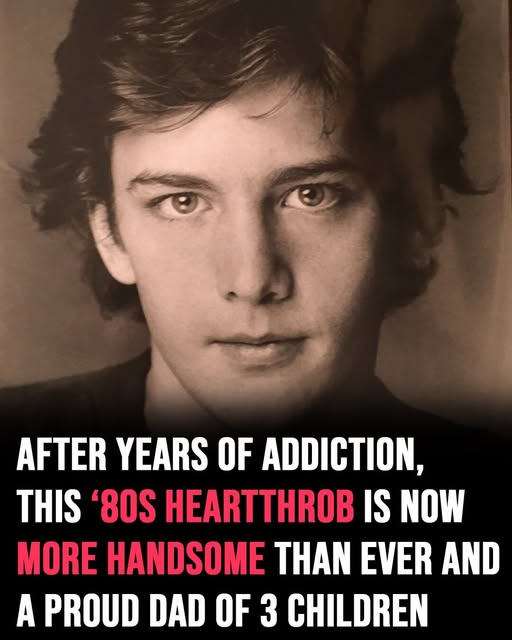
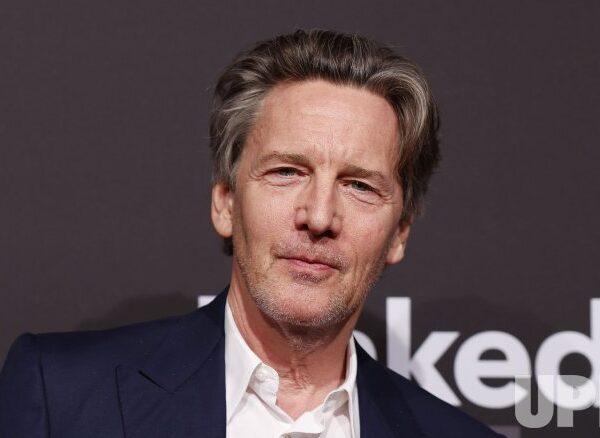
In the cultural imagination of the 1980s, Andrew McCarthy occupied a very specific and powerful space. He was not the loudest star or the most aggressively charismatic, yet his presence lingered longer than many of his contemporaries. There was something disarming in the way he carried himself on screen—an inward-looking sensitivity that contrasted sharply with the glossy confidence Hollywood often celebrated. Audiences didn’t just watch him; they leaned toward him, sensing vulnerability beneath the charm. He became a symbol of emotional accessibility in an era defined by excess, a romantic lead who felt thoughtful rather than dominant. But long before magazine covers and packed theaters, McCarthy was a quiet, uncertain boy growing up in Westfield, New Jersey, the third of four brothers in a working-class family where stability mattered more than dreams. His parents emphasized responsibility and routine, and the idea of Hollywood fame was distant, almost abstract. What drew him toward acting was not celebrity, but refuge. Performance offered structure where he felt none, expression where words failed, and a rare sense of belonging in a world that often felt overwhelming.
That search for belonging followed him to New York University, where he enrolled in the acting program with hope but little preparation for its rigidity. The discipline of formal training clashed with his temperament. He struggled with expectations, skipped classes, and drifted away from the institutional framework meant to guide him. His eventual expulsion after two years could have ended his aspirations, reinforcing every fear he carried about inadequacy. Instead, it became an unlikely pivot point. Not long afterward, he answered a newspaper casting call for the film Class, landing a role that placed him opposite Jacqueline Bisset and into the machinery of professional filmmaking almost overnight. The transition was abrupt and destabilizing. One moment he was a directionless former student; the next, he was navigating press interviews, on-set etiquette, and a level of scrutiny he had never imagined. Fame did not arrive as validation—it arrived as acceleration, pushing him forward before he had time to understand who he was or what he needed to survive it.
By the mid-1980s, McCarthy’s career surged into the mainstream. St. Elmo’s Fire cemented his visibility and tied him to the Brat Pack, a label that brought instant cultural relevance but also narrowed perception. While the group defined a generation, McCarthy often felt reduced by the branding, sensing that nuance and craft were being overshadowed by trend. Still, his work resonated deeply. In Pretty in Pink, he delivered a performance marked by restraint and emotional clarity, offering sincerity in a genre often defined by exaggeration. Films like Mannequin and Weekend at Bernie’s further solidified his status as a bankable star, but success carried a quieter toll. The attention was relentless, the expectations unforgiving, and the pressure to remain effortlessly appealing exhausting. Alcohol became his social lubricant, easing anxiety and silencing self-doubt in rooms full of people. What began as a coping mechanism gradually hardened into dependency, blurring the line between relief and escape.
Behind the calm, approachable image audiences adored, McCarthy was unraveling. He has spoken candidly about arriving on sets hungover, performing while carrying shame and anxiety beneath carefully maintained composure. Though he experimented briefly with drugs, it was alcohol that truly consumed him, embedding itself into daily life as both shield and saboteur. Fame amplified everything—the fear of being exposed, the dread of losing relevance, the internalized belief that he was somehow undeserving. By his late twenties, the contradiction between his public success and private instability became impossible to ignore. In 1992, at just 29 years old, he entered detox. Sobriety was not a single dramatic turning point but a long, uncomfortable reckoning that forced him to confront his identity stripped of validation and applause. It demanded honesty about the ways he had used success to avoid self-examination, and it challenged the illusion that achievement alone could offer peace.
What followed was not disappearance, but transformation. Freed from the obligation to sustain a heartthrob image, McCarthy began reshaping his creative life on his own terms. He moved behind the camera, discovering fulfillment in directing where collaboration replaced performance and control replaced chaos. Television became a new home, with episodes of series like Orange Is the New Black and Gossip Girl benefiting from his empathy for actors and sensitivity to character. At the same time, he uncovered a voice that had little to do with Hollywood at all: writing. Travel became both literal and symbolic, a way to gain distance from his past and perspective on his present. As a contributor and editor-at-large for National Geographic Traveler, he learned to observe rather than perform, to listen rather than impress. His books, including The Longest Way Home and Brat: An ’80s Story, are marked by humility, humor, and an unflinching willingness to examine regret, growth, and the quiet courage required to begin again.
Today, Andrew McCarthy’s life is defined less by recognition than by intention. He is a father of three, a husband, and a creator who values presence over nostalgia. While his early films remain cultural touchstones, he no longer lives inside them. He honors that chapter without allowing it to eclipse everything that followed. His story resonates because it dismantles one of Hollywood’s most enduring myths—that fame is the ultimate destination. Instead, it reveals a deeper, more human truth: that fulfillment emerges through self-awareness, resilience, and the bravery to change course when the old path no longer serves you. The young man who once embodied countless teenage crushes grew into someone far more compelling—a person who chose honesty over illusion, depth over surface, and a life meaningfully lived over one merely admired.