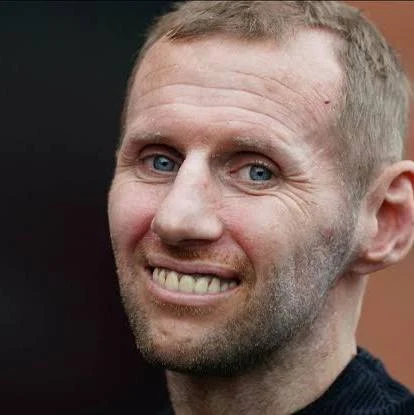
The day Leeds said goodbye to Rob Burrow did not feel like an ending, but like a collective stillness, a moment in which a city, a sport, and a nation paused together to comprehend the depth of what had been given and what had been lost. Streets filled with people who had never shared a conversation with him, yet felt an unmistakable closeness forged through years of watching his courage, humility, and excellence unfold in public view. The civic reception at Leeds Civic Hall carried no sense of spectacle; instead, it was shaped by quiet gratitude, an atmosphere of reverence rather than ceremony. Family members sat alongside former teammates, civic leaders, and representatives from the motor neurone disease community, united not by protocol but by a shared understanding that Burrow’s life had grown far beyond the boundaries of sport. His death at just forty-one, following a public and unflinchingly honest battle with MND, arrived with heartbreaking symbolism, occurring only hours before construction was due to begin on a research centre bearing his name. That timing felt less like coincidence and more like a final reminder of how tightly his story had bound loss to purpose, grief to momentum, and farewell to continuation.
Rob Burrow’s journey began far from packed stadiums and national tributes, rooted instead in a childhood shaped by discipline, curiosity, and an enduring love for rugby league. From his earliest days on the pitch, he challenged assumptions with a quiet confidence that never sought attention but always commanded respect. Smaller than many of his peers, he did not attempt to outmuscle opponents; instead, he outthought and outworked them, relying on speed, vision, and an instinctive understanding of space that made the game seem to slow around him. His rise with Leeds Rhinos became one of the most celebrated careers in modern rugby league, marked by Super League titles, Challenge Cup triumphs, and international honours with England. Yet numbers and trophies never fully captured his influence. Teammates often spoke of how he elevated those around him, not through dominance, but through trust, communication, and relentless commitment. He played with joy rather than ego, embodying a form of greatness that rejected intimidation in favour of intelligence and heart. Over time, he became more than a key player; he became a living example of how excellence can emerge when belief outweighs limitation.
The diagnosis of motor neurone disease in 2019 altered the course of his life in ways few can imagine, but it did not diminish his sense of responsibility to others. Rather than withdrawing from public life, Burrow chose to remain visible, transforming his personal battle into a platform for awareness, research, and collective action. As the disease progressed, steadily stealing his speech, mobility, and independence, he continued to show up, refusing to allow silence to erase his presence or his purpose. Alongside his close friend and former teammate Kevin Sinfield, he helped raise millions for MND research, turning endurance challenges into acts of solidarity that resonated far beyond the rugby world. Each public appearance carried a quiet lesson: that dignity does not vanish when the body weakens, and that courage does not require bravado. For people living with MND, and for families navigating its relentless reality, Burrow became more than an advocate. He became proof that life could still hold meaning, humour, and connection even as physical decline reshaped every aspect of daily existence.
The farewell procession through West Yorkshire revealed the true scale of his impact in a way no speech or statistic ever could. Hundreds lined the streets, some wearing Leeds jerseys, others standing in silence, all united by the same sense of gratitude and loss. Junior players from a local club formed a guard of honour, their presence serving as a powerful bridge between generations, a reminder that Burrow’s influence would extend to young athletes who never saw him play but would inherit the values he embodied. The hearse carried floral tributes marked simply “Dad,” “Bro,” and “Son,” words that cut through public identity and returned him to the roles that mattered most. When the procession paused at the ground where his rugby journey had begun, mourners signed a book of condolences, transforming a familiar sporting space into a place of shared memory. In that moment, it became clear how deeply his story was woven into the fabric of Leeds, and how sport, at its best, becomes inseparable from community, identity, and belonging.
What ultimately distinguished Rob Burrow was not only his resilience, but his refusal to allow suffering to narrow his world or define the limits of his humanity. Even as communication became more difficult, his message remained unmistakably clear. In words shared after his death, he urged others never to “waste a moment” and always to “dare to dream.” Those words resonated not because they were inspirational slogans, but because they were lived truths, forged through years of confronting fear while choosing hope. Friends and family often spoke of his humour, his warmth, and his ability to put others at ease, qualities that endured even as his physical strength faded. His marriage, his role as a father to three children, and his close bonds with parents and siblings grounded him, reminding the public that behind the symbol stood a man navigating love, vulnerability, and devotion like anyone else. That openness deepened the impact of his advocacy, making his courage feel accessible rather than distant.
As Leeds and the wider rugby world move forward, Rob Burrow’s legacy continues to unfold in tangible and intangible ways. The research centre that will bear his name stands as a lasting commitment to progress, ensuring that his battle fuels hope long after his passing. Yet his most enduring contribution may lie in how he reshaped the very idea of strength. He demonstrated that heroism is not confined to moments of victory, but often emerges in vulnerability, persistence, and honesty. His life connected elite sport with everyday courage, reminding millions that greatness is measured not only by what is won, but by how one responds when circumstances change without consent. In remembering Rob Burrow, people are not simply mourning a sporting legend; they are carrying forward a blueprint for compassion, resilience, and purpose that transcends rugby and speaks to the deepest understanding of what it means to live fully, even when time is painfully short.