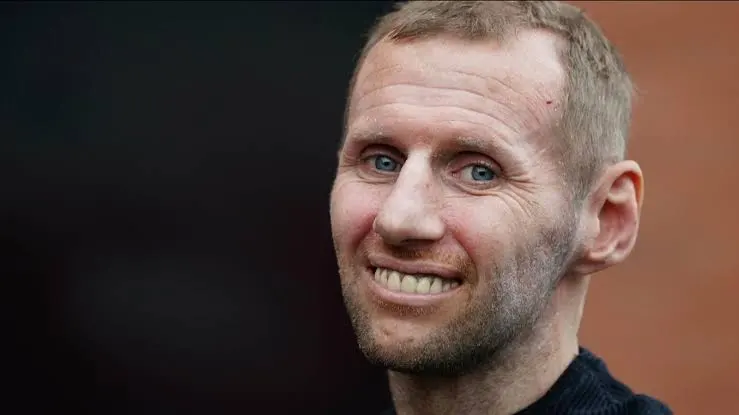
The day Leeds said goodbye to Rob Burrow did not feel like an ending, but like a collective pause taken by a city, a sport, and a nation trying to absorb the depth of what had been given and what had been lost. Streets filled with people who had never met him personally yet felt an enduring connection through moments of brilliance on the field and moments of raw honesty away from it. The civic reception at Leeds Civic Hall was defined not by grandeur, but by reverence, shaped by gratitude rather than ceremony. Family members sat alongside former teammates, civic leaders, and representatives from the motor neurone disease community, united by the shared understanding that Burrow’s life had grown far larger than rugby league alone. His death at just 41, following a courageous and public battle with MND, carried a cruel symbolism, arriving only hours before construction was due to begin on a research center bearing his name. That timing felt less like coincidence and more like a final reminder of how deeply his story fused grief with purpose, loss with momentum, and farewell with continuation.
Rob Burrow’s journey began long before packed stadiums and national tributes, rooted in a childhood shaped by discipline, joy, and an unwavering love for rugby league. From his earliest days on the pitch, he defied assumptions about what a professional player should look like. Smaller than many of his peers, he compensated not with recklessness, but with intelligence, speed, and an instinctive understanding of space that set him apart. When he joined Leeds Rhinos, those qualities flourished. Over the course of his career, he became one of the most decorated players of the Super League era, collecting titles, Challenge Cups, and international caps with England. Yet statistics alone never captured his true influence. Teammates spoke of how he lifted standards quietly, how his work ethic set the tone for entire squads, and how his trust in others made them better players. He played with joy and fearlessness, embodying a form of excellence built not on physical dominance, but on vision, timing, and heart. Over time, he became more than a key player; he became a symbol of what commitment, intelligence, and humility could achieve when limitations were refused permission to define potential.
The diagnosis of motor neurone disease in 2019 altered the course of his life, but it did not diminish his sense of purpose. Where many might have chosen privacy, Burrow chose visibility, transforming his personal battle into a platform for awareness, empathy, and urgent action. As the disease progressed, gradually taking his speech, his mobility, and his independence, he continued to show up in the public eye, refusing to let silence erase him. Alongside close friend and former teammate Kevin Sinfield, he helped raise millions for MND research, turning endurance challenges into acts of solidarity that captured the public imagination. Each appearance carried a quiet lesson: that dignity is not lost when the body weakens, and that courage does not require bravado. For families living with MND, Burrow became more than a figurehead; he became proof that life could still hold meaning, connection, and agency even as control slipped away. His honesty reframed illness not as failure, but as a different arena in which character could still shine.
The farewell procession through West Yorkshire reflected the breadth of his influence in a way no speech could replicate. Hundreds lined the streets in silence, many wearing Leeds jerseys, others holding handwritten signs, all united in a shared act of remembrance. Junior players from a local club formed a guard of honor, their presence creating a living bridge between past and future, reminding onlookers that Burrow’s impact would echo through generations who may never have seen him play, but would inherit the values he embodied. The hearse carried simple floral tributes marked “Dad,” “Bro,” and “Son,” words that stripped away public identity and returned him to the roles that mattered most. When the procession paused at the ground where his rugby journey began, mourners signed a book of condolences, transforming a familiar sporting space into a site of collective memory. It was a moment that revealed how deeply his story was woven into the fabric of Leeds, and how sport, at its best, becomes inseparable from the emotional life of a community.
What set Rob Burrow apart was not only resilience, but his refusal to allow suffering to narrow his world. Even as communication became increasingly difficult, his message remained unmistakably clear. In a final statement shared after his death, he urged others never to “waste a moment” and always to “dare to dream.” Those words resonated because they were not abstract inspiration, but earned wisdom, forged through years of confronting loss while choosing hope. Friends and family spoke often of his humor, warmth, and ability to put others at ease, qualities that endured even as his body failed him. His role as a husband and father grounded him, reminding the public that behind the symbol stood a man navigating love, fear, and devotion like anyone else. That visible humanity deepened the power of his advocacy, making his courage relatable rather than distant, and his message accessible rather than idealized.
As Leeds and the wider rugby league world move forward, Rob Burrow’s legacy continues to unfold. The research center that will bear his name stands as a tangible commitment to the future, a promise that his struggle will fuel progress long after his passing. Yet his most enduring contribution may be how he reshaped our understanding of strength itself. He showed that heroism is not confined to moments of victory, but can be found in vulnerability, persistence, and the courage to stand publicly in one’s truth. His life bridged elite sport and everyday resilience, reminding millions that greatness is measured not only by trophies lifted, but by character revealed when circumstances turn unforgiving. In remembering Rob Burrow, people are not only mourning a rugby legend; they are carrying forward a blueprint for compassion, purpose, and quiet bravery that transcends sport and speaks to the deepest meaning of living fully, even when time is painfully short.