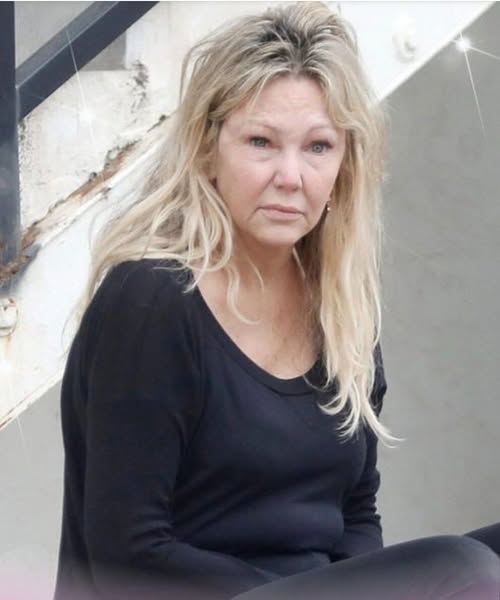
In the long and evolving history of American television, few performers have come to embody a specific cultural moment as completely as Heather Locklear. At the height of her fame, she was more than a popular actress; she was a symbol of polished glamour, confidence, and accessibility rolled into one luminous presence. Her image seemed to define an era when television stars felt omnipresent, shaping ideals of beauty and success in households across the country. Producers trusted her instinctively, audiences welcomed her effortlessly, and networks understood that her presence alone could elevate a series from successful to iconic. With her bright smile, sunlit California aesthetic, and an ease on screen that suggested confidence without arrogance, she appeared to glide through fame untouched by its harsher edges. Yet this perception masked a deeper reality. Even as magazine covers and studio lights reinforced the illusion of effortlessness, the notion that beauty equaled emotional security was already unraveling behind the scenes. The gap between who Heather Locklear was expected to be and who she actually felt herself to be quietly widened, shaping a life defined not only by acclaim, but by resilience forged in private struggle.
Her early years offered little indication that she would one day become a cultural fixture. Born in Los Angeles in 1961, Heather grew up close enough to the entertainment industry to see its allure, yet distant enough to understand that success within it was never guaranteed. Her father’s military background instilled discipline and order, while her mother’s work in production offered a glimpse into Hollywood’s machinery without opening doors automatically. As a teenager, Heather did not see herself as extraordinary. She has spoken candidly about feeling insecure, awkward, and uncertain, traits that clashed sharply with the confident persona audiences would later assume came naturally. These formative years were further complicated by profound family losses that introduced grief and emotional vulnerability early in her life. Such experiences did not make headlines at the time, but they shaped her inner world in lasting ways. Long before red carpets and casting calls, she learned that stability could be fragile and that life could shift without warning. Those lessons, quietly absorbed, would later intersect with fame’s pressures in ways no one could see from the outside.
Her professional ascent in the 1980s was both swift and transformative, placing her squarely at the center of television’s most influential era. Early roles revealed an actress capable of balancing warmth with intensity, projecting strength without sacrificing relatability. When she joined “Dynasty,” her presence felt immediately consequential, as though the camera itself recognized her authority. She did not simply blend into ensemble casts; she altered their chemistry, commanding attention through subtlety rather than excess. That quality reached its peak with “Melrose Place,” where her arrival reinvigorated the series and reshaped its cultural footprint. Week after week, millions of viewers welcomed her into their living rooms, watching characters that reflected ambition, vulnerability, and emotional complexity. Award nominations, magazine features, and industry acclaim followed in rapid succession, reinforcing her status as television royalty. Yet this success carried an unintended cost. The consistency that made her invaluable also narrowed public perception, compressing a multifaceted individual into a fixed image that left little room for fragility, reinvention, or emotional honesty.
As her career flourished, her personal life unfolded under a microscope few could endure unscathed. Relationships that might have remained private for others became public narratives, amplified by a media culture eager to blur glamour with turmoil. Her marriage to musician Tommy Lee captured public fascination, symbolizing a collision between Hollywood polish and rock-and-roll chaos. While the pairing intrigued fans and tabloids alike, the realities of incompatible lifestyles, relentless attention, and unrelenting scrutiny eventually eroded its foundation. Seeking balance and grounding, she later married Richie Sambora, and for a time, family life appeared to offer the stability she had long searched for. Motherhood marked a profound shift, anchoring her priorities and offering a sense of purpose that fame alone never could. Yet even this chapter was not immune to strain. The pressures of public expectation, personal differences, and unresolved emotional struggles gradually resurfaced, leading to another painful separation. Each highly visible ending added emotional weight, reinforcing how difficult it was to preserve normalcy when every private moment risked becoming public spectacle.
The years that followed exposed the less glamorous, rarely acknowledged realities of celebrity life. Heather Locklear’s struggles became increasingly visible, not because they were unique, but because fame magnified them beyond proportion. Moments of instability that might have remained private for others unfolded publicly, often stripped of nuance, empathy, or understanding. Headlines focused on incidents rather than healing, constructing narratives of decline while overlooking the complexity of mental health and addiction. Yet what emerged was not a simple story of downfall, but a prolonged confrontation with challenges faced by millions outside the spotlight. Throughout these years, she sought treatment, entered recovery programs, and leaned on a support system that extended beyond romantic relationships. The continued involvement of those who once shared her life reflected enduring bonds rooted in shared concern, particularly for family. While public opinion fluctuated between judgment and sympathy, those closest to her witnessed persistence rather than surrender, a quiet determination to reclaim stability on her own terms.
Today, Heather Locklear’s story is increasingly understood not as a cautionary tale, but as a testament to endurance and humanity. Her legacy extends far beyond iconic roles and unforgettable performances, opening a broader conversation about vulnerability, recovery, and compassion in a culture that often demands perfection. She embodies the truth that success does not shield anyone from pain, and that healing rarely follows a straight or predictable path. In recent years, glimpses of stability and renewed focus have offered reassurance to those who continue to care about her journey. Fans who once idolized an image now recognize strength in persistence rather than flawlessness. Her life illustrates how beauty and achievement can coexist with hardship, and how confronting struggle openly can redefine what resilience truly means. As her story continues to unfold, it stands as a reminder that even under the harshest public gaze, growth remains possible, and that hope, though sometimes fragile, possesses a remarkable capacity to endure.