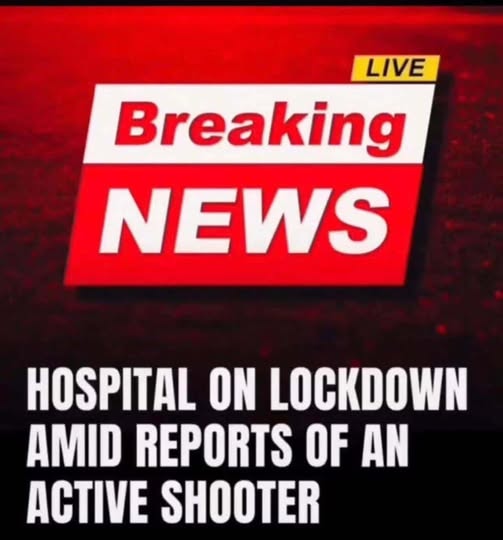
In the immediate aftermath of the lockdown, the hospital appeared outwardly unchanged. The floors still gleamed under fluorescent lights, monitors continued their steady beeping, and the quiet choreography of care resumed with practiced precision. Yet beneath that surface, something essential had shifted. The building felt heavier, as though the walls themselves had absorbed the shock. Staff returned to their roles because patients still needed medications, wounds still required attention, and life inside a hospital does not pause simply because fear has entered the room. But the ease that once accompanied routine was gone. Walking down a hallway now carried a heightened awareness of sound and movement. A door closing too loudly, footsteps approaching from behind, or an unexpected announcement over the intercom could trigger a jolt of adrenaline. The physical environment remained intact, but the emotional geography had been irrevocably altered. Familiar spaces no longer felt neutral; they carried memory, anticipation, and unease, reshaping how people inhabited them hour by hour.
For many employees, the most destabilizing realization was not the lockdown itself, but the knowledge that the perceived threat originated from within the hospital community. Hospitals are built on layers of trust that extend beyond formal policies. There is trust that colleagues share a commitment to care, that patients and staff occupy a shared moral space centered on healing, and that danger comes from outside rather than within these walls. When that assumption fractures, the injury cuts deeper. Staff found themselves revisiting past interactions with unsettling intensity, replaying conversations and encounters in their minds. A brief moment of tension, a colleague’s withdrawal, or a look that once seemed insignificant became subject to scrutiny under the harsh light of hindsight. This process was not about assigning blame as much as it was about reclaiming a sense of control. If warning signs could be identified retroactively, perhaps future harm could be prevented. Yet this search also carried a heavy burden, quietly teaching people to doubt their own perceptions and to wonder whether safety could ever be fully restored in a place that had once felt implicitly secure.
Hospital leadership responded swiftly, aware that silence could compound fear. Lockdown protocols were reviewed, security presence increased, and clear communication emphasized preparedness and vigilance. Counselors and mental health professionals were brought in to support staff, and debriefing sessions were scheduled to help people process what had happened. These actions were necessary and, in many ways, reassuring. They demonstrated accountability and concern. Still, they could not immediately reach the quieter, more complicated injuries that had settled into the workforce. Trauma does not always announce itself loudly. For some, the counseling sessions became a rare space to voice emotions they had long suppressed—fear, anger, grief, and even resentment that such vulnerability had been forced upon them at work. For others, the idea of speaking felt overwhelming or pointless, as if naming the pain might anchor it more firmly in place. Healing began in uneven rhythms, shaped by personal history, workload, family responsibilities, and the unspoken expectations that healthcare professionals often place on themselves to endure without complaint.
The lockdown also forced a profound reckoning with professional identity. Healthcare workers are trained to remain composed in crisis, to act decisively when others panic, and to compartmentalize personal emotion in service of patient care. Many take pride in this capacity, seeing it as a defining strength. The incident challenged that self-concept. Fear arrived suddenly and without permission, cutting through experience and training alike. Some staff members struggled with guilt, believing they should have been braver, calmer, or more resilient. Others felt ashamed of lingering anxiety, interpreting it as weakness rather than a natural human response to threat. Gradually, a more complicated understanding began to emerge. Professionalism does not confer immunity from trauma, and courage does not mean the absence of fear. Acknowledging this truth was uncomfortable, but it opened space for conversations that had long been sidelined by the relentless pace of healthcare. Discussions about mental health, burnout, and emotional safety gained new urgency, reframing vulnerability not as failure, but as a signal that support systems matter as much as clinical expertise.
As days turned into weeks, staff responses diverged in visible and invisible ways. Some found strength in shared experience, leaning into their teams with renewed honesty. Small gestures took on greater meaning: checking in on a colleague after a difficult shift, lingering a moment longer during handoff, or offering quiet reassurance without needing to explain it. These acts became anchors, helping rebuild a sense of collective trust, however fragile. For others, the hospital began to feel less like a calling and more like a site of vigilance. The constant awareness, the inability to fully relax even in familiar routines, eroded their sense of belonging. Updating a résumé or exploring other opportunities was not an act of disloyalty, but a form of self-preservation. Leaving was sometimes the only way to imagine reclaiming peace. Both paths reflected valid responses to trauma, underscoring that recovery does not look the same for everyone and cannot be mandated or timed by institutional expectations.
Beyond individual experience, the incident prompted difficult but necessary conversations about workplace culture and responsibility. Questions surfaced about how stress, isolation, and unaddressed struggles manifest in high-pressure environments. Without offering simplistic answers, the event exposed the limits of existing safeguards and the importance of early intervention. Safety, it became clear, is not only a matter of locked doors, drills, and surveillance, but also of attention, empathy, and the willingness to act when something feels wrong. Addressing these issues requires more than policy updates; it demands sustained commitment to listening, reducing stigma around seeking help, and recognizing that emotional well-being is inseparable from patient care. These discussions were uncomfortable, often emotionally charged, but they marked a shift toward greater honesty about the human cost of working in environments where stakes are always high.
Long after the lockdown was lifted and daily operations stabilized, its imprint remained. There was no clear moment when the hospital returned to what it had been before. Instead, a new normal slowly took shape, defined by heightened awareness and a deeper understanding of vulnerability. The building bore no visible scars, yet the people inside carried the experience with them in subtle ways—more cautious, more compassionate, or more resolved to protect their own well-being. Healing proved to be neither linear nor quick. It unfolded through patience, repeated conversations, and the gradual rebuilding of trust that had been shaken from within. In a place dedicated to restoring health, the staff learned that their own recovery could not be rushed or minimized. It required acknowledgment, support, and the recognition that some wounds are not healed by efficiency alone, but by time, honesty, and the shared effort to feel safe again in a space meant to offer refuge.