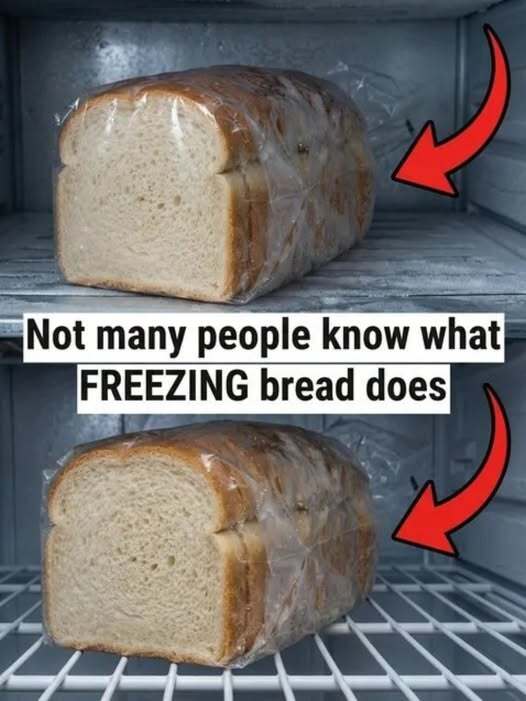
Freezing bread is often seen as a minor household habit, something done almost automatically when a loaf risks going stale before it can be finished. A good deal at the store, a homemade loaf baked with enthusiasm, or an unexpected change in meal plans can all send bread straight into the freezer with little thought. Yet this ordinary action hides a surprisingly complex story. Bread is not a static food, and the moment it leaves the oven, it begins a slow transformation driven by chemistry, time, and environment. Freezing interrupts that process in ways that affect far more than freshness alone. It alters texture, preserves flavor, extends usability, changes how the body digests carbohydrates, and subtly reshapes how people plan meals and think about food. What seems like a simple act of preservation is actually a quiet intersection of food science, nutrition, economics, and behavior, playing out invisibly every time a loaf is sealed and stored in the cold.
To understand why freezing bread is so effective, it helps to first understand why bread changes at room temperature. Many people believe bread becomes stale because it dries out, but moisture loss is only part of the story. The real culprit is a process called starch retrogradation. During baking, starch granules absorb water and swell, creating the soft crumb associated with fresh bread. Once the bread cools, those starch molecules slowly begin to reorganize and crystallize again. As they realign, they squeeze water out of the structure, causing the crumb to firm up and lose its appealing texture. This happens even in sealed bags and continues whether or not mold is present. Refrigeration actually accelerates this process, which is why bread stored in the fridge often tastes stale faster than bread left on the counter. Freezing, however, changes everything. At freezer temperatures, molecular movement slows dramatically. The starch molecules responsible for staling are essentially locked in place, halting the aging process. Mold growth also stops, since mold requires warmth and moisture to develop. Freezing does not reverse staling, but it pauses it almost completely, preserving bread in a state much closer to its original freshness for weeks or even months.
Texture and flavor are often cited as reasons people hesitate to freeze bread, usually based on disappointing past experiences. In most cases, the freezer itself is not the problem—air exposure is. When bread is poorly wrapped, moisture escapes and freezer burn develops, leaving slices dry, tough, and flavorless. Properly protected bread tells a very different story. When sealed tightly in airtight packaging, bread retains its internal moisture and structure. Upon thawing, especially at room temperature, that moisture redistributes throughout the crumb, restoring softness. Toasting frozen bread can be even more effective. Heat disrupts some of the starch crystallization that occurred before freezing, often producing bread that tastes fresher than slices left on the counter for days. Aromas return, the crust regains light crispness, and the interior softens. In this way, freezing acts like a pause button rather than a decline. Instead of allowing bread to slowly deteriorate, freezing preserves it at a moment closer to its peak, provided it is handled correctly.
Beyond texture and taste, freezing bread introduces a subtle but meaningful nutritional shift. When bread is frozen and then thawed, a portion of its starch becomes resistant starch. Resistant starch behaves differently during digestion. Instead of being rapidly broken down into glucose in the small intestine, it resists digestion and passes into the large intestine, where it functions more like dietary fiber. This slows the release of glucose into the bloodstream, leading to smaller and more gradual blood sugar rises after eating. For people sensitive to blood sugar spikes, this modest change can make a difference. Frozen-then-toasted bread is not transformed into a health food, but it can produce a slightly lower glycemic response than freshly baked bread eaten immediately. Resistant starch also feeds beneficial gut bacteria, supporting digestive health in quiet, cumulative ways. Some people notice that frozen bread feels more filling or leads to steadier energy levels, effects that reflect these small but real physiological changes.
The benefits of freezing bread extend well beyond the body and into daily routines and habits. Bread is one of the most commonly wasted foods worldwide, not because it lacks value, but because it spoils quickly and is often sold in quantities larger than many households need. Freezing breaks this cycle. A loaf no longer comes with pressure to be finished quickly. Slices can be frozen individually and used only when needed, allowing bread to adapt to real eating patterns rather than forcing people to eat more just to avoid waste. This flexibility is especially useful for single-person households, families with irregular schedules, or anyone trying to be more mindful about consumption. Financially, the impact adds up quietly. Buying in bulk, taking advantage of discounts, or baking at home becomes practical instead of risky. Psychologically, freezing reduces stress. There is no urgency to “use it up,” which often leads to overeating or mindless meals. Bread becomes something to enjoy intentionally, not something to get rid of before it spoils.
From a cooking perspective, frozen bread often becomes more versatile rather than less. Slices can go straight from freezer to toaster, making quick meals easier instead of slower. Thawed bread works well for sandwiches, while bread that has been frozen and slightly dried excels in recipes that benefit from structure. French toast absorbs custard more evenly, bread pudding holds its shape, and stuffing develops better texture. Croutons and breadcrumbs are almost improved by bread that is no longer perfectly fresh. Different types of bread respond differently, but most freeze successfully. Dense loaves like sourdough, rye, and whole grain breads hold up particularly well due to their structure and moisture balance. Soft sandwich bread freezes best when sliced first, while artisan loaves benefit from being frozen in portions. Bagels, rolls, and many pastries tolerate freezing far better than days of exposure to air. In fact, freezing bread at home mirrors practices already used in commercial baking and distribution, where freezing helps maintain quality across long supply chains.
At a broader level, freezing bread reflects a shift toward more intentional and sustainable eating. Every loaf represents resources—grain, water, energy, labor, and transportation. Reducing waste honors those inputs while saving money and effort at home. The habit itself is simple: allow bread to cool completely, wrap it well, freeze it promptly, and thaw or toast as needed. Yet the effects ripple outward. Freezing bread pauses time, preserves flavor, subtly reshapes digestion, and restores control to the eater. That loaf in the freezer is not forgotten or neglected; it is waiting, protected from staleness and waste, ready to be enjoyed when it truly fits the moment. Once understood, freezing bread stops being a last resort and becomes a quietly powerful tool for better health, smarter spending, reduced waste, and a calmer, more thoughtful relationship with everyday food.