A high-profile arrest carried out in the closing hours of 2025 has pushed Minneapolis into the national spotlight, transforming a single enforcement action into a symbol of America’s unresolved struggle over immigration, federal authority, and community trust. When U.S. Immigration and Customs Enforcement agents took Mahad Abdulkadir Yusuf into custody on December 31, federal officials framed the operation as a straightforward act of public safety. Yusuf, a Somali national who entered the United States in the mid-1990s and later became a lawful permanent resident, had accumulated a serious criminal record, including a 2016 conviction for first-degree criminal sexual conduct. To ICE, the case represented a clear failure of local cooperation that allowed a dangerous individual to remain in the community longer than necessary. To Minnesota leaders and immigrant advocates, however, the arrest became evidence of how federal enforcement strategies can inflame fear, strain civil liberties, and undermine the fragile trust between law enforcement and immigrant neighborhoods. Almost overnight, the Yusuf case ceased to be about one man and instead became a referendum on sanctuary policies, public safety narratives, and the limits of federal power in local communities.
Federal authorities have leaned heavily on Yusuf’s criminal history to justify their criticism of Minnesota’s sanctuary-style policies. According to ICE, Yusuf’s continued presence in Minneapolis illustrated what happens when local jurisdictions refuse to honor immigration detainers or restrict information sharing with federal agencies. Officials emphasized that his record was neither minor nor isolated, highlighting violent offenses, sexual assault convictions, and an outstanding warrant related to obstructing police. From this perspective, sanctuary policies are portrayed as creating enforcement blind spots—gaps that can be exploited by individuals who pose a risk to public safety. ICE officials have also alleged that prior attempts to arrest Yusuf were thwarted by community interference, including an incident in which a property manager reportedly denied agents access to an apartment building. Such accounts have been amplified by federal leadership as proof that local resistance goes beyond policy disagreements and can escalate into physical obstruction, increasing danger for agents and bystanders alike. In the federal narrative, the Yusuf arrest is not an anomaly but a cautionary tale, offered as evidence that non-cooperation has tangible, potentially devastating consequences.
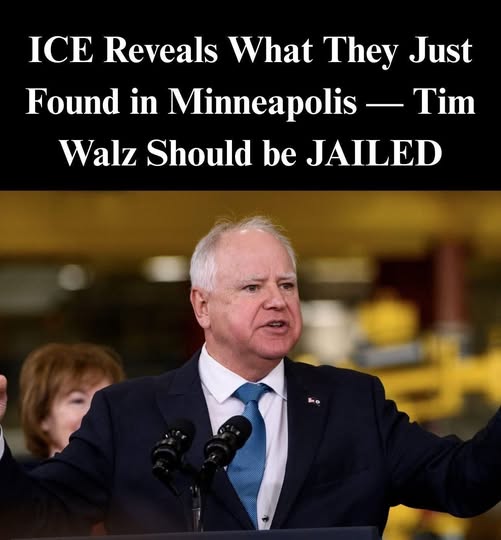
Minnesota’s political leadership has forcefully rejected that framing, arguing that it oversimplifies a complex reality and ignores the broader purpose of sanctuary policies. Governor Tim Walz and Minneapolis Mayor Jacob Frey have consistently maintained that separating local policing from federal immigration enforcement is essential to maintaining public safety, not undermining it. Their argument rests on the belief that communities are safer when residents—regardless of immigration status—feel secure reporting crimes, cooperating with investigations, and engaging with police without fear of deportation. From this vantage point, sanctuary policies are not designed to shield criminals but to protect the integrity of community policing. Mayor Frey has been particularly outspoken in criticizing the methods employed by ICE, describing heavily armed operations in residential neighborhoods as unnecessarily aggressive and destabilizing. He and other local leaders contend that such tactics sow fear, discourage cooperation, and risk alienating precisely the communities law enforcement depends on to solve crimes. In their telling, the federal government’s focus on individual cases like Yusuf obscures the broader, long-term damage caused when trust between police and residents erodes.
The arrest also unfolded against the backdrop of a broader federal initiative known as “Operation Metro Surge,” an escalation of immigration enforcement efforts across Minnesota aimed at locating individuals with outstanding deportation orders or serious criminal records. While federal officials have defended the operation as a necessary response to public safety concerns, its impact has been felt most acutely within Minneapolis’ Somali-American community, the largest of its kind in the United States. Reports of agents conducting ID checks at businesses, detaining individuals in public spaces, and dispersing crowds with pepper spray have circulated widely, fueling anxiety among residents. For many families, the presence of ICE agents has blurred distinctions between citizens, lawful residents, and undocumented immigrants, creating a pervasive sense of vulnerability. Community leaders have reported declines in business activity, disruptions to school attendance, and heightened stress among children and parents alike. What federal authorities describe as targeted enforcement, many residents experience as indiscriminate pressure that reshapes daily life and deepens mistrust.
Within this charged environment, the Yusuf case has become a symbol onto which competing visions of public safety are projected. Federal officials argue that sanctuary policies inherently compromise safety by allowing dangerous individuals to remain at large, framing cooperation with ICE as a moral and practical imperative. They warn that restrictions on detainers and information sharing hinder their ability to act swiftly and decisively, potentially putting lives at risk. Local leaders and advocates counter that this approach prioritizes enforcement metrics over community well-being, ignoring evidence that aggressive immigration tactics can produce a chilling effect on crime reporting and witness cooperation. They point to instances in which lawful residents and even U.S. citizens have been questioned or detained, reinforcing fears of racial or ethnic profiling. For them, the Yusuf arrest underscores the need for clear boundaries that protect civil liberties while allowing local police to focus on their core mission. The disagreement is not merely tactical but philosophical, reflecting divergent beliefs about how safety is created and sustained in diverse urban environments.
The legal framework surrounding this conflict adds another layer of complexity. Immigration enforcement is undeniably a federal responsibility, yet constitutional principles such as anti-commandeering prevent Washington from forcing states or municipalities to act as federal agents. Sanctuary policies operate within this legal space, limiting local participation without violating federal law outright. While courts have generally upheld the right of local governments to decline cooperation, the practical consequences of these choices remain hotly contested. Federal authorities argue that legality does not equal wisdom, insisting that the cumulative effect of non-cooperation undermines enforcement efforts nationwide. Local governments respond that constitutional boundaries exist precisely to prevent the concentration of power and to protect communities from overreach. For residents caught in the middle, these legal distinctions offer little comfort, as policy debates translate into lived experiences of fear, uncertainty, and division.
As national political tensions intensify, the Minneapolis arrest is increasingly invoked far beyond Minnesota’s borders. Conservative lawmakers have seized on the case to argue that sanctuary policies endanger communities, while progressive leaders warn that using individual crimes to justify sweeping enforcement risks stigmatizing entire populations. In this way, Yusuf’s arrest has become a narrative battleground, shaping campaign rhetoric and influencing public opinion on immigration policy more broadly. At its core, the controversy raises a difficult and enduring question: how can a society balance the legitimate need for public safety with the equally vital need for trust, dignity, and constitutional restraint? Minneapolis now stands as a microcosm of that struggle, illustrating how immigration enforcement is never just about law, but about values, relationships, and the kind of democracy communities seek to uphold.