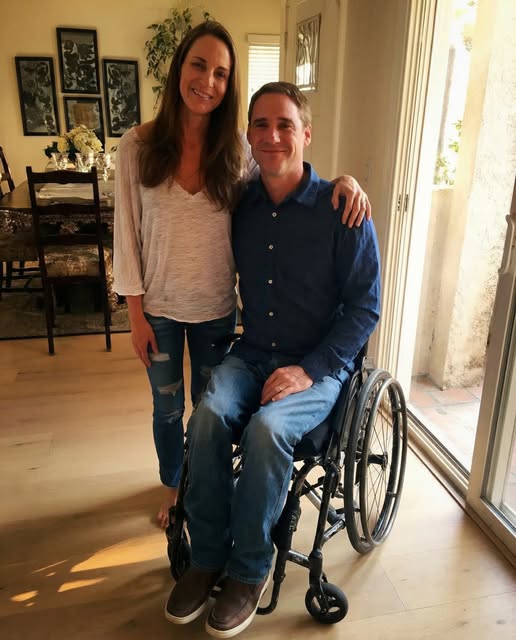
For eight years, my life revolved around a man I loved deeply, who suddenly became dependent on me after a life-altering accident left him unable to walk. Those early days were filled with exhaustion, worry, and fear. I became his caregiver, preparing meals, assisting with personal care, coordinating doctors’ visits, and juggling a full-time job to support our family. I watched over our children while maintaining the household, believing that devotion and sacrifice were the true measures of love. Each day felt heavy, yet I held onto the hope that one day, things would return to the way they were. My world narrowed to the rhythm of his recovery, and though the weight of responsibility was crushing at times, I never imagined walking away. Love, I believed, meant enduring the hardest trials without complaint, even when my own health and dreams quietly suffered.
Before the accident, our life had seemed steady and promising. We had a young family, stable routines, and dreams for the future that felt achievable. The accident dismantled that security overnight, forcing me into a role I never anticipated but never questioned. I became the sole support, the constant presence in his pain and frustration, and the steady hand that held our children through the chaos. The days blurred into months and then years, each marked by therapy appointments, emotional lows, and financial strain. I told myself this sacrifice was temporary—that someday our lives would align again, that his body and our marriage would heal together. The thought of leaving never crossed my mind; staying felt instinctive, the only way to honor the vows I had made and the life we had built.
As the years went on, the slow grind of recovery became my reality. I celebrated every small milestone, every inch of progress, and every spark of hope that he might walk again. And then, miraculously, it happened. After countless hours of rehabilitation, I watched him take his first steps, unsteady yet triumphant. In that moment, I felt elation, relief, and the certainty that the worst chapter had passed. I imagined a new beginning for our marriage, a time to reconnect and rebuild the intimacy that had been overshadowed by care and necessity. But the joy of his recovery became the prelude to a truth I was not prepared to face. In one cruel twist, the man I had devoted myself to handed me divorce papers, revealing a life I had never suspected existed.
The shock was paralyzing. He spoke of freedom, of choices I had made that he felt were burdens, and, most painfully, of a relationship he had nurtured long before the accident. The man I had stood by through pain, sleepless nights, and personal sacrifice had harbored a secret that tore through the foundation of our shared years. Worse still, the money I had earned while caring for him had quietly supported that hidden relationship. The betrayal cut deeper than the divorce itself, unraveling not just our marriage but the very trust and faith I had placed in him. In those moments, I felt a mix of anger, sorrow, and disbelief—emotions that collided in a storm I never expected to navigate. Love had taught me endurance, but betrayal taught me the limits of loyalty.
The legal process that followed was both a relief and another kind of trial. I fought for the custody of our children, for the stability of our home, and for the acknowledgment that my years of sacrifice had value. Each hearing and meeting reinforced the reality that, despite his charm and manipulations, I had been the anchor that held our family together. The court ruled in my favor, granting the support we needed and affirming that our children would have the life they deserved. While he ventured into a new life that quickly unraveled, I began the slow process of healing. Every day brought challenges, but also small victories—a sense of autonomy, renewed purpose, and the quiet confidence that I could thrive on my own.
Looking back now, the experience has reshaped my understanding of love, loyalty, and self-worth. Caring for him taught me empathy and resilience, but walking away taught me boundaries and the importance of choosing myself. Life after betrayal is never simple; grief, anger, and doubt linger longer than anyone anticipates. Yet, with time, clarity emerges. I have learned that survival is not defined by how long we endure suffering for someone else, but by how courageously we step into our own lives when that suffering becomes toxic or one-sided. My children and I are rebuilding, learning to embrace the future without the shadow of past deceit, and discovering that strength often comes from the most unexpected places.
Today, I am no longer defined by the years I spent holding someone else’s life together, but by the life I am creating for myself and my children. Every step forward is a testament to endurance, but also to awakening—the realization that devotion must never come at the expense of one’s dignity and well-being. I cherish the lessons learned, the resilience uncovered, and the love that now extends to myself as much as it does to those around me. Though the goodbye was shocking, painful, and unfair, it became a catalyst for growth, freedom, and self-discovery. In the end, loyalty has many faces, but the most essential one is the one we owe to ourselves.