The story of Tobey Maguire begins far from red carpets and box-office records, rooted instead in instability, fear, and survival. Born on June 27, 1975, in Santa Monica, California, Maguire entered the world to parents who were scarcely more than children themselves. His mother, Wendy, was just 18; his father, Vincent, only 20. They married shortly after his birth, but the relationship unraveled quickly, ending in divorce when Tobey was just three years old. What followed was a childhood defined by constant movement, financial insecurity, and emotional isolation. Maguire has described those years as “tough and lonely,” a time when safety and certainty were rare luxuries. His father’s infamous bank robbery—unmasked, unarmed, and fueled by desperation—cast a long shadow over his youth. Vincent Maguire, broke and convinced he was dying of cancer, walked into a bank near his home with a note claiming he had a weapon and “nothing to live for.” He escaped with cash but was arrested an hour later and served two years in prison. Though Tobey rarely speaks about this chapter, the event crystallized the chaos surrounding his early life. Poverty was constant. The family relied on food stamps, government health insurance, and the kindness of neighbors who sometimes supplied groceries. Nights were spent on relatives’ couches or in shelters, and the future felt uncertain at best. Yet even amid fear and scarcity, something vital was forming: an early sense of responsibility and an understanding that survival depended on self-reliance.
That realization—“I was responsible for myself”—became the emotional engine driving Maguire forward. As a child, he learned quickly that comfort, security, and happiness were not guaranteed; they had to be created. While the instability could have derailed him entirely, it instead sharpened his ambition. Money, to young Tobey, wasn’t about luxury—it was about safety. He dreamed of a life where he wouldn’t have to wonder where his next meal would come from or where he would sleep. Ironically, his earliest career aspiration had nothing to do with acting. He wanted to be a chef and planned to take a home economics class in sixth grade. It was his mother who changed everything, offering him $100—a small fortune for their family—to take a drama class instead. That single decision became a turning point. Acting offered structure, expression, and possibility. It was also something he could control. By high school, however, the constant upheaval proved overwhelming. Maguire dropped out during his freshman year, choosing to pursue acting full-time rather than return to a system that felt incompatible with his reality. It was a risky decision, but risk had always been part of his life. What mattered was focus. While many young actors stumble amid sudden attention, Maguire approached his craft with seriousness and discipline, shaped by years of instability that left little room for recklessness.
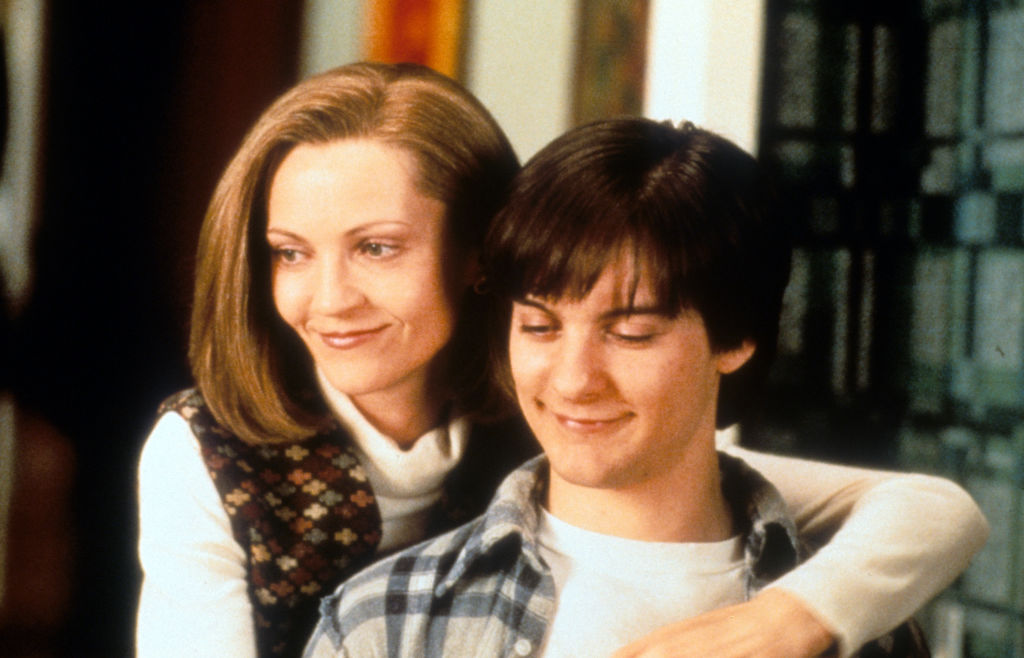
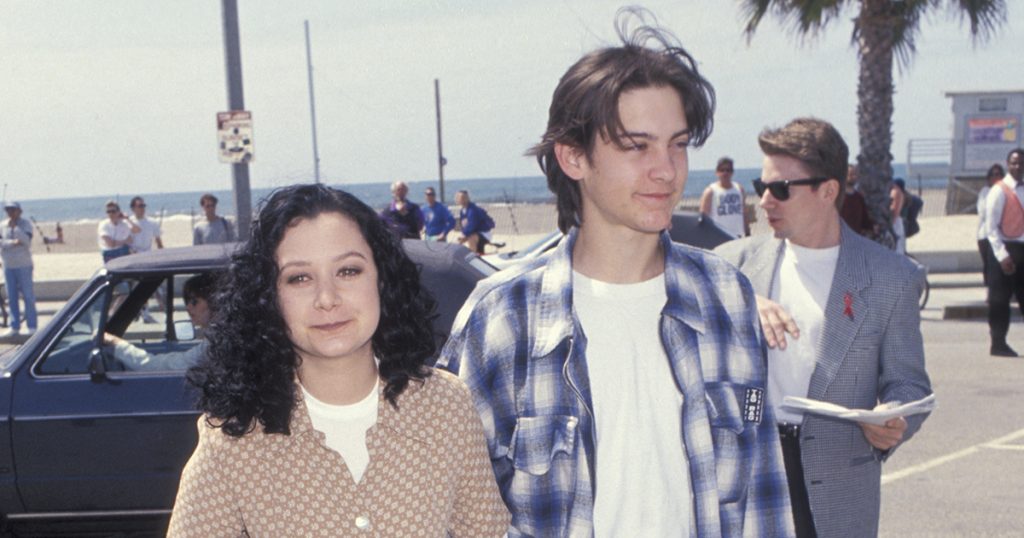
His early career unfolded slowly, marked by modest roles and near-misses rather than overnight fame. In 1992, he appeared in the short-lived sitcom Great Scott, followed by his film debut in This Boy’s Life in 1993. Though his role was small, the experience proved pivotal. Sharing the screen with Leonardo DiCaprio forged a friendship that would endure for decades, connecting two young actors navigating similar pressures. Maguire’s distinctive presence—quiet, watchful, emotionally raw—set him apart, even when the spotlight was minimal. After several projects that failed to gain traction, his breakthrough came with Ang Lee’s The Ice Storm. Playing Paul Hood, a troubled adolescent in a fractured family, Maguire channeled his own experiences into a performance that felt unsettlingly real. Critics took notice. He followed this with Pleasantville, where his gentle vulnerability resonated with audiences, and The Cider House Rules, which earned Oscar recognition and cemented his reputation as a serious actor. Yet behind the scenes, Maguire struggled. Like many young performers thrust into adult worlds too soon, he battled addiction. Drugs and alcohol became coping mechanisms—until he made a decision that would define the rest of his life. At just 19, he quit all mind-altering substances. He has remained abstinent ever since, embracing a disciplined lifestyle that includes veganism and a careful approach to health. That early sobriety, rare in Hollywood, underscored his determination to break cycles rather than repeat them.
Everything changed in 2002 when Tobey Maguire put on the Spider-Man suit. Cast as Peter Parker, he embodied the character’s awkward humanity in a way that felt revolutionary. This wasn’t a flawless superhero—it was a young man burdened by responsibility, guilt, and fear. Audiences connected instantly. The role earned Maguire $4 million initially, but its true value was immeasurable. Spider-Man transformed him into a global icon and redefined superhero cinema by emphasizing emotion over invincibility. Success followed swiftly. Seabiscuit added both prestige and financial security, with Maguire earning $12 million for the role. Yet his approach to wealth remained cautious, shaped by memories of scarcity. He resisted extravagant spending, determined never to become dependent on constant work to sustain an inflated lifestyle. That prudence paid off spectacularly. For Spider-Man 2, he earned $17.5 million plus a percentage of box office profits; by the third film, his deal reached historic levels. To this day, he remains the highest-paid actor to portray Spider-Man. More importantly, his interpretation set a benchmark—many fans still consider his Peter Parker the most emotional and authentic. Even years later, his return in Spider-Man: No Way Home sparked widespread celebration, a testament to the enduring power of his portrayal.
Beyond acting, Maguire steadily expanded his influence behind the camera. Through his production company, Material Pictures, he co-produced projects such as Good People, Pawn Sacrifice, and Babylon, demonstrating an interest in complex stories rather than easy wins. His personal life, too, reflected growth and balance. He met jewelry designer Jennifer Meyer in 2003, and their relationship blossomed quietly. They married in 2007 and welcomed two children, Ruby and Otis. Though their marriage ended in separation in 2016 and divorce in 2020, the bond they built endured. They maintained a close friendship, prioritizing family over bitterness—a rare outcome in Hollywood. During the devastating Los Angeles wildfires in 2025, Maguire opened his home to Meyer and her new fiancé, a gesture that spoke volumes about maturity and compassion. Away from film sets, Maguire cultivated other passions, including competitive poker, where his strategic mind found a new arena. Yet beneath every role, every venture, and every success lies the same foundation: resilience forged through hardship. Tobey Maguire’s journey is not simply a tale of fame—it is a story of survival, discipline, and the quiet power of choosing a different path. From a childhood shaped by poverty and instability to a career that reshaped modern cinema, his life stands as proof that beginnings do not define endings—and that even the most fragile origins can produce enduring strength.