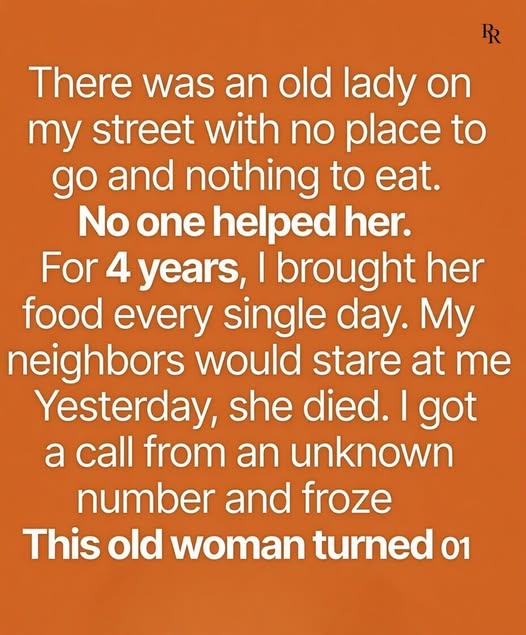
The neighborhood looked peaceful from the outside. Tree-lined sidewalks stretched beneath aging oaks, porch lights glowed warmly each evening, and children’s laughter echoed down the street before fading into the calm rhythm of suburban life. People waved politely while collecting mail, hurried home carrying groceries, and exchanged quick conversations across driveways before disappearing indoors again. It was the kind of place where outsiders assumed everyone knew one another.
But hidden quietly within that ordinary street was a loneliness so deep that almost nobody noticed it.
Every single day, no matter the weather, an elderly woman sat alone near the corner mailbox on Maple Street. She wore the same faded coat through every season, her thin hands folded carefully in her lap while traffic passed and neighbors moved around her as though she were part of the sidewalk itself. Some assumed she was waiting for someone. Others thought she simply liked fresh air. Most never stopped long enough to wonder at all.
Over time, she became invisible.
Not because she lacked worth.
Because people stopped looking closely enough to see her.
I lived only a few houses away from that corner, yet for months I barely paid attention either. Like everyone else, I was consumed by ordinary responsibilities — long workdays, bills, deadlines, errands, exhaustion. Life teaches adults how to move quickly past things that feel emotionally inconvenient. Yet every time I walked by her, something unsettled me in a way I could never fully explain.
She never asked anyone for money.
Never begged.
Never interrupted people.
She simply sat there quietly with a sadness that seemed too heavy for words.
One freezing evening, as wind swept dead leaves across the pavement and most neighbors hurried inside before dark, I noticed her pulling her thin coat tightly around her shoulders. Something about the sight stopped me completely. Without really thinking about it, I went inside my house, filled a container with leftover soup and bread, and carried it back outside.
“I thought you might want something warm,” I said awkwardly.
For a moment, she looked startled — almost suspicious — as though kindness itself had become unfamiliar.
Then she accepted the food carefully with trembling hands and whispered two simple words:
“Thank you.”
That was all.
No dramatic speech.
No tears.
No emotional scene.
Just a quiet expression of gratitude beneath the dim glow of a streetlight.
But from that moment forward, everything slowly changed.
The next afternoon, I brought another meal.
Then another the day after that.
Without either of us ever discussing it directly, feeding her became part of my routine. What began as one small act of compassion slowly transformed into something far deeper — a friendship built not through grand gestures, but through consistency, presence, and the simple decision to keep showing up.
Her name was Eleanor.
At first, our conversations stayed small and careful. She told me she once worked as a seamstress. She liked black coffee but hated loud music. She missed the days when neighbors sat on porches together instead of hiding behind locked doors and glowing screens. Some afternoons she talked for hours. Other days she barely spoke at all.
But little by little, pieces of her life began revealing themselves.
Her husband had died years earlier.
Her son passed away from illness long before that.
Most of her closest friends were gone too.
Her apartment, she admitted quietly one afternoon, had become painfully silent.
Sometimes she left the television running all night just to hear human voices in the background.
“Silence gets loud when you’re alone too long,” she told me softly.
That sentence stayed with me for days.
The more time I spent with Eleanor, the more I realized loneliness isn’t always dramatic. Sometimes it arrives quietly, slowly erasing people from the world while they’re still alive. Society often celebrates youth, productivity, and speed, but elderly people frequently become invisible once others decide they are no longer useful or convenient.
Eleanor had spent decades building a life.
She worked jobs.
Raised a family.
Survived heartbreak.
Paid bills.
Carried responsibilities.
Yet now the world passed her by without noticing whether she existed at all.
Some neighbors questioned why I kept helping her.
One man laughed and said, “You know there are programs for people like that, right?”
Another warned me not to “get too involved.”
But they missed the point entirely.
This wasn’t about charity anymore.
It was about dignity.
Eleanor never asked for much. In fact, she apologized constantly for “being trouble,” which somehow hurt more than anything else. She seemed genuinely shocked whenever someone remembered her favorite soup or asked whether she was feeling okay.
And slowly, I realized I wasn’t simply bringing her food.
I was reminding her she still mattered.
Over the next four years, our small ritual became one of the most meaningful relationships of my life. Summers passed with lemonade shared beneath shaded trees. Winters arrived with warm casseroles and knitted scarves she insisted I “shouldn’t waste money on.” Some days we talked about grief, old memories, and how quickly the world changes. Other days we simply sat quietly together while children rode bicycles nearby and leaves drifted across the street.
But even silence felt different when shared.
Then one cold morning, I looked toward the corner and immediately felt something was wrong.
Eleanor wasn’t there.
At first, I assumed she was resting or avoiding the weather. But when evening arrived and her apartment lights remained dark, unease settled heavily in my chest. I carried a container of soup to her door and knocked several times.
No answer.
Hours later, my phone rang.
The voice on the other end belonged to a county employee speaking with the careful gentleness people use when delivering painful news.
Eleanor had passed away peacefully that morning.
For several seconds, I couldn’t breathe.
Then the woman said something that shattered me even further.
Among Eleanor’s belongings, they had found my name listed as her emergency contact.
Mine.
Not distant relatives.
Not old friends.
Mine.
The neighbor who brought her soup.
The following afternoon, I visited the county office to collect a few personal items Eleanor had requested I receive after her death. Inside the small cardboard box was an old silver brooch, a faded photograph, and one sealed envelope with my name written carefully across the front in shaky handwriting.
I opened it slowly.
The letter inside was short, but every sentence carried the weight of a lifetime.
“To the only person who truly saw me,” it began.
By the time I reached the final paragraph, tears blurred every word.
She thanked me not only for the meals, but for restoring her dignity during the loneliest years of her life. She wrote that before our friendship began, she often wondered whether anyone would even notice if she disappeared.
Then came the line I will never forget:
“Thank you for becoming my family when the world forgot me.”
I sat in my car crying harder than I had in years because suddenly I understood something devastating.
What felt ordinary to me had meant survival to her.
One plate of food.
One conversation.
One person choosing not to look away.
That was all it took to change the final chapter of another human being’s life.
And ever since Eleanor died, I’ve carried one truth with me everywhere:
Kindness is never small to the person who desperately needs it.