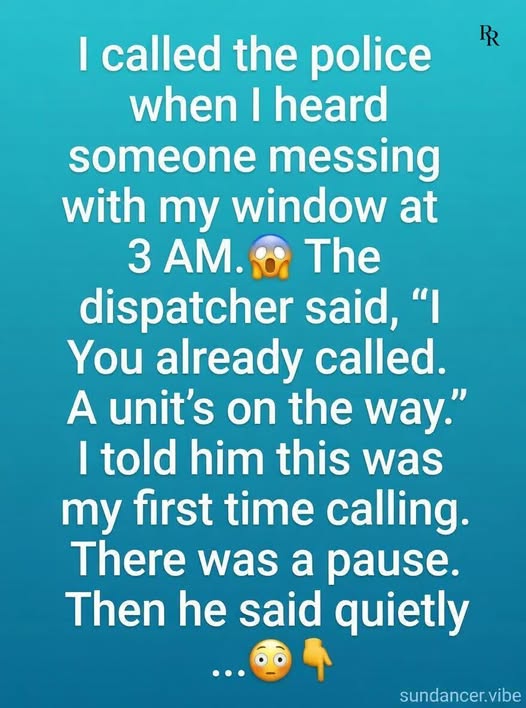
It was sometime after midnight when I first heard the sound.
Not loud. Not dramatic. Just a faint rustling near my bedroom window — soft enough that most people probably would have ignored it and rolled over back to sleep. But there was something about it that instantly unsettled me. At that hour, when the world is silent and every little noise feels amplified, even the smallest disturbance can seem strangely important.
I opened my eyes and listened carefully.
For a few seconds, everything was still again. No footsteps. No voices. Just the low hum of the heater and the distant creak of branches outside in the winter wind. I almost convinced myself it had been nothing. Maybe an animal. Maybe the weather. Maybe my imagination drifting between dreams and wakefulness.
But the feeling didn’t leave.
That was the strange part.
It wasn’t fear exactly. It was more like a quiet pressure in the back of my mind — an instinct gently insisting that something wasn’t right. The longer I ignored it, the stronger that feeling became.
Finally, I reached for my phone.
Even as I unlocked the screen, I felt silly for overreacting to a noise I couldn’t even explain properly. I remember hesitating before dialing, already imagining how ridiculous I might sound trying to describe “a weird feeling” to a dispatcher in the middle of the night.
Still, something inside me pushed forward.
So I called.
The dispatcher answered calmly, asking what was happening.
I opened my mouth to explain about the sound near my window, but before I could finish, he interrupted me.
“You already called,” he said.
I froze.
“What?”
“You called a few minutes ago,” he repeated. “Officers are already on the way.”
My entire body went cold.
I stared down at the glowing screen in my hand, confused enough to wonder if I’d somehow misheard him.
“No,” I said slowly. “I’m calling right now. I haven’t called before this.”
There was a pause on the other end.
Not the impatient kind. The thoughtful kind.
The dispatcher checked something again, then calmly repeated that a call had indeed come from my number minutes earlier — same address, same concern, same report about noises outside the window.
I could barely process what he was saying.
Because I knew, without question, that I had not made any earlier call.
Until that moment, I had been sitting alone in silence debating whether I should even pick up the phone at all.
The dispatcher’s tone softened slightly after I explained this. He didn’t accuse me of lying, but I could tell he was trying to understand how both things could somehow be true at once.
He assured me officers were already nearby and advised me to stay inside until they arrived.
When the call ended, the room felt different somehow.
The darkness seemed heavier. The silence no longer comforting.
I sat on the edge of my bed gripping the phone tightly while my mind raced through every possible explanation. Sleepwalking? A technical glitch? An accidental emergency call I somehow didn’t remember making?
None of it felt right.
And underneath all those logical explanations was something harder to explain — the uncomfortable realization that my instincts had reacted before my conscious mind fully understood why.
A few minutes later, flashing blue lights reflected faintly through my curtains.
Two officers checked around the outside of the house carefully. They searched near the windows, inspected the side yard, and circled the property with flashlights cutting through the darkness.
When they finally came to the door, they told me everything appeared normal.
No broken locks.
No footprints.
No signs anyone had tried to enter.
Nothing.
Relief should have settled the situation completely.
Instead, the mystery of that first phone call stayed lodged in my mind far more deeply than the original noise ever had.
After the officers left, I couldn’t sleep.
I kept replaying the sequence of events over and over, trying to understand what had happened. Yet the more I thought about it, the more I realized the unexplained call wasn’t the part that affected me most.
It was the feeling before it happened.
That quiet instinct.
That subtle inner warning I almost ignored because it didn’t come with proof or certainty.
Before that night, I had always believed intuition was something dramatic — a loud gut feeling, a sudden flash of fear, a clear internal alarm. But what I experienced was different. Softer. Quieter. Almost easy to dismiss.
And yet it still pushed me to act.
By morning, the world looked completely ordinary again. Sunlight poured through the same window that had unsettled me hours earlier. Cars passed outside. Neighbors walked their dogs. Nothing about the house suggested anything unusual had happened at all.
But something inside me had shifted.
I realized how often we ignore ourselves simply because we can’t immediately explain what we feel. We dismiss small warnings because they sound irrational. We talk ourselves out of paying attention because we’re afraid of seeming paranoid or dramatic.
That night taught me something I’ve never forgotten since:
Sometimes intuition speaks long before logic catches up.
And sometimes the quietest instincts are the ones worth listening to most.