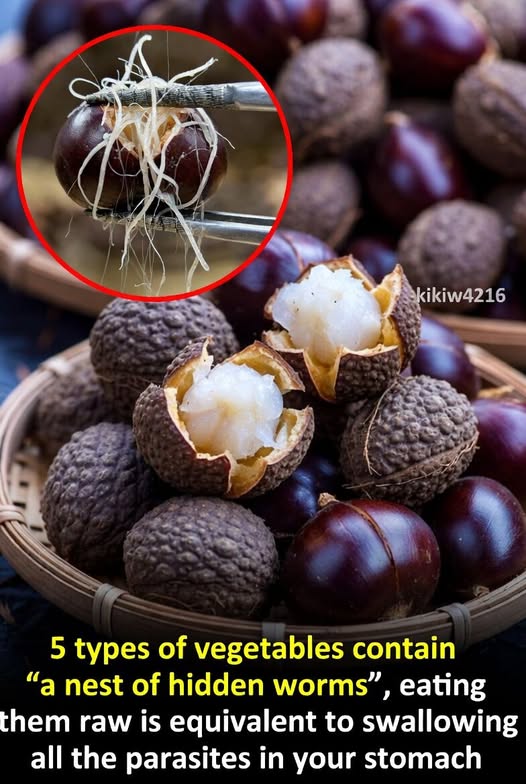
The internet erupted with shock after disturbing viral images began circulating across social media platforms. The photos showed cracked-open black water chestnuts piled inside woven baskets, while a magnified inset revealed thin, white worm-like strands being pulled from the vegetables using tweezers. Accompanied by alarming warnings claiming that several common vegetables may contain “hidden nests of parasites,” the posts triggered widespread fear, disgust, and debate among consumers worldwide.
Although many online claims are often exaggerated for attention, the concerns behind these viral warnings are not entirely fictional. Certain vegetables—especially those grown in contaminated soil or standing water—can indeed become carriers for parasites, microscopic eggs, bacteria, and other harmful organisms if they are not cleaned or cooked properly before consumption.
Fresh vegetables are widely praised for their vitamins, antioxidants, fiber, and disease-fighting nutrients. However, when eaten raw without proper preparation, some produce may expose people to invisible health hazards that most consumers never think about while preparing salads or smoothies. Food safety experts have long warned that contaminated irrigation water, poor sanitation practices, untreated fertilizers, and polluted farming environments can increase the risk of parasites attaching themselves to produce.
The issue becomes even more serious in areas where vegetables are grown using untreated wastewater or animal manure. In such environments, parasite eggs and larvae may cling to leaves, stems, roots, or surfaces and survive long enough to enter the human digestive system.
Here are five vegetables commonly associated with parasite contamination risks and why experts recommend taking extra precautions before eating them raw.
1. Water Chestnuts
Water chestnuts are among the most discussed vegetables whenever parasite contamination becomes a public concern. These crunchy aquatic vegetables are popular in many Asian dishes and are often enjoyed raw because of their sweet taste and refreshing texture.
However, water chestnuts grow in flooded environments such as ponds, marshes, lakes, and muddy wetlands. If the water becomes contaminated with human or animal waste, dangerous parasites can attach themselves to the plant’s surface.
One of the best-known threats linked to aquatic vegetables is Fasciolopsis buski, also known as the giant intestinal fluke. This parasite can survive on plants growing in contaminated freshwater environments. When infected vegetables are eaten raw or undercooked, the parasite may enter the digestive tract and mature inside the intestines.
Symptoms of infection can include:
- Severe stomach pain
- Persistent diarrhea
- Nausea and vomiting
- Malnutrition
- Fatigue and weakness
- Intestinal inflammation
In severe cases, heavy infections may even lead to intestinal blockages.
Experts stress that properly cooking water chestnuts dramatically reduces the risk because heat destroys parasite cysts and larvae. Thorough peeling and washing are also essential safety measures.
2. Cabbage
Cabbage is another vegetable frequently mentioned in food safety discussions due to its tightly layered leaves. Those compact layers can trap dirt, insect eggs, tiny organisms, and contaminants deep inside where simple rinsing may not reach.
When cabbage is grown in contaminated soil or irrigated with unsafe water, parasite eggs may cling to the leaves. Improperly composted manure used as fertilizer can further increase contamination risks.
Health researchers have found that leafy vegetables can occasionally carry parasite eggs associated with tapeworms and roundworms in regions with poor sanitation standards. While infections are relatively uncommon in countries with strong food safety systems, the possibility still exists, especially with imported produce or vegetables purchased from unregulated sources.
Raw cabbage may also contain bacteria and microscopic contaminants hidden between layers. This is why food safety specialists often recommend removing outer leaves, soaking the vegetable thoroughly, and washing each section carefully before use.
Cooking cabbage not only improves safety but also makes it easier to digest for some people.
3. Spinach and Leafy Greens
Spinach, lettuce, kale, and other leafy greens are widely considered health superfoods. Yet they are also among the vegetables most commonly associated with foodborne illness outbreaks.
Their textured surfaces and folds make it easy for dirt, bacteria, parasite eggs, and microscopic organisms to cling to the leaves. Because these vegetables are frequently eaten raw in salads and smoothies, contaminants may survive long enough to be consumed.
Parasites that may contaminate leafy greens include:
- Roundworms
- Giardia
- Cryptosporidium
- Various protozoan cysts
Contaminated irrigation water is one of the biggest contributors to the problem. Flooding, animal activity near farms, and poor worker hygiene can also introduce harmful organisms during harvesting and packaging.
Food safety experts recommend:
- Washing leaves individually under running water
- Soaking produce in vinegar or saltwater solutions
- Using clean utensils and cutting boards
- Refrigerating vegetables properly
- Avoiding wilted or damaged leaves
Light steaming or sautéing significantly reduces the risk of contamination while still preserving many nutrients.
4. Broccoli and Cauliflower
Broccoli and cauliflower may appear clean from the outside, but their dense florets contain countless tiny spaces where insects, larvae, dirt, and contaminants can hide.
Many people have experienced finding tiny insects emerging after soaking broccoli in saltwater. While these are often harmless pests rather than parasites, contaminated growing conditions can also expose cruciferous vegetables to more dangerous microorganisms.
Because their complex surfaces are difficult to clean completely, experts often recommend cooking these vegetables rather than eating them fully raw.
Boiling, steaming, roasting, or blanching broccoli and cauliflower can help eliminate:
- Surface bacteria
- Tiny insects
- Parasite eggs
- Harmful microorganisms
Cooking also improves digestibility for many individuals and reduces compounds that may interfere with thyroid function when consumed excessively in raw form.
5. Watercress and Aquatic Greens
Like water chestnuts, watercress and other aquatic greens grow in moist environments where parasites can thrive if sanitation standards are poor.
Watercress has historically been linked to liver fluke infections in certain parts of the world. These parasites may attach themselves to plants growing near contaminated freshwater systems.
When eaten raw, infected greens may transmit parasites capable of invading the liver or digestive system.
Symptoms can include:
- Fever
- Abdominal pain
- Digestive issues
- Fatigue
- Liver inflammation
Although such infections are relatively uncommon in developed regions, travelers visiting rural or endemic areas are often advised to avoid raw aquatic vegetables unless they are certain the produce has been properly cleaned and prepared.
Why Parasites End Up on Vegetables
The problem usually does not originate from the vegetables themselves. Instead, contamination occurs because of environmental conditions and farming practices.
Common causes include:
- Irrigation with contaminated water
- Use of untreated animal manure
- Poor sanitation during harvesting
- Handling produce with unwashed hands
- Flooding near agricultural fields
- Contaminated storage facilities
Parasite eggs are incredibly resilient. Some can survive for weeks or even months in moist soil or on vegetable surfaces.
Even vegetables purchased from supermarkets may occasionally carry contaminants if proper handling procedures were not followed somewhere along the supply chain.
The Truth About Viral Social Media Warnings
Many viral posts exaggerate the risks by using frightening language like “nests of worms” or “brain parasites hiding in vegetables.” These dramatic descriptions are often designed to attract clicks and shares rather than provide balanced scientific information.
Still, the underlying warning about food hygiene is legitimate.
Not every raw vegetable contains parasites, and millions of people safely eat salads every day without problems. However, improper washing and unsafe agricultural practices can increase the risk of infection.
Experts emphasize that consumers should respond with caution—not panic.
Fresh vegetables remain essential for good health and provide nutrients linked to lower risks of heart disease, obesity, diabetes, and certain cancers. Eliminating vegetables entirely out of fear would create far greater health problems.
The real solution lies in proper preparation and informed food safety habits.
How to Reduce the Risk of Parasites in Vegetables
Food safety specialists recommend several simple but effective precautions:
Wash Thoroughly
Rinse vegetables under clean running water while rubbing surfaces gently to remove dirt and contaminants.
Soak Before Eating
Soaking vegetables in saltwater or vinegar solutions may help loosen hidden particles and small insects.
Peel When Possible
Removing outer skins or leaves can reduce exposure to contaminants.
Cook High-Risk Vegetables
Heat is one of the most effective methods for killing parasites, bacteria, and harmful microorganisms.
Buy from Trusted Sources
Purchase produce from reputable suppliers that follow modern sanitation and agricultural safety standards.
Store Properly
Keep vegetables refrigerated and separate from raw meat to avoid cross-contamination.
Practice Kitchen Hygiene
Wash hands, knives, cutting boards, and countertops regularly while preparing food.
A Reminder About Safe Eating
The viral photos of worms allegedly found inside vegetables may be shocking, but they also serve as an important reminder about food safety and hygiene. Invisible contaminants can exist in raw produce if vegetables are not grown, transported, cleaned, or prepared properly.
Fortunately, simple precautions dramatically reduce these risks.
Cooking vegetables thoroughly, washing produce carefully, and practicing safe kitchen habits can help protect families from parasites and foodborne illness while still allowing people to enjoy the enormous health benefits of fresh vegetables.
Rather than fear every salad or raw snack, experts encourage consumers to stay informed, remain cautious, and prepare food responsibly. With proper handling, vegetables continue to be one of the healthiest and most valuable parts of a balanced diet.
The key is not avoiding vegetables altogether—it is understanding how to enjoy them safely.