For millions of viewers, game shows offer excitement, suspense, and the thrill of imagining what they would do under pressure. Sitting comfortably at home, answers often feel obvious. Letters jump out. Puzzles appear simple. Contestants’ mistakes seem impossible to understand from the safety of a couch.
But inside a brightly lit television studio, with cameras pointed in every direction and a countdown clock ticking loudly in your ears, even the easiest puzzle can suddenly feel impossible.
That reality hit hard during a recent episode of Wheel of Fortune when contestant Eric Handzel came painfully close to winning a massive $61,000 prize package before losing it all over two simple words: “Body Pillow.”
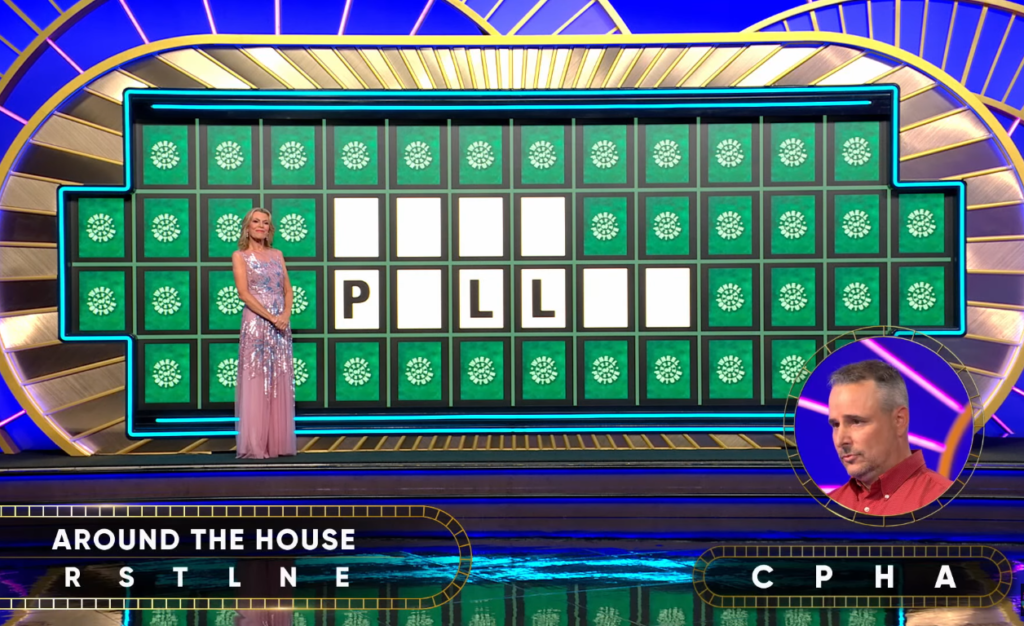
The moment instantly exploded online. Fans flooded social media with disbelief, sympathy, criticism, and jokes. Some viewers insisted the puzzle was unbelievably easy. Others defended Handzel, explaining that pressure can completely scramble even the sharpest minds. Meanwhile, many people focused less on the loss itself and more on the emotional father-son dynamic that unfolded throughout the episode.
For Eric Handzel, however, the experience was likely far more personal than viral entertainment. In just a few minutes, he went from dominating the game and thrilling the audience to becoming the center of one of the season’s most unforgettable Bonus Round misses.
Still, despite the heartbreaking ending, the episode became memorable for something deeper than money. It reminded viewers that game shows are not just about prizes. They are about people, nerves, family support, unexpected mistakes, and emotional moments that audiences continue talking about long after the credits roll.
Handzel entered the episode as an energetic and likable contestant from Chadwicks, New York. A devoted Yankees fan with an easy smile and confident personality, he quickly made an impression on both the audience and host Ryan Seacrest.
The competition was strong from the beginning.
He faced Camila Santos, a mother of two from Sunnyvale, California, and Joanie White, a hairstylist from St. Pauls, North Carolina. All three contestants arrived ready to compete, but it quickly became clear that Handzel had excellent puzzle-solving instincts.
Joanie White started fast by correctly solving both Toss-Up puzzles, giving herself an early advantage with $3,000 in winnings. Early momentum matters on Wheel of Fortune because confidence can dramatically affect later rounds.
However, Handzel responded almost immediately.
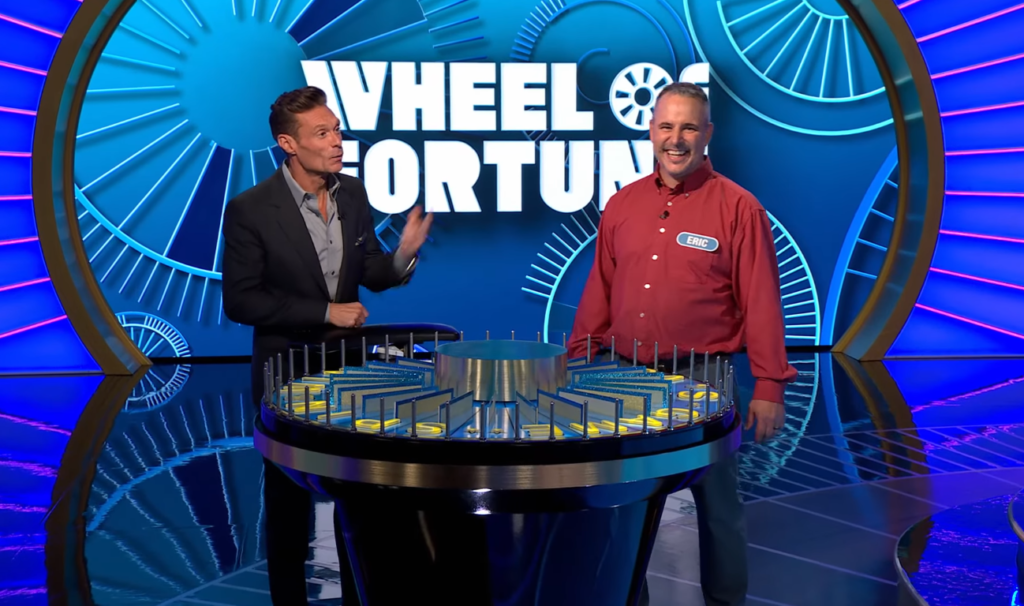
When the first main puzzle appeared, he solved “Shameless Shoe Shopaholic,” earning $3,500 and announcing himself as a serious contender. The audience responded enthusiastically, and his upbeat energy began carrying through the rest of the game.
Wheel of Fortune has always rewarded contestants who remain calm while balancing speed and accuracy. Throughout the episode, Handzel appeared focused but relaxed. He spun confidently, guessed carefully, and avoided the disastrous bankrupt wedges that often destroy strong performances.
Joanie White fought back with another successful solve: “Annual Chili Cook-Off.” That pushed her total to $4,650 and kept the competition close.
But the turning point arrived during the Prize Puzzle round.
Handzel solved “Don’t Forget Your Phone Charger,” securing not only additional cash but also a luxurious South American cruise to Argentina and Patagonia. The prize dramatically boosted his total winnings to $17,350 and gave him clear momentum heading toward the end of the game.
By that point, many viewers already believed he looked destined for the Bonus Round.
His confidence continued during the Triple Toss-Ups, where he solved two out of the three puzzles. Joanie White grabbed the final Toss-Up and later solved the last puzzle of the evening, “Gone on a Blind Date,” finishing with an impressive $8,350.
Camila Santos, despite playing competitively, unfortunately never managed to secure a major puzzle victory. Still, as Wheel of Fortune tradition guarantees, she left with the standard $1,000 consolation prize.
When the regular game ended, Eric Handzel stood victorious with more than $21,000 in cash and prizes.
That alone would make most contestants ecstatic.
But on Wheel of Fortune, the Bonus Round is where dreams become legendary—or heartbreaking.
As Handzel prepared for the final puzzle, host Ryan Seacrest noticed loud laughter echoing from the audience. Curious, Seacrest asked whether the booming laugh belonged to Handzel’s father.
Handzel smiled and confirmed it immediately.
The audience loved the moment.
His father Joe became an instant fan favorite despite barely speaking on camera. His infectious laughter brought warmth and humor to the episode, creating a family atmosphere that resonated with viewers at home.
Many fans later commented online that the relationship between father and son ended up being the most memorable part of the episode.
There was something refreshingly genuine about it.
In an era where television often feels overly polished or manufactured, Joe’s loud, uncontrollable laughter felt real. Viewers could sense pride, excitement, nervousness, and joy all mixed together. Every time the camera cut toward the family section, audiences saw people genuinely invested in Eric’s success.
That emotional connection made what happened next even harder to watch.
For the Bonus Round, Handzel selected the category “Around the House.”
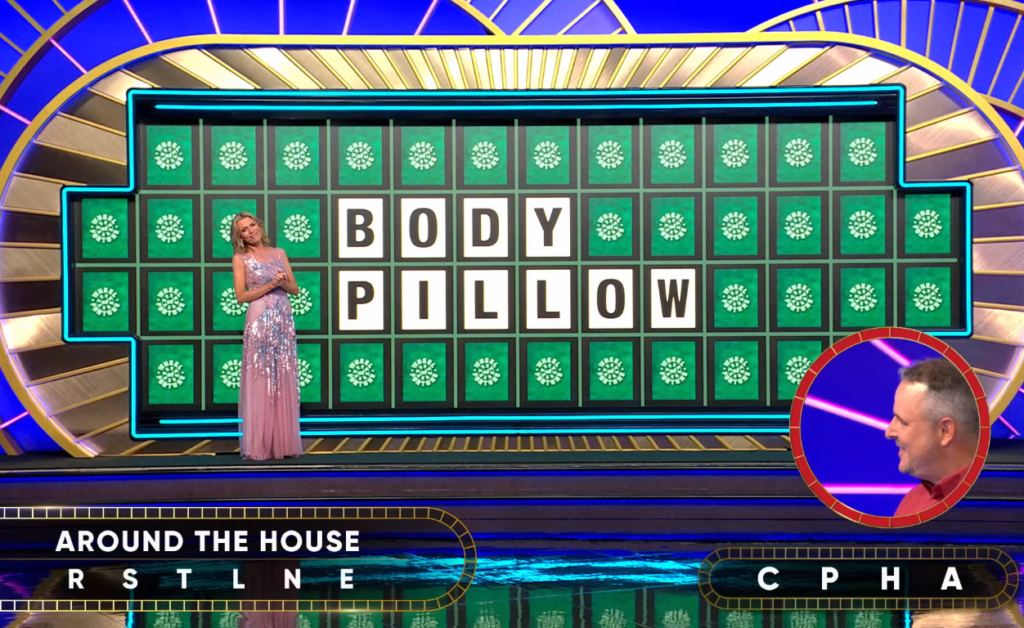
Traditionally, that category can be unpredictable. Sometimes it produces simple answers like “Coffee Table” or “Kitchen Window.” Other times, contestants face unusual household terms they rarely use in daily life.
Like every Bonus Round contestant, Handzel received the standard letters R, S, T, L, N, and E.
After those letters appeared, he chose additional letters: C, P, H, and A.
The board then displayed:
_ _ _ _ P _ L L _ _
At first glance, many viewers immediately recognized the answer.
But inside the studio, under crushing pressure, things looked very different.
The timer began counting down.
Handzel first muttered “pulley,” clearly trying to force the word structure into something familiar. Then he pivoted toward “pillow.” Suddenly, he understood the second word but struggled desperately to connect it to the first.
“Bed pillow.”
“Throw pillow.”
“Pillow.”
His guesses became increasingly frantic as time disappeared.
Then the buzzer sounded.
The correct answer appeared:
“Body Pillow.”
The audience groaned collectively.
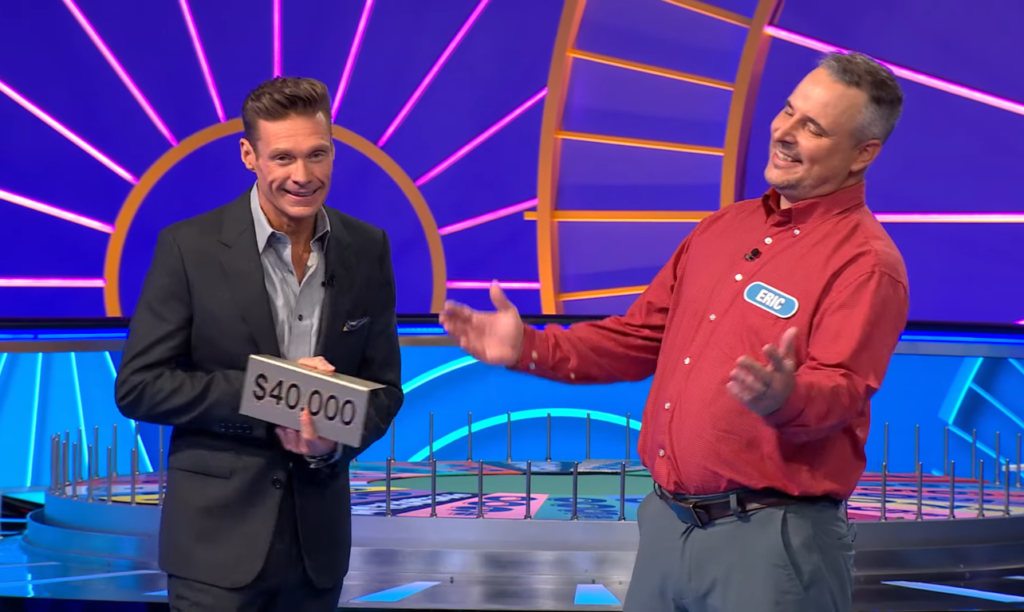
Ryan Seacrest revealed the lost prize: an additional $40,000.
Had Handzel solved the puzzle, his total winnings would have soared past $61,000.
Instead, the money vanished instantly.
For a brief moment, the disappointment on Handzel’s face captured exactly why Wheel of Fortune remains one of television’s most emotionally effective game shows. The losses often feel more dramatic than the victories because viewers can so clearly imagine themselves standing there.
What made the moment especially memorable was Handzel’s immediate honesty afterward.
When Seacrest jokingly referenced body pillows, Handzel admitted he actually used one himself while sleeping.
The crowd burst into laughter.
Even Seacrest joined the fun, joking, “I use one every night too.”
The humor softened the sting slightly, but fans online still could not believe the miss.
Within hours, clips of the Bonus Round spread across YouTube, Facebook, TikTok, and discussion forums. Reactions varied wildly.
Some viewers argued the puzzle was among the easiest Bonus Round solutions in recent memory.
One commenter wrote:
“Wow, I actually guessed ‘Body Pillow’ correctly—and it was just a lucky shot!”
Another viewer commented:
“We don’t even own body pillows, but the answer still felt obvious.”
Others defended Handzel passionately.
Many people pointed out that watching from home is completely different from standing on a stage with thousands of dollars at stake.
The human brain behaves differently under stress.
Psychologists have long studied how pressure affects memory recall and problem-solving ability. Even highly intelligent people can struggle with simple tasks when anxiety spikes. That phenomenon explains why athletes miss easy shots, musicians forget lyrics, and contestants fail puzzles they normally would solve instantly at home.
Several fans compared Handzel’s miss to famous Wheel of Fortune blunders from previous years.
The show has a long history of shocking mistakes and painful near-wins. Sometimes contestants mispronounce obvious words. Other times they guess nonsensical phrases while viewers scream answers at their televisions.
That mixture of suspense and unpredictability is exactly why audiences remain loyal decade after decade.
Still, many viewers insisted this particular puzzle felt unusually cruel because the answer seemed so accessible once revealed.
The phrase “Body Pillow” is extremely common in modern culture. Retail stores sell them everywhere. Social media jokes reference them constantly. Younger audiences especially recognized the term immediately.
Yet language becomes slippery under pressure.
Once Handzel locked onto “pillow,” his brain likely raced through familiar combinations as the clock destroyed his focus. “Body” may have been sitting just outside conscious reach the entire time.
That tiny mental gap cost him $40,000.
The incident also reignited discussions about Bonus Round difficulty overall.
Some longtime fans believe recent puzzles have become harder and more abstract. Others argue contestants simply panic too easily during the final countdown.
Wheel of Fortune producers face a difficult balance. If Bonus Round puzzles become too easy, massive payouts happen constantly and suspense disappears. If puzzles become impossibly difficult, audiences grow frustrated and contestants feel defeated.
The “Body Pillow” moment somehow managed to trigger both reactions simultaneously.
Some viewers called it embarrassingly simple.
Others insisted it was deceptively tricky because only two words were available and the first lacked obvious letters.
The debate spread widely online, turning Handzel’s miss into one of the week’s most discussed television moments.
Yet amid all the reactions, jokes, and commentary, one detail continued standing out: his father’s laughter.
Again and again, viewers mentioned Joe Handzel.
Not because he mocked his son, but because his loud, supportive energy created an unexpectedly emotional backdrop for the episode.
Family support matters enormously on game shows.
Contestants often describe the experience as emotionally overwhelming. Lights, cameras, travel, rehearsals, and high stakes combine into a surreal environment. Having loved ones nearby provides grounding and comfort.
Throughout the episode, Joe’s laughter reflected pride more than anything else.
Even after the loss, viewers sensed the family remained grateful for the experience itself.
That perspective may ultimately matter more than the money.
After all, Eric Handzel still walked away with over $21,000 in winnings plus an incredible vacation to South America. Most contestants would consider that life-changing success.
But human psychology focuses heavily on near-misses.
Studies show people often feel worse losing a possible reward than they feel happy about gaining a smaller one. Missing out on $40,000 after coming extremely close naturally creates stronger emotions than simply winning $21,000 outright.
That emotional contrast explains why viewers became so invested.
People saw themselves in the moment.
Everyone has experienced situations where an answer arrived one second too late. Everyone has replayed missed opportunities in their mind afterward.
What if I had said it sooner?
What if I stayed calmer?
What if one small detail changed everything?
Those questions linger long after game shows end.
For Handzel, however, the episode likely also brought pride.
He played exceptionally well overall.
He solved multiple important puzzles, dominated key rounds, earned a dream vacation, entertained audiences, and handled disappointment with grace and humor. Many contestants crumble emotionally after devastating Bonus Round losses. Handzel instead laughed along with Seacrest and stayed positive despite the heartbreak.
That composure impressed many fans.
Several viewers specifically praised his attitude online, saying his good sportsmanship made the loss easier to watch.
In today’s entertainment environment, audiences increasingly value authenticity. Contestants who react honestly—whether through joy, sadness, laughter, or disappointment—often become far more memorable than those who simply win money.
Handzel achieved that memorability.
Ironically, had he solved “Body Pillow,” the episode might have faded quickly into the endless stream of successful Bonus Rounds.
Instead, the near-miss transformed it into viral television.
Years from now, many Wheel of Fortune fans will still remember the Yankees supporter who lost $40,000 because “Body Pillow” would not come to him in time.
But they may remember something else too.
A father laughing loudly in the audience.
A son smiling nervously onstage.
A family sharing a once-in-a-lifetime moment together under bright studio lights.
Because while money creates headlines, emotion creates memory.
And in the end, that may be why this particular Wheel of Fortune episode resonated so deeply with viewers everywhere.
The puzzle itself lasted only seconds.
The conversation around it lasted far longer.
Some people laughed.
Some groaned.
Some defended Eric passionately.
Others insisted they would have solved it instantly.
But almost everyone agreed on one thing:
Watching someone come so close to victory only to lose it at the very last second remains one of television’s most irresistible forms of drama.
For Eric Handzel, the words “Body Pillow” will probably follow him for years.
Friends will joke about it.
Family members will bring it up at holidays.
Strangers online may continue referencing the clip whenever difficult Bonus Rounds appear.
That is the strange reality of viral television moments. They become part of public memory almost overnight.
Still, there are certainly worse legacies to have.
He played well.
He entertained millions.
He handled disappointment with dignity.
And unlike many contestants who leave empty-handed, he still walked away with substantial winnings, unforgettable memories, and a family moment audiences genuinely loved watching.
Not every near-miss becomes a tragedy.
Sometimes it simply becomes a story people keep telling.
And somewhere in New York, there is probably still a Yankees fan hearing the phrase “Body Pillow” shouted at him by laughing friends while his father roars even louder than before.
