Snakebites are frightening because they happen fast and without warning. One moment someone is walking through tall grass, cleaning a backyard shed, hiking a quiet trail, or gathering firewood, and the next they feel a sharp sting followed by confusion and panic. For many people, fear takes over immediately. They imagine the worst possible outcome and rush to act without thinking clearly. Unfortunately, that panic can sometimes become more dangerous than the snakebite itself.
Across the world, thousands of people are bitten by snakes every year. Some bites are harmless, while others can become life-threatening within hours if not treated correctly. Venomous snakes can damage tissue, attack the nervous system, affect blood clotting, and interfere with breathing. However, survival rates improve dramatically when victims stay calm, follow proper first aid procedures, and receive medical care quickly.
The problem is that misinformation about snakebites remains everywhere. Movies, television, and old survival myths have convinced people to use dangerous techniques that can make injuries worse. Many still believe they should cut the wound, suck out venom, apply ice, or tie a tight tourniquet around the limb. Medical experts repeatedly warn that these actions can increase tissue damage, worsen circulation problems, and delay lifesaving treatment.
Knowing the correct first aid steps can make a critical difference during those first minutes after a bite. Calm actions save lives. Panic creates mistakes.
The first thing to understand is that not every snakebite injects venom. Some venomous snakes deliver what doctors call a “dry bite,” meaning little or no venom enters the body. Others release a dangerous amount that causes symptoms rapidly. Because it is impossible to know how serious the bite is at first, every snakebite should be treated as a medical emergency.
The moment a bite occurs, the priority is safety. Many people are bitten a second time because they try to kill, catch, or closely examine the snake. This is one of the most common mistakes. A frightened or injured snake may strike again. Instead of approaching it, victims should move away slowly and get to a safe location. If possible, try to remember the snake’s color, markings, or shape from a distance, but never risk another bite for identification.
Once away from danger, staying calm becomes extremely important. Fear and movement increase heart rate, which can spread venom through the bloodstream more quickly. Victims should sit or lie down immediately and avoid unnecessary motion. If someone else is present, they should provide reassurance and help keep the injured person still.
Calling emergency services should happen as soon as possible. Even if symptoms appear mild, medical evaluation is essential. Venom effects may take time to develop, and some dangerous complications are not immediately obvious. Quick transportation to a hospital can dramatically improve outcomes.
If the bite occurred on an arm or leg, remove rings, watches, bracelets, tight clothing, or shoes before swelling begins. Snakebite swelling can become severe within minutes, turning small objects into dangerous constricting bands that cut off circulation.
Positioning also matters. The bitten limb should remain still and generally be kept at or slightly below heart level. Excessive movement increases venom spread. Splinting the limb gently with a stick or rigid support can help reduce motion during transport.
Cleaning the wound lightly with soap and water is acceptable, but aggressive washing should be avoided. Doctors may later use traces of venom on the skin for identification purposes. The wound should then be covered with a clean, dry dressing.
One of the biggest myths surrounding snakebites involves tourniquets. Many people believe tightly tying off a limb will stop venom from spreading. In reality, tourniquets can trap venom in one area, causing catastrophic tissue destruction. They may also cut off blood flow completely, increasing the risk of permanent injury or amputation. Modern medical advice strongly discourages their use in most snakebite situations.
Another dangerous myth involves cutting the bite open and sucking out venom. This method has appeared in movies for decades despite having almost no medical benefit. Cutting the wound increases infection risk and damages surrounding tissue. Attempting to suck out venom is ineffective and can expose the helper to venom through cuts or sores in the mouth.
Applying ice is also discouraged. Although people often use ice for swelling and injuries, snake venom can already compromise blood flow. Ice may worsen tissue destruction and increase complications.
Alcohol and caffeine should also be avoided. These substances can affect heart rate, circulation, and hydration, potentially worsening symptoms.
Some snake venoms attack the nervous system, while others destroy tissue or interfere with blood clotting. Because symptoms vary widely, victims should watch carefully for warning signs while waiting for medical care.
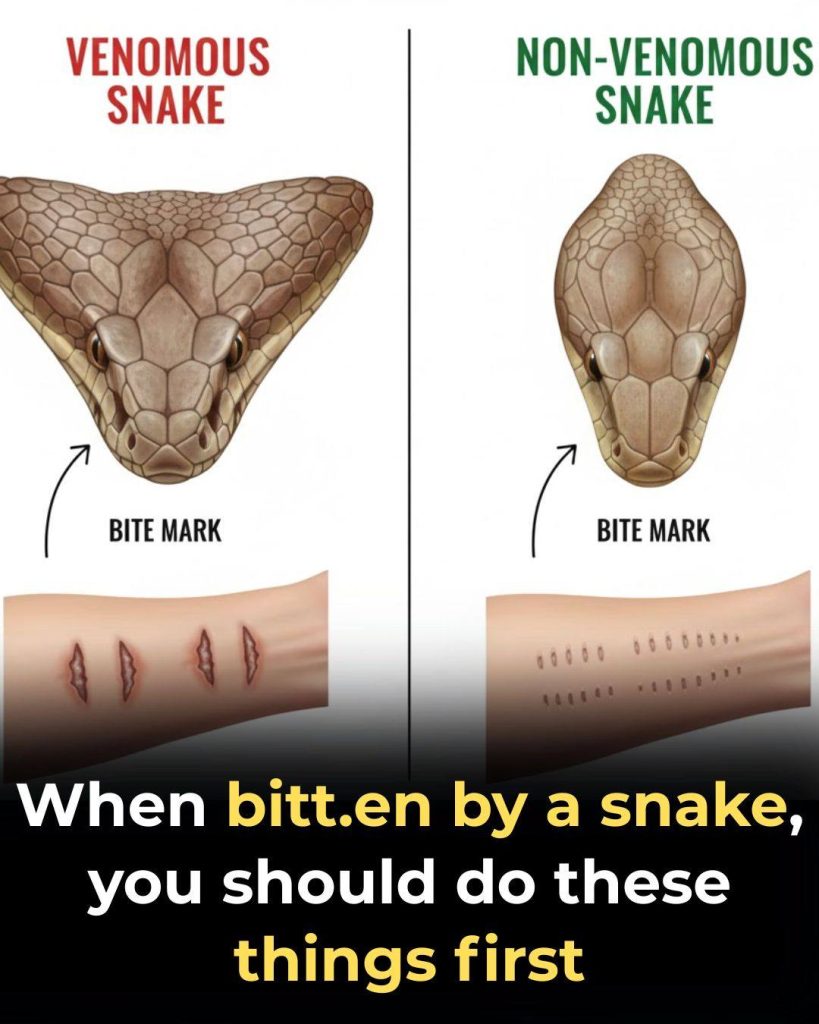
Common symptoms include severe pain, swelling, bruising, nausea, dizziness, sweating, weakness, numbness, and difficulty breathing. Some bites produce visible fang marks, while others may leave only scratches. Swelling that spreads rapidly is especially concerning.
Neurotoxic venom can cause drooping eyelids, blurred vision, trouble speaking, muscle weakness, or paralysis. Hemotoxic venom may lead to uncontrolled bleeding, dark urine, or severe swelling. Certain bites can trigger shock, where blood pressure drops dangerously low.
Children face especially high risks because venom affects their smaller bodies more quickly. Elderly individuals and people with existing medical conditions may also experience more severe complications.
Pets are vulnerable too. Dogs are often bitten while investigating snakes in yards or on trails. Signs in animals may include swelling, collapse, bleeding, shaking, or breathing difficulty. Immediate veterinary care is critical.
In remote areas where emergency response may take longer, keeping the victim calm and still becomes even more important. Rescue teams recommend minimizing walking whenever possible. If safe transportation is available, victims should be carried rather than allowed to hike long distances.
Pressure immobilization bandaging is sometimes recommended for certain highly neurotoxic snake species in specific regions such as Australia. However, techniques vary depending on the snake involved, and incorrect application can be harmful. Because advice differs globally, people should follow guidance from local medical authorities whenever possible.
Hospitals treat venomous snakebites using antivenom when necessary. Antivenom works by neutralizing venom toxins before they cause further damage. Doctors monitor patients carefully for allergic reactions, breathing problems, tissue damage, clotting abnormalities, and organ complications.
Not every bite requires antivenom. Doctors evaluate swelling progression, laboratory tests, neurological symptoms, and overall condition before deciding on treatment. Some patients may only need observation, fluids, pain management, wound care, and monitoring.
Recovery depends on several factors, including the snake species, amount of venom injected, bite location, body size, and how quickly treatment begins. Some people recover within days, while others may experience long-term complications such as nerve damage, chronic pain, or limited mobility.
Preventing snakebites is always safer than treating them. Most snakes prefer to avoid humans and only bite when threatened, cornered, or accidentally stepped on. Awareness dramatically reduces risk.
When hiking or working outdoors, wear boots and long pants whenever possible. Stay on clear paths and avoid placing hands or feet into areas you cannot see clearly, such as rock crevices, thick brush, wood piles, or tall grass. Use a flashlight at night in areas where snakes may be active.
Homeowners can reduce snake encounters by keeping grass trimmed, removing debris piles, controlling rodents, and sealing gaps around buildings. Snakes often follow food sources, especially mice and rats.
Parents should teach children never to touch or approach snakes, even small ones. Many bites occur because someone tries to pick up, tease, or kill the animal. A snake that appears dead can still bite reflexively.
Campers should shake out sleeping bags, boots, and clothing before use in snake-prone regions. Travelers visiting unfamiliar environments should learn which venomous species live locally and understand regional emergency procedures.
One reason snakebite myths persist is because dramatic stories spread faster than medical facts. Survival television and internet videos often prioritize entertainment over safety. Experts stress that scientifically supported first aid saves more lives than improvised “heroic” actions.
The psychological impact of snakebites can also be severe. Many victims develop anxiety or fear long after physical wounds heal. Some become afraid of outdoor activities entirely. Emotional recovery is sometimes overlooked but can be an important part of healing.
Globally, snakebite envenomation remains a major health challenge, especially in rural agricultural regions where medical care may be far away. Farmers, field workers, and people living in remote communities face the highest risks. In some countries, delayed treatment and lack of antivenom access contribute to thousands of preventable deaths each year.
Education remains one of the strongest tools against snakebite fatalities. Communities that understand proper first aid and prevention strategies consistently see better outcomes. Simple knowledge—staying calm, avoiding harmful myths, and seeking rapid medical attention—can change survival rates dramatically.
Wildlife experts also remind the public that snakes play important ecological roles. They control rodent populations and contribute to balanced ecosystems. Fear often leads to unnecessary killing of snakes, including harmless species. Respecting wildlife while maintaining safe distance is the healthiest approach.
It is important to remember that many symptoms of panic can mimic venom effects. After a bite, victims may experience rapid heartbeat, shaking, sweating, dizziness, or hyperventilation from fear alone. This does not mean the situation should be ignored, but it highlights why calm reassurance matters so much.
If you are helping someone who has been bitten, your attitude can influence their condition. Speak slowly. Encourage stillness. Focus on getting professional help instead of attempting risky treatments. Keeping the victim calm may slow venom spread and improve their chances.
Modern medicine has greatly improved snakebite survival. What once caused widespread fear and death is now highly treatable in many parts of the world when victims receive prompt care. The greatest danger often comes from delays, misinformation, and panic-driven decisions.
The key lessons are simple but powerful. Move away from the snake. Stay calm. Keep the bitten area still. Remove tight items before swelling begins. Call emergency services immediately. Avoid cutting, sucking, icing, or tightly binding the wound. Reach professional medical care as quickly as possible.
In emergencies, people rarely rise to the level of their hopes. They fall to the level of their preparation. Understanding snakebite first aid before disaster strikes may someday help save your life—or someone else’s.