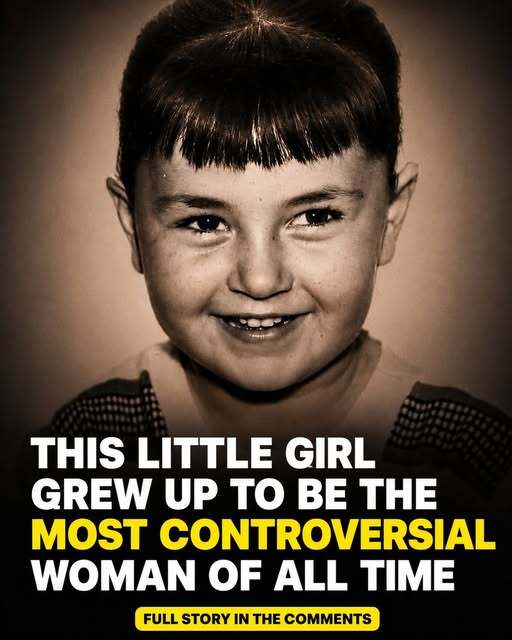
Long before Roseanne Barr became one of the most divisive figures in American entertainment, she was a frightened child growing up in a struggling household in Salt Lake City, trying to survive an environment shaped by instability, emotional tension, and quiet fear.
Her life story would eventually become one of the strangest and most dramatic transformations in modern celebrity culture.
At different moments, she was celebrated as a groundbreaking feminist comedian, condemned as a national embarrassment, praised as the authentic voice of working-class America, and criticized as a public figure consumed by anger and controversy.
What makes her story so haunting is that none of those identities fully erase the others.
They all exist together.
And understanding how she became both beloved and deeply polarizing requires returning to the beginning—long before fame magnified every wound she carried.
Childhood in Utah: Fear, Isolation, and Survival Through Humor
Roseanne Barr was born on November 3, 1952, into a working-class Jewish family in Salt Lake City during a period when antisemitism still shaped many American communities quietly but powerfully.
According to Barr, her parents often encouraged the family to conceal their Jewish identity publicly to avoid discrimination and social hostility.
For a child, that created confusion early.
She learned that acceptance sometimes depended on hiding parts of yourself.
Her father worked hard but reportedly struggled with anger and emotional volatility. Her mother maintained strict expectations inside a household often described as tense and unpredictable.
In that environment, humor became more than entertainment.
It became protection.
Barr developed a sharp tongue, fast instincts, and an ability to turn pain into comedy long before she ever stood on a stage.
People often assume comedians are naturally carefree.
In reality, many learn humor because laughter temporarily interrupts fear.
For Roseanne, comedy became survival.
The Accident That Changed Everything
At sixteen years old, Barr suffered a devastating car accident that resulted in a traumatic brain injury.
The aftermath reportedly included severe emotional instability, hallucinations, mood swings, and long-term psychological struggles that would influence much of her adult life.
Doctors feared she might never fully recover normally.
During her extended recovery, Barr spent enormous amounts of time isolated inside her own thoughts.
But somewhere inside that emotional chaos, she sharpened the observational instincts that later made her comedy feel startlingly honest.
She noticed contradictions.
Hypocrisy.
The exhaustion hidden beneath ordinary family life.
The resentment people swallowed quietly to survive.
Years later, those observations would become the foundation of a comedic voice unlike anything mainstream television had fully embraced before.
Breaking Into Comedy With a Voice Television Had Never Heard
When Roseanne Barr entered stand-up comedy during the late 1970s and early 1980s, American entertainment still expected women to appear polished, agreeable, attractive, and emotionally controlled.
Roseanne rejected nearly all of those expectations immediately.
She performed as loud, frustrated, sarcastic, exhausted, overweight, and unapologetically angry.
Her routines focused on unpaid domestic labor, financial anxiety, bad marriages, parenting stress, and the emotional burden carried by working-class women.
Audiences connected instantly because she sounded real.
Not glamorous.
Not carefully scripted.
Real.
While many sitcom mothers on television existed inside spotless homes filled with cheerful optimism, Roseanne spoke about bills, exhaustion, disappointment, and resentment.
Millions of women recognized themselves in her material for the first time.
Her comedy succeeded because she expressed emotions society often discouraged women from admitting publicly.
The Revolution of “Roseanne”
Everything changed when Roseanne premiered in 1988.
The sitcom became an enormous success and quickly transformed television culture.
The Conner family did not resemble traditional television households.
They struggled financially.
They argued loudly.
They worried about layoffs, debt, parenting mistakes, and emotional fatigue.
Their kitchen looked cluttered.
Their furniture looked worn.
Their lives felt believable.
For many Americans, particularly working-class viewers, the show reflected realities television usually ignored.
Roseanne Barr became more than a comedian.
She became a symbol.
To supporters, she represented authenticity in an industry built on artificial perfection.
Her character carried rage, humor, compassion, bitterness, and resilience all at once.
And audiences trusted her because they believed she understood ordinary struggle firsthand.
At the height of her success, Barr held enormous cultural influence.
Fame, Power, and Growing Volatility
But the same qualities that made Roseanne Barr powerful also made her increasingly volatile.
Success amplified long-standing emotional wounds, distrust, insecurity, and anger.
Behind the scenes, reports described frequent conflicts with writers, producers, network executives, and cast members.
Barr demanded increasing creative control and often reacted aggressively when she felt criticized or ignored.
Over time, the line between honesty and cruelty became harder to distinguish.
One of her earliest major national controversies erupted in 1990 when she performed the American national anthem before a baseball game in a deliberately mocking style before grabbing her crotch and spitting on the field afterward.
Millions viewed the act as disrespectful and offensive.
Barr defended it as satire.
The backlash marked a major turning point in how the public viewed her.
Before that moment, many Americans saw her primarily as rebellious.
Afterward, increasing numbers began seeing her as reckless.
Trauma, Rage, and Public Confession
Throughout the 1990s, Barr spoke openly about painful aspects of her childhood and family relationships.
She publicly accused relatives of abuse, discussed emotional trauma in interviews, and engaged in bitter feuds that often played out publicly.
Some supporters admired her willingness to discuss painful experiences openly.
Others felt uncomfortable with the increasingly chaotic nature of her public life.
What became clear over time was that fame did not heal Roseanne Barr’s wounds.
It magnified them.
Celebrity amplified every insecurity and every emotional impulse.
The larger her platform became, the harder it seemed for her to separate performance from personal conflict.
Controversy Escalates Beyond Satire
As years passed, Barr’s controversies grew increasingly difficult for many people to defend.
One particularly disturbing incident involved a controversial magazine photoshoot in which she posed as a domestic version of Adolf Hitler baking human-shaped cookies.
Barr described the imagery as dark satire connected to Jewish history and criticism of fascism.
Many viewers, however, viewed it as offensive and attention-seeking.
At the same time, her public interviews became increasingly erratic and combative.
Critics argued that the compassion once visible beneath her comedy was disappearing beneath bitterness and provocation.
Yet others continued defending her fiercely because they believed she represented anti-establishment rebellion against elite institutions and cultural expectations.
That division became central to her public identity.
Social Media and the Collapse of Boundaries
The rise of social media changed everything.
Platforms gave Roseanne Barr direct access to millions of people without editors, network executives, or publicists filtering her statements.
What once might have remained occasional controversies transformed into constant public conflict.
Barr increasingly shared conspiracy theories, inflammatory political commentary, personal attacks, and controversial statements online.
Supporters viewed her as fearless and uncensored.
Critics viewed her as increasingly consumed by paranoia, resentment, and extremism.
Public debate surrounding her became intensely polarized.
Some argued she was being unfairly targeted because of her political opinions.
Others believed her behavior had become dangerous and deeply irresponsible.
Mental health discussions also complicated public reactions.
Barr spoke openly about psychological struggles, medication, trauma, and emotional instability throughout different periods of her life.
But those explanations never fully resolved questions about accountability.
The Stunning Television Comeback
In 2018, something remarkable happened.
The revival of Roseanne premiered to enormous ratings success.
For a brief moment, it appeared possible that Roseanne Barr might achieve one of the greatest comeback stories in television history.
Audiences responded enthusiastically to the return of the Conner family.
Many viewers still connected deeply with stories centered on financial stress, working-class frustration, and family survival.
Networks celebrated the reboot immediately.
Commentators discussed whether Barr’s complicated public image might finally stabilize.
For the first time in years, it seemed possible that her legacy could shift back toward her groundbreaking contributions to television rather than constant scandal.
But the comeback collapsed almost instantly.
The Tweet That Ended Everything
In May 2018, Roseanne Barr posted a racist tweet targeting former presidential advisor Valerie Jarrett.
The backlash was immediate and overwhelming.
Even many longtime supporters struggled to defend the comment.
The network canceled the revival within hours despite its enormous ratings success.
The decision shocked the entertainment industry because of both the speed and scale of the collapse.
Barr apologized repeatedly afterward.
She blamed medication, exhaustion, political division, misunderstanding, and emotional instability.
But the damage could not be reversed.
For many observers, the incident symbolized more than a celebrity scandal.
It represented the destruction of someone who once held extraordinary cultural influence and emotional connection with ordinary Americans.
A Legacy Defined by Both Brilliance and Self-Destruction
Today, Roseanne Barr remains one of the most complicated figures in American entertainment history because her story contains both genuine achievement and profound collapse.
She changed television permanently.
Before Roseanne, working-class women rarely appeared onscreen with such honesty, frustration, humor, and emotional complexity.
She gave visibility to families struggling financially and emotionally in ways mainstream sitcoms often avoided.
Her comedy once carried deep empathy for overlooked people.
Yet over time, the anger fueling her brilliance increasingly seemed to overpower the compassion that once balanced it.
Fame intensified every unresolved wound.
Every insecurity.
Every instinct to attack before being hurt.
Some people still see her as a truth-teller punished for refusing to conform to powerful cultural expectations.
Others see her as a tragic example of how trauma, fame, rage, and unchecked public behavior can destroy even extraordinary talent.
What makes her story so unsettling is that both interpretations contain elements of truth.
The frightened little girl from Utah who survived through humor never completely disappeared.
Neither did the woman whose anger eventually alienated many of the very people who once saw her as their voice.
And perhaps that is why Roseanne Barr remains such a haunting figure in modern culture.
Because beneath the scandal, politics, outrage, and headlines lies a far more uncomfortable reality:
Sometimes the same pain that helps a person become extraordinary can also become the force that ultimately consumes them.