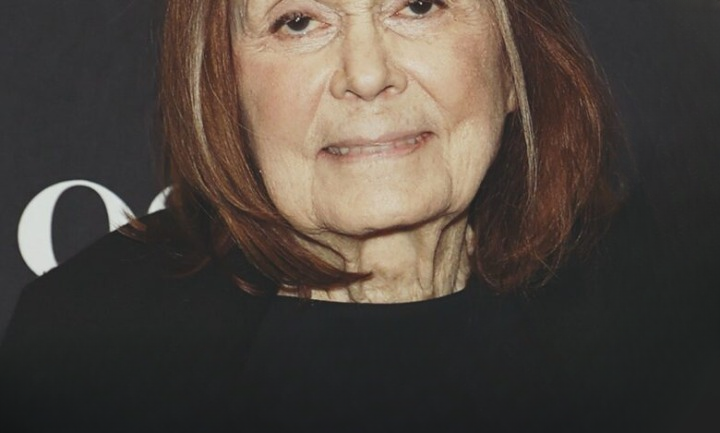
For more than six decades, Gloria Steinem has remained one of the most recognizable and influential voices in the global fight for women’s rights, equality, and social justice.
At ninety-two years old, her story represents far more than personal achievement. It reflects the evolution of modern feminism itself—a movement shaped through persistence, public resistance, difficult conversations, and the willingness of individuals to challenge systems long considered untouchable.
Across journalism, activism, political organizing, publishing, education, and media leadership, Steinem helped reshape how millions of people understood gender, power, and representation.
Her influence spans generations.
And even now, decades after first stepping into public life, her voice continues to resonate in conversations about equality, democracy, and human dignity around the world.
A Childhood Shaped by Instability and Responsibility
Gloria Steinem was born on March 25, 1934, in Toledo during a period when opportunities for women were far more limited than they are today.
Her early years were marked by instability.
Her father worked as a traveling salesman, and the family moved frequently throughout her childhood. After her parents separated, Steinem spent much of her youth caring for her mother, who struggled with severe depression.
The responsibility profoundly affected her education and personal development.
Unlike many children her age, Steinem experienced caregiving duties, emotional strain, and financial uncertainty at a very young age. Those experiences exposed her to realities many women faced privately but rarely discussed publicly during that era.
Yet alongside hardship came intellectual curiosity.
She read constantly, developed a passion for writing, and demonstrated an early desire to understand the broader social structures shaping people’s lives.
Many of the themes that later defined her activism—autonomy, fairness, visibility, and systemic inequality—were rooted in these formative years.
Education and a Growing Global Perspective
After graduating from high school, Steinem attended Smith College, where she studied government and graduated magna cum laude in 1956.
Her academic success earned her the prestigious Chester Bowles Fellowship, allowing her to spend two years in India.
That experience became transformative.
While abroad, she observed grassroots activism, nonviolent resistance movements, and community-led social organizing efforts firsthand. She also contributed to local publications and developed a broader understanding of how collective action could challenge deeply rooted systems of inequality.
The lessons she absorbed in India would later become central to her work in the United States.
She began to see activism not simply as protest, but as a long-term process of organizing communities, changing narratives, and creating cultural shifts capable of reshaping institutions.
Journalism and the Article That Changed Everything
When Steinem returned to New York City in the early 1960s, she began working as a freelance journalist.
At the time, journalism remained heavily dominated by men, and women were often assigned lifestyle stories or entertainment coverage rather than serious political reporting.
Steinem pushed against those limitations immediately.
Her major breakthrough came in 1963 with the publication of her now-famous undercover article, “I Was a Playboy Bunny.”
For the story, she worked inside a Playboy Club while documenting the working conditions women experienced there.
The exposé revealed issues involving sexism, exploitation, workplace expectations, and gender inequality.
The article attracted national attention.
More importantly, it established Steinem as a fearless journalist willing to investigate institutions many others avoided criticizing publicly.
She demonstrated that reporting could be both deeply personal and politically significant.
Becoming a Central Voice in the Women’s Liberation Movement
By the late 1960s and early 1970s, the women’s liberation movement in the United States was gaining momentum rapidly.
Steinem emerged as one of its most visible public voices.
Her writing for New York Magazine explored changing political and social realities while challenging traditional expectations surrounding gender roles, labor, family life, and representation.
Unlike many activists who focused exclusively on legislation or protest, Steinem understood the importance of communication and public storytelling.
She had a rare ability to translate complicated political issues into language ordinary people could connect with emotionally and intellectually.
That skill helped broaden the movement’s reach significantly.
In 1971, she co-founded the National Women’s Political Caucus alongside influential figures including Betty Friedan, Shirley Chisholm, and Bella Abzug.
The organization sought to increase women’s participation in politics by supporting female candidates and encouraging broader political engagement.
At a time when women remained severely underrepresented in public office, the initiative marked a significant cultural and political shift.
The Revolutionary Impact of Ms. Magazine
That same year, Steinem helped launch Ms. magazine.
Initially introduced as a special section within New York magazine, it quickly became a standalone publication and one of the most influential feminist media platforms in modern history.
The magazine addressed topics mainstream publications often ignored or minimized, including:
- Workplace discrimination
- Reproductive rights
- Domestic violence
- Sexual harassment
- Gender inequality in education and employment
For many readers, Ms. magazine provided language and validation for experiences they previously believed were isolated or unimportant.
It changed media culture permanently.
More importantly, it demonstrated that journalism could function not merely as observation, but as a tool for social transformation.
Public Speaking, Grassroots Organizing, and National Influence
Throughout the 1970s and 1980s, Steinem traveled extensively across the United States speaking at universities, rallies, conferences, and community events.
Her speeches energized audiences and encouraged political participation, especially among young women seeking broader opportunities and representation.
She became deeply involved in advocacy surrounding the Equal Rights Amendment, which aimed to guarantee equal legal rights regardless of sex.
Although the amendment ultimately failed to achieve ratification, the campaign itself helped elevate national discussions about gender equality dramatically.
Steinem’s visibility also made her a target for criticism.
Public conversations about feminism became increasingly polarized during this period. Some viewed the movement as essential progress, while others perceived it as threatening traditional structures and expectations.
Despite controversy, Steinem remained committed to dialogue, coalition-building, and long-term organizing efforts.
Building Organizations That Empowered Others
Beyond journalism and public speaking, Steinem dedicated enormous energy toward institution-building.
She helped establish organizations designed to support activism, amplify marginalized voices, and create opportunities for women in leadership and public life.
Among them were the Women’s Action Alliance and the Ms. Foundation for Women.
These organizations funded grassroots initiatives, supported emerging activists, and worked to address inequality across multiple social and economic sectors.
In the 1990s, Steinem also helped launch Take Our Daughters to Work Day, encouraging young girls to explore professional possibilities and imagine futures beyond traditional limitations.
The initiative reflected one of Steinem’s longstanding beliefs: representation matters because imagination shapes opportunity.
Expanding Influence Through Media Leadership
Steinem’s advocacy extended further into media through the creation of the Women’s Media Center, which she co-founded alongside Jane Fonda and Robin Morgan.
The organization focuses on increasing women’s visibility and representation across journalism, broadcasting, and digital media.
Steinem long argued that cultural storytelling shapes political reality.
Who gets heard.
Who gets believed.
Who gets centered.
Who gets ignored.
Media representation, in her view, was never merely entertainment—it was deeply connected to power.
Writing That Blended Personal Reflection and Social Critique
Throughout her career, Steinem authored several influential books, including:
- Outrageous Acts and Everyday Rebellions
- Revolution from Within
- Moving Beyond Words
- My Life on the Road
Her writing style combined memoir, political analysis, journalism, and cultural critique in ways that made complex social issues accessible to broad audiences.
Rather than separating personal experience from political conversation, she often argued the two were deeply connected.
That perspective helped shape modern feminist discourse significantly.
Recognition and Cultural Legacy
In 2013, Gloria Steinem received the Presidential Medal of Freedom, the highest civilian honor in the United States.
The recognition acknowledged decades of contributions to civil rights, women’s equality, journalism, and democratic participation.
By that point, her influence had already extended globally.
Universities studied her writings.
Historians documented her role in modern feminism.
Activists across generations cited her work as foundational to their own organizing efforts.
Personal Choices and Public Conversations
Steinem also spoke openly about personal autonomy and societal expectations surrounding women’s lives.
In 2000, she married David Bale, who passed away in 2003.
She did not have biological children, a decision she discussed publicly in conversations about personal freedom and the importance of allowing women to define fulfillment on their own terms.
For Steinem, feminism was never about forcing identical life choices.
It was about expanding the freedom to choose.
Continuing Influence Into Her Nineties
Even in her nineties, Gloria Steinem continues speaking, mentoring younger activists, participating in public events, and contributing to discussions surrounding democracy, equality, and social justice.
Her longevity within public life is remarkable not only because of her age, but because of her continued relevance across changing generations.
The issues she spent decades addressing—representation, bodily autonomy, workplace equality, political participation, and systemic discrimination—remain central to contemporary public discourse worldwide.
A Legacy Larger Than One Individual
Gloria Steinem’s legacy extends far beyond individual accomplishments.
She helped reshape language itself around equality and gender.
She contributed to expanding opportunities for women in politics, journalism, media, and public leadership.
She challenged institutional norms many people once considered permanent.
Most importantly, she demonstrated how storytelling, organizing, education, and persistence can combine to create long-term social change.
Her life reflects a larger truth about activism:
Meaningful progress rarely happens quickly.
It requires generations of people willing to speak, organize, question systems, and continue working even when change feels painfully slow.
At ninety-two years old, Steinem remains not merely a historical figure, but a living symbol of endurance, courage, and public engagement.
Her story continues to remind people around the world that social movements are built not through single moments of victory, but through decades of collective effort, difficult conversations, and the refusal to accept inequality as inevitable.