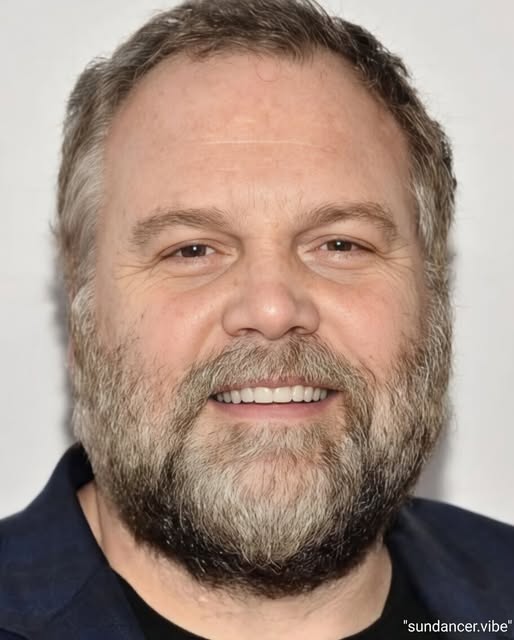
For most actors, success arrives attached to celebration. Fame usually brings admiration, attention, and opportunity. But for one rising Hollywood performer in the late 1980s, the role that launched his career also created an emotional crisis he never expected. The transformation that made audiences remember him forever left him struggling to recognize himself, separated him from ordinary social life, and blurred the line between fiction and reality so completely that strangers began treating him like the disturbed character he portrayed on screen.
That actor was Vincent D’Onofrio.
Long before he became famous for intense performances in crime dramas, psychological thrillers, and major Hollywood productions, D’Onofrio was simply another young actor trying to survive in New York City while pursuing a dream almost everyone told him was unrealistic. He did not come from wealth or industry privilege. He worked ordinary jobs, lived modestly, and spent years trying to prove himself in a profession filled with rejection.
Then one audition changed everything.
When legendary filmmaker Stanley Kubrick began casting his Vietnam War masterpiece Full Metal Jacket, he searched for someone capable of portraying Leonard Lawrence, the overweight, emotionally fragile Marine recruit whose tragic psychological collapse becomes one of the film’s most unforgettable storylines. The role demanded more than acting ability. It required total surrender.
D’Onofrio agreed to transform himself completely.
At the time, he was athletic, lean, and conventionally handsome, with thick dark curls and the appearance of a classic young leading man. Kubrick, however, wanted something entirely different. He wanted vulnerability. Awkwardness. Physical heaviness. Emotional discomfort visible before the character even spoke.
To achieve that transformation, D’Onofrio gained an astonishing amount of weight—roughly seventy to eighty pounds according to numerous interviews over the years. The physical change became one of the most extreme actor transformations Hollywood had ever seen at the time. He shaved his head, altered his posture, changed his movement, and immersed himself so deeply into the role that the person audiences saw on screen barely resembled the young actor who had originally auditioned.
The process was exhausting.
Unlike modern productions that often rely heavily on digital effects or shorter shooting schedules, Kubrick’s filmmaking style demanded relentless repetition and emotional endurance. The training scenes in the film were physically punishing even for actors in peak condition. D’Onofrio performed them carrying enormous additional weight while enduring repeated takes under Kubrick’s famously perfectionist direction.
Yet the physical discomfort eventually became the least surprising consequence of the experience.
The real shock came after the movie’s release.
Before filming, D’Onofrio had spent years moving through the world unnoticed. Suddenly audiences everywhere recognized him—but not as Vincent D’Onofrio. They saw Leonard Lawrence. The tragic, mentally unstable recruit nicknamed “Gomer Pyle” inside the story became so deeply associated with the actor that many viewers unconsciously merged fiction with reality.
Women who once found him attractive reportedly avoided him entirely after seeing the film. Strangers treated him differently in public. Some people assumed he was unintelligent because of the character he portrayed. Others spoke to him slowly or awkwardly, as though the role reflected his actual personality rather than an extraordinary acting performance.
The transformation that earned him recognition also erased his previous identity in the eyes of many viewers.
For a young actor still trying to establish confidence within the industry, the experience felt emotionally disorienting. Fame arrived hand in hand with misunderstanding.
Ironically, that misunderstanding existed because his performance had been so convincing.
Born in Brooklyn and raised partly in Florida after his parents divorced, D’Onofrio’s early life was shaped by instability and adjustment. He developed a naturally introspective personality, often retreating into imagination and observation rather than attention-seeking behavior. Those quiet traits later became valuable tools as an actor because they allowed him to study human behavior deeply and inhabit emotionally complicated characters with unusual realism.
But before success arrived, survival mattered more than artistry.
Like many aspiring performers, D’Onofrio worked whatever jobs he could find while attending auditions and theater classes. He delivered flowers, worked as a nightclub bouncer, installed curtains, drove taxis, and took physically demanding labor jobs simply to pay rent. At one point, he even worked as a bodyguard for celebrities including Robert Plant and Yul Brynner.
Those years hardened him emotionally while teaching discipline and persistence. Nothing about his early career suggested overnight success. Acting opportunities arrived slowly, often through tiny productions and theater work that paid almost nothing.
Still, he remained intensely committed.
Friends and colleagues later described him as someone willing to disappear completely into a role. Vanity meant very little to him compared to emotional truth. That willingness eventually caught the attention of actor Matthew Modine, who encouraged D’Onofrio to audition for Kubrick’s war film.
The recommendation changed his life permanently.
Kubrick himself became fascinated by D’Onofrio’s willingness to transform. The director reportedly pushed him repeatedly to gain additional weight because he still appeared too physically capable for the vulnerable recruit Kubrick envisioned. D’Onofrio complied, sacrificing comfort, appearance, and eventually even parts of his personal confidence to make the character believable.
When Full Metal Jacket premiered, audiences were stunned.
The film’s brutal training sequences became legendary, particularly the emotional breakdown experienced by Leonard Lawrence under relentless humiliation from his drill instructor. D’Onofrio’s performance felt disturbingly authentic because he portrayed not just sadness or fear, but gradual psychological collapse. His expressions, body language, and emotional shifts made viewers deeply uncomfortable in ways few performances achieve.
Critics praised the role almost immediately.
Yet outside professional reviews, ordinary public reaction became far more complicated.
People often struggle separating actors from characters, especially when performances feel emotionally real. Many viewers unconsciously assume actors possess traits similar to the people they portray. For D’Onofrio, this became painfully obvious after the film’s release. Instead of being recognized as a talented young performer making a daring artistic sacrifice, he often found himself socially defined by the troubled fictional recruit audiences remembered most vividly.
The experience revealed something uncomfortable about fame itself.
Hollywood celebrates transformation publicly, but audiences rarely think about the psychological consequences performers experience afterward. Dramatic physical change affects not only careers but identity. When someone spends months reshaping their body, appearance, and emotional state for a role, returning mentally to ordinary life afterward is not always simple.
D’Onofrio later spoke openly about how strange it felt watching people react to him differently based entirely upon appearance. Before the film, he fit traditional standards of attractiveness associated with young Hollywood actors. Afterward, he became associated with instability, awkwardness, and emotional fragility because of the role.
The emotional confusion lingered even after the weight disappeared.
Fortunately, the physical transformation itself proved temporary. Within roughly a year, D’Onofrio returned close to his original size and appearance. But the lessons stayed with him permanently. He learned how quickly public perception changes. More importantly, he discovered that artistic commitment powerful enough to convince audiences completely can sometimes isolate the performer behind the character.
Rather than retreating from difficult roles afterward, however, D’Onofrio leaned even further into complexity.
Throughout the following decades, he quietly built one of Hollywood’s most respected careers—not by protecting his image, but by repeatedly disappearing into emotionally layered characters other actors avoided.
He appeared in films across multiple genres, refusing to limit himself to predictable roles. In every performance, audiences noticed the same quality first revealed in Full Metal Jacket: total commitment.
Years later, television introduced him to an entirely new generation through his unforgettable role as Detective Robert Goren in Law & Order: Criminal Intent. Unlike conventional television detectives, Goren felt emotionally complicated, intellectually intense, and psychologically unpredictable. D’Onofrio played him with extraordinary depth, creating a character viewers found both brilliant and deeply human.
The role transformed him once again into a household name.
Then came another reinvention.
When D’Onofrio portrayed Wilson Fisk, also known as Kingpin, in Daredevil, audiences witnessed the same fearless immersion that defined his earlier work. Fisk was physically intimidating yet emotionally wounded, violent yet vulnerable. Rather than portraying a simplistic villain, D’Onofrio created someone terrifying precisely because he felt emotionally real.
Critics praised the performance widely, with many calling it one of the greatest portrayals in modern comic-book television.
By then, it became obvious that D’Onofrio possessed a rare ability: he could make audiences uncomfortable while still making them emotionally invested. He understood that human beings are rarely simple. Even villains carry fear, loneliness, insecurity, and emotional contradiction beneath the surface.
That complexity became his trademark.
Off screen, however, his life remained quieter and far more introspective than many fans expected.
In the early 1990s, he entered a relationship with actress Greta Scacchi, and together they had a daughter, Leila George, who later pursued acting herself. In 1997, D’Onofrio married Dutch model Carin van der Donk. Their marriage lasted more than two decades and included periods of separation, reconciliation, and the pressures common within long-term celebrity relationships.
Together they raised two sons while balancing demanding careers and family responsibilities.
Despite his intimidating screen presence, interviews often revealed D’Onofrio as thoughtful, reflective, and surprisingly gentle in conversation. He spoke openly about childhood memories, artistic curiosity, and the emotional experiences shaping his performances. During adolescence, he developed unusual hobbies including magic tricks and sleight-of-hand performances learned partly from Cuban entertainers in Florida.
Those details contrasted sharply with the emotionally intense figures audiences associated with him on screen.
In many ways, that contrast explains why his career continues resonating decades after his breakthrough.
Vincent D’Onofrio never became famous through superficial charm or carefully managed celebrity branding. He became respected because audiences sensed authenticity in his performances. Whether portraying broken soldiers, obsessive detectives, or emotionally wounded criminals, he committed completely enough to make viewers believe the character existed beyond the screen.
That kind of acting carries risk.
Some performers protect themselves emotionally by maintaining visible distance between their identity and their roles. D’Onofrio often seemed willing to cross deeper into emotional territory instead. The result created unforgettable performances—but occasionally personal discomfort as well.
His Full Metal Jacket experience remains one of Hollywood’s clearest examples of how artistic transformation can affect not only careers but personal identity. Audiences celebrated the realism of Leonard Lawrence without always considering the human cost behind such total immersion.
Yet without that risk, the performance might never have become legendary.
Today younger audiences continue discovering D’Onofrio through streaming platforms, crime dramas, superhero series, and classic war films. Many are surprised learning the actor behind the emotionally shattered recruit in Full Metal Jacket later became one of television’s most commanding performers.
But that evolution reflects the deeper truth behind his career.
The role that temporarily damaged his confidence ultimately revealed his greatest strength.
He was never afraid to disappear.
While many actors spend careers trying to look attractive, powerful, or glamorous, Vincent D’Onofrio repeatedly chose truth over vanity. He understood something essential about memorable performances: audiences rarely remember perfection. They remember honesty. Vulnerability. Emotional risk.
That willingness to sacrifice comfort for authenticity turned a struggling young actor into one of Hollywood’s most respected character performers.
And decades later, people still cannot forget him—not because he protected his image, but because he transformed it completely whenever the story demanded it.