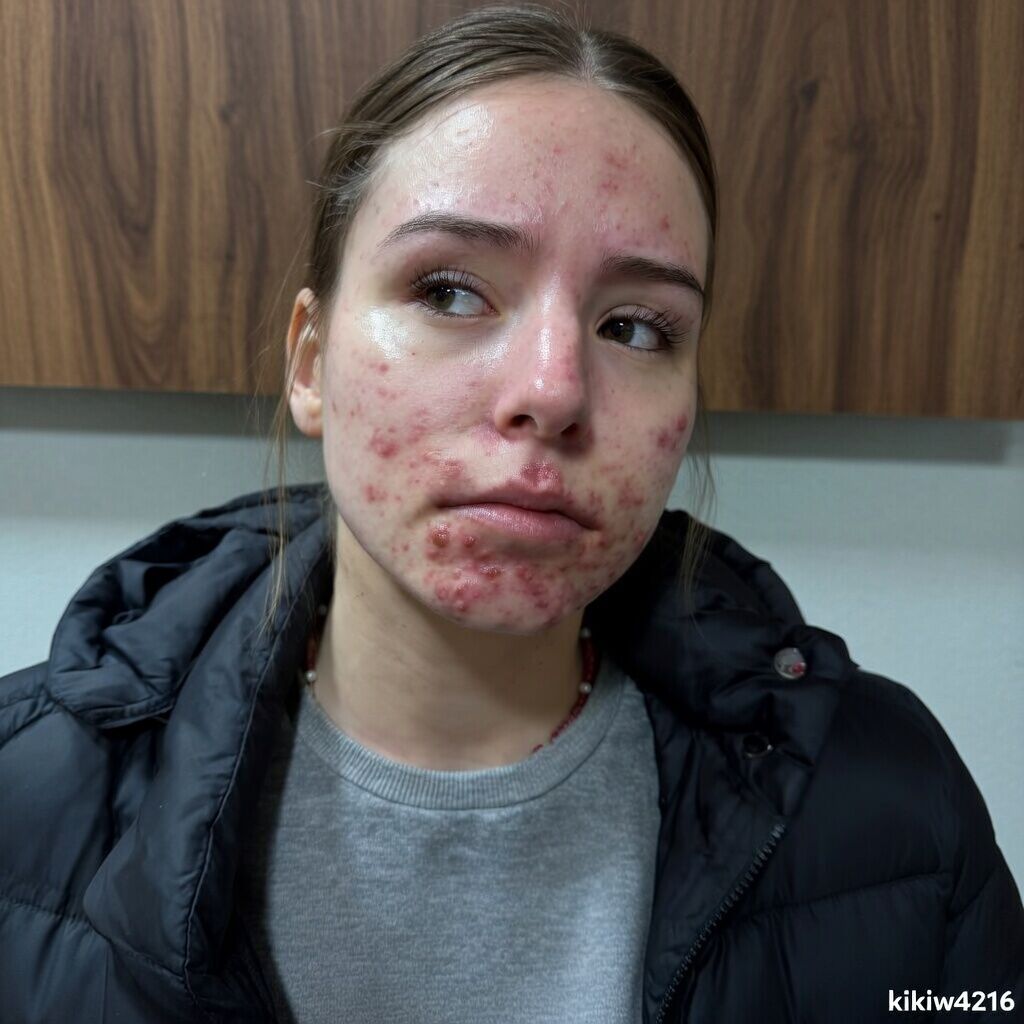
The young woman shown in the image carries the visible burden of severe inflammatory acne, a condition that affects millions of adolescents and young adults across the world yet is often misunderstood as nothing more than a cosmetic inconvenience. Her cheeks are swollen with painful cysts, her forehead dotted with inflamed pustules, and the redness stretching across her face reflects an internal biological process unfolding beneath the skin every single day. What appears on the surface is only the final stage of a complicated chain reaction involving hormones, genetics, immune activity, bacteria, lifestyle habits, and dietary triggers that combine to transform healthy skin into a landscape of recurring breakouts and chronic inflammation. For many individuals like her, acne becomes far more than a temporary teenage problem; it can deeply influence emotional health, confidence, social interactions, and overall quality of life.
Acne develops inside structures known as pilosebaceous units, which consist of hair follicles and sebaceous glands. These glands normally produce sebum, an oily substance designed to lubricate and protect the skin. Under balanced conditions, sebum travels smoothly through pores to the surface, keeping the skin flexible and hydrated. However, in acne-prone individuals, this process becomes disrupted by several overlapping factors that stimulate excess oil production while simultaneously interfering with the natural shedding of skin cells inside the follicle. Once the pore becomes clogged, the environment inside transforms into an ideal breeding ground for bacteria and inflammation, leading to the painful lesions visible on the young woman’s face.
The earliest stage of acne formation begins microscopically, long before a visible pimple appears. Hormonal signals stimulate the sebaceous glands to enlarge and release more oil than the skin requires. At the same time, dead skin cells lining the follicle fail to shed normally and instead stick together, forming a plug. This creates what dermatologists call a microcomedone, the invisible precursor to acne lesions. As oil and cellular debris accumulate, the blockage expands. If the pore remains closed, it forms a whitehead. If the pore opens and the material oxidizes when exposed to air, it appears as a blackhead. These noninflammatory lesions can later progress into painful inflammatory pimples when bacteria become involved.
One of the primary bacteria associated with acne is Cutibacterium acnes, formerly known as Propionibacterium acnes. This microorganism naturally lives on human skin and is usually harmless. Problems arise when excess oil and clogged pores create an oxygen-poor environment that allows the bacteria to multiply rapidly. As the bacterial population increases, it releases enzymes and inflammatory compounds that irritate the follicle wall. Eventually, the pressure inside the pore may cause it to rupture beneath the surface of the skin. When this occurs, the immune system reacts aggressively, sending white blood cells and inflammatory chemicals into the area. The result is the redness, swelling, tenderness, and pus associated with papules, pustules, nodules, and cystic acne.
For young women especially, hormonal fluctuations are among the strongest driving forces behind persistent acne. During puberty, the body increases production of androgens, a group of hormones that includes testosterone. Although testosterone is often associated with males, females produce it as well, and even small increases can strongly affect the sebaceous glands. These hormones bind to receptors within oil glands and trigger greater sebum production. As oil output rises, pores become increasingly vulnerable to blockage and bacterial growth.
Hormonal shifts do not end after puberty. Many women continue to experience cyclical acne linked to menstruation because estrogen and progesterone levels fluctuate throughout the menstrual cycle. Breakouts commonly intensify in the days leading up to menstruation when hormonal balance changes in ways that increase oil gland activity. The lower face, jawline, and chin are particularly sensitive to these hormonal changes, which is why acne often clusters in these areas. Stress further complicates the situation because elevated cortisol levels can indirectly stimulate androgen activity and worsen inflammation throughout the body.
Certain medical conditions can intensify hormonal acne even further. One of the most significant is polycystic ovary syndrome, commonly known as PCOS. Women with PCOS often experience elevated androgen levels, insulin resistance, irregular menstrual cycles, and persistent acne that is resistant to standard treatments. Even mild insulin resistance without full PCOS can influence acne severity because high insulin levels stimulate insulin-like growth factor-1, also known as IGF-1. This growth factor increases oil production, accelerates skin cell growth inside follicles, and contributes to inflammation. As these pathways remain activated over time, acne becomes more severe and difficult to control.
Genetics also play a profound role in determining who develops severe acne and who escapes with only occasional blemishes. If one or both parents experienced significant acne, the likelihood increases that their children will face similar struggles. Genetic variations influence sebaceous gland sensitivity, immune system reactivity, inflammatory signaling, and the rate at which skin cells are shed within follicles. Some individuals naturally produce thicker or stickier sebum that clogs pores more easily. Others inherit immune responses that overreact to bacterial activity, producing stronger inflammation and more extensive scarring.
Environmental and lifestyle influences add another layer to the problem. Pollution exposes the skin to oxidative stress, damaging the skin barrier and increasing inflammation. Lack of sleep interferes with hormonal regulation and tissue repair. Harsh skincare products can strip away protective oils, causing irritation that paradoxically stimulates more oil production. Heavy cosmetics and pore-clogging ingredients may trap debris within follicles and worsen congestion. Even frequent touching of the face can transfer bacteria and irritants onto already sensitive skin.
Among all lifestyle factors connected to acne, diet has become one of the most intensely studied and debated. For decades, many people dismissed the relationship between food and acne as a myth, but modern scientific evidence increasingly demonstrates that nutrition can strongly influence acne severity in susceptible individuals. While diet alone does not cause acne, certain foods can activate hormonal and inflammatory pathways that significantly worsen breakouts.
High-glycemic foods represent one of the clearest dietary triggers identified in acne research. These foods cause blood sugar levels to rise rapidly after consumption, forcing the body to release large amounts of insulin. Examples include white bread, sugary cereals, pastries, soda, candy, white rice, chips, and many processed snacks. Elevated insulin stimulates the production of IGF-1, which directly increases sebaceous gland activity and promotes excessive growth of skin cells inside follicles. This combination creates the perfect environment for clogged pores and inflammatory lesions.
In addition to influencing hormones, high-glycemic diets promote systemic inflammation throughout the body. Frequent spikes in blood sugar increase oxidative stress and inflammatory signaling, making the immune system more reactive when pores become clogged. The skin essentially becomes primed for exaggerated inflammatory responses, turning small blockages into large, painful cysts and nodules. Several clinical studies have shown that individuals who switch to low-glycemic diets often experience measurable reductions in acne lesion counts and oil production within weeks to months.
Dairy products are another major focus of acne research, especially milk. Multiple observational studies have linked milk consumption to higher rates of acne in adolescents and young adults. The relationship appears strongest with skim milk, though whole milk may also contribute in some individuals. Researchers believe this effect stems from several overlapping mechanisms. Milk naturally contains hormones and bioactive molecules designed to promote growth in calves. These compounds can survive processing and digestion, influencing human hormonal pathways related to sebum production and inflammation.
Milk consumption also stimulates insulin and IGF-1 levels, further amplifying the hormonal signals that drive acne development. Certain proteins in dairy, particularly whey and casein, may intensify these effects by promoting insulin release. For acne-prone individuals, frequent dairy intake can therefore sustain the very biological processes responsible for clogged pores and inflammation. While not everyone reacts negatively to dairy, many people with persistent acne report noticeable improvements after reducing or eliminating milk products for several weeks.
Chocolate is another commonly discussed trigger food. Research findings remain somewhat mixed, but several studies suggest that chocolate consumption may worsen acne in susceptible individuals. The problem likely involves a combination of sugar, dairy content, and inflammatory effects rather than cocoa itself. Milk chocolate especially contains refined sugar and dairy proteins that can stimulate insulin and IGF-1 activity. Some evidence also suggests that chocolate may alter immune responses and increase inflammatory cytokine production, contributing to more severe lesions.
Processed foods and fast foods further complicate acne management because they often combine multiple problematic elements simultaneously. Fried foods, packaged snacks, sugary beverages, and highly refined carbohydrates create inflammatory conditions inside the body while offering little nutritional support for skin health. Many processed foods contain excessive omega-6 fatty acids, trans fats, preservatives, and additives that may contribute to systemic inflammation. Over time, diets dominated by these foods can disrupt hormonal balance and worsen the severity of inflammatory skin conditions.
Although oily foods have traditionally been blamed for acne, the relationship is more nuanced than once believed. Eating greasy food does not directly transfer oil to the skin. However, diets high in saturated fats and unhealthy oils can alter the composition of sebum and influence inflammatory pathways within the body. Excessive intake of fried foods may therefore contribute indirectly to acne severity, especially when combined with high sugar consumption and poor overall nutrition.
On the other hand, certain dietary patterns appear protective against acne. Diets rich in vegetables, legumes, whole grains, fruits, nuts, seeds, and omega-3 fatty acids may help calm inflammation and support healthier skin function. Omega-3 fats found in fish like salmon and sardines possess anti-inflammatory properties that may counterbalance inflammatory signals linked to acne. Antioxidants from colorful fruits and vegetables help reduce oxidative stress and support tissue repair. Fiber-rich foods improve blood sugar stability, preventing the dramatic insulin spikes associated with high-glycemic diets.
Hydration also plays an indirect but meaningful role in maintaining skin health. Adequate water intake supports circulation, cellular repair, and the maintenance of a healthy skin barrier. While drinking water alone will not cure acne, dehydration can contribute to dullness, irritation, and impaired healing of inflamed lesions.
Stress deserves special attention because its impact on acne is often underestimated. Emotional stress activates the hypothalamic-pituitary-adrenal axis, increasing cortisol production and influencing inflammatory signaling throughout the body. Stress may also disrupt sleep patterns, encourage unhealthy eating habits, and trigger compulsive skin picking, all of which worsen acne outcomes. Students facing academic pressure, young adults struggling with relationships, and individuals dealing with social anxiety often notice significant flare-ups during emotionally demanding periods.
The psychological effects of severe acne can be devastating. Many individuals experience embarrassment, social withdrawal, low self-esteem, anxiety, and even depression because of persistent visible breakouts. Acne lesions located on the face are particularly distressing because they are impossible to hide completely. Young women frequently feel intense societal pressure regarding appearance, making severe acne emotionally exhausting. The emotional burden can become a vicious cycle because stress worsens inflammation, which then worsens acne and deepens emotional distress.
Another major concern associated with inflammatory acne is scarring. Deep cystic lesions can destroy collagen and damage the deeper layers of skin, leaving behind permanent indentations or raised scars long after active breakouts have healed. Post-inflammatory hyperpigmentation, especially in individuals with darker skin tones, may persist for months following inflammation. Early and effective treatment is therefore important not only for controlling active acne but also for minimizing long-term skin damage.
Proper skincare can support acne management, though many people unintentionally worsen their condition through harsh routines. Overwashing strips away protective oils and irritates the skin barrier, often triggering rebound oil production. Scrubbing aggressively can spread inflammation and damage healing lesions. Heavy products containing comedogenic ingredients may clog pores further. Dermatologists generally recommend gentle cleansing, noncomedogenic moisturizers, and sun protection to maintain skin barrier integrity while treating acne.
Medical treatment options vary depending on severity. Mild acne may respond to topical retinoids, benzoyl peroxide, or salicylic acid. Moderate to severe inflammatory acne often requires prescription medications such as oral antibiotics, hormonal therapy, or isotretinoin. Hormonal treatments like certain birth control pills and spironolactone can be especially effective for women with hormonally driven acne because they reduce androgen activity. Dermatologists may also recommend chemical peels, laser therapy, or scar treatments for individuals dealing with residual marks and textural damage.
However, even the most advanced medical treatments work best when combined with supportive lifestyle adjustments. Individuals who continue consuming large amounts of sugary foods, sleeping poorly, and ignoring chronic stress may struggle to achieve lasting improvement despite prescription medications. This is why holistic acne management increasingly emphasizes the interaction between internal health and skin appearance.
For the young woman described in the image, improvement likely requires patience and a multifaceted approach rather than a quick fix. Identifying dietary triggers, stabilizing blood sugar, reducing inflammatory foods, maintaining consistent sleep, managing stress, and following an evidence-based skincare routine can gradually calm the biological pathways driving her breakouts. Keeping a food and symptom journal may help reveal personal sensitivities to dairy, sugar, or specific processed foods. Small sustainable changes often produce better long-term outcomes than extreme restrictive diets or harsh treatment methods.
Importantly, acne should never be viewed as a sign of poor hygiene or personal failure. The condition arises from deeply rooted physiological processes influenced by genetics, hormones, immune responses, and environmental exposures that are often beyond an individual’s immediate control. Compassion and understanding are essential because many sufferers already experience profound emotional distress linked to their appearance.
As scientific research continues to uncover the intricate connections between nutrition, hormones, inflammation, and skin biology, the understanding of acne is steadily evolving beyond outdated myths. Increasing evidence suggests that what people eat can meaningfully influence how their skin behaves, particularly in those genetically predisposed to breakouts. This growing awareness offers hope because diet and lifestyle represent modifiable factors that individuals can actively improve in support of healthier skin.
For countless young adults like the woman described here, the path toward clearer skin is rarely immediate or simple. Yet with education, medical support, balanced nutrition, stress management, and consistent care, acne can become far more manageable over time. Understanding the true science behind pimples transforms the condition from a mysterious source of shame into a comprehensible biological process that can be addressed thoughtfully and effectively. That knowledge alone can empower individuals to move beyond frustration and begin building healthier habits that benefit not only their skin but also their long-term physical and emotional well-being.