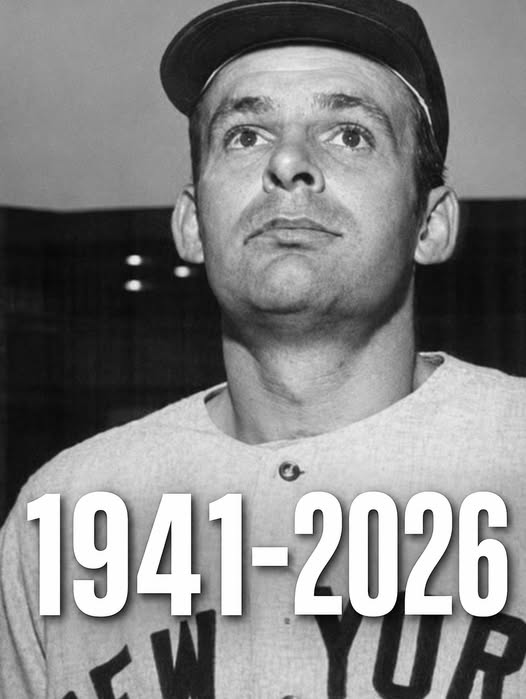
The death of Bobby Cox at the age of 84 closes one of the most respected and influential chapters in the history of Major League Baseball. Across generations, his name became inseparable from the Atlanta Braves, excellence in leadership, and a philosophy of baseball built on trust, discipline, loyalty, and consistency. For millions of fans, Bobby Cox was never simply a manager standing in the dugout. He became the emotional center of an organization that rose from irrelevance to dominance under his guidance and vision.
News of his passing sent waves of emotion through the baseball world. Former players, executives, broadcasters, and lifelong fans reflected not only on his extraordinary accomplishments but also on the kind of person he was away from the spotlight. Many managers are remembered for championships or tactical brilliance, but Bobby Cox earned something deeper and far rarer in professional sports: universal respect. Players trusted him completely. Rivals admired him. Fans loved him fiercely because they believed he genuinely cared about the people wearing the Braves uniform.
The Atlanta Braves organization described him as the greatest manager in franchise history, a statement few within baseball would challenge. His legacy stretched far beyond statistics and banners. Bobby Cox represented stability in a sport defined by pressure, failure, and constant change. He built a culture where players believed they could succeed, where talent flourished, and where accountability existed without fear or humiliation. That ability to lead human beings may have been his greatest gift of all.
Born on May 21, 1941, in Tulsa, Oklahoma, Bobby Cox developed his love for baseball at an early age. Raised primarily in California, he quickly displayed both athletic talent and a deep understanding of the game. Like many future baseball leaders, his playing career never fully reflected the greatness he would later achieve as a manager. Yet even during his years as a young player, coaches and teammates noticed qualities that separated him from others. He studied situations carefully, communicated naturally with teammates, and understood the emotional rhythms of baseball in ways many veterans never fully grasped.
Cox signed his first professional contract with the Dodgers organization in 1960. His climb through the minor leagues required patience and resilience, especially during an era when opportunities at the major league level were extremely difficult to earn. After years of hard work, he eventually reached the majors with the New York Yankees, primarily playing third base during the 1968 and 1969 seasons. Injuries, particularly persistent knee problems, limited his playing career and ultimately prevented him from remaining an everyday player in the majors.
For many athletes, such setbacks become devastating disappointments. For Bobby Cox, however, they became the beginning of something far greater.
Almost immediately after his playing career slowed, he transitioned into coaching and player development within the Yankees organization. Those years proved essential to his growth because they allowed him to observe baseball from an entirely different perspective. He learned how organizations functioned behind the scenes. He studied personalities, clubhouse dynamics, scouting, and long-term development. More importantly, he began understanding how leadership could shape the confidence and performance of an entire team.
By the mid-1970s, Cox had become highly respected within baseball circles for his intelligence and communication skills. In 1977, he joined the Yankees coaching staff under fiery manager Billy Martin during a championship season. Working within that intense environment exposed Cox to both the brilliance and volatility of major league leadership. While Martin managed through confrontation and emotion, Cox developed a calmer and steadier approach that would later define his own career.
In 1978, the Atlanta Braves offered Bobby Cox his first opportunity to manage at the major league level. At the time, the Braves were struggling to establish consistency and relevance. His first stint with the organization did not immediately produce championships or playoff appearances, but it planted important foundations for the future. Players respected his honesty and preparation, while executives admired his baseball instincts and long-term vision.
Still, baseball is often unforgiving, and after the strike-shortened 1981 season, Cox was dismissed as Braves manager. Many careers never recover from such setbacks, yet even then the organization continued to value his baseball mind. That lingering respect would eventually change the course of franchise history.
After leaving Atlanta, Cox became manager of the Toronto Blue Jays in 1982. At the time, Toronto remained a young franchise searching for legitimacy in the powerful American League East. Under Cox’s leadership, the Blue Jays steadily transformed from an inexperienced club into a legitimate contender. He emphasized patience, fundamentals, accountability, and player development. Over time, those principles created one of the strongest young rosters in baseball.
By 1985, the Blue Jays won 99 games and captured their first division title in franchise history. Cox’s reputation soared throughout the league. He was now viewed not merely as a capable manager but as one of baseball’s premier leaders. Yet in a surprising move, he chose to leave Toronto and return to Atlanta as the Braves’ general manager.
That decision would ultimately define his legacy forever.
When Bobby Cox returned to Atlanta in the mid-1980s, the Braves were once again struggling badly. Attendance lagged, expectations were low, and the organization lacked direction. Cox immediately focused on building a sustainable winner rather than chasing temporary success. He believed elite pitching formed the backbone of championship baseball, and he prioritized developing young talent capable of competing for years instead of months.
During this period, the Braves assembled what would become one of the greatest collections of talent in modern baseball history. Tom Glavine matured into an ace. John Smoltz emerged as a fierce competitor with overpowering stuff. Young stars such as David Justice, Ron Gant, Steve Avery, and eventually Chipper Jones helped create a foundation for long-term success. Cox played a major role in shaping both the roster and the organizational culture.
Then came one of the most important moments in Braves history.
In 1990, after another disappointing start to the season, Bobby Cox left the front office and returned to the dugout as manager. Few people realized how dramatically the franchise was about to change.
The following season, the Braves completed one of the greatest turnarounds in sports history. After finishing last in 1990, Atlanta surged to the National League pennant in 1991, captivating baseball fans nationwide with a worst-to-first transformation that seemed almost impossible. Their dramatic World Series battle against the Minnesota Twins remains one of the most celebrated Fall Classics ever played.
Although the Braves lost that series, a dynasty had officially begun.
From 1991 through the early 2000s, the Atlanta Braves became baseball’s model organization. Under Bobby Cox, they won an astonishing 14 consecutive division titles, a level of sustained excellence nearly unheard of in professional sports. Seasons with 95 or 100 wins became routine. Atlanta consistently developed talent, competed under pressure, and entered every year expecting to contend for championships.
What made the Braves especially remarkable was their consistency despite constant roster changes, injuries, and evolving competition. Baseball is a marathon built on endurance and mental toughness. Few organizations have ever maintained elite performance for such a long period. Bobby Cox made that possible by creating stability within the clubhouse.
Players repeatedly described him as a manager who trusted them completely. He believed elite athletes performed best when they felt supported rather than micromanaged. Pitchers loved throwing for Cox because he gave them confidence to work through adversity instead of immediately pulling them after mistakes. Veterans appreciated the professionalism he demanded, while younger players valued the patience he showed during difficult stretches.
One of the defining characteristics of Bobby Cox’s managerial style was his fierce loyalty to players. That loyalty became legendary through his famous confrontations with umpires. Cox was ejected from games 162 times during his managerial career, the most in baseball history. Yet those outbursts were rarely about personal anger. They were acts of protection and solidarity.
Players understood exactly what those arguments meant.
When Cox stormed from the dugout to defend a player after a disputed strike call or controversial ruling, he sent a message to the entire clubhouse: “I’m with you.” That emotional support created enormous trust between manager and team. Many former Braves later admitted they would do almost anything for him because they knew he always stood behind them publicly.
The pinnacle of Atlanta’s dynasty arrived in 1995.
After years of postseason heartbreak and criticism, the Braves finally captured the World Series championship by defeating the Cleveland Indians. For Atlanta fans, the victory represented validation for years of dominance. It also delivered the city’s first major professional sports championship, forever cementing Bobby Cox’s place in Southern sports history.
The images from that championship season remain iconic. Greg Maddux carving through lineups with surgical precision. Tom Glavine dominating under pressure. Chipper Jones emerging as the face of the franchise. Bobby Cox standing calmly in the dugout while an entire region celebrated around him.
Even after winning the World Series, however, criticism occasionally followed Cox because the Braves secured only one championship during their remarkable run of division titles. Some observers argued the dynasty underachieved in October despite its regular-season dominance.
Many players strongly rejected that narrative.
Former Braves stars repeatedly defended Cox by emphasizing the unpredictable nature of baseball’s postseason. Unlike other sports, baseball playoffs often hinge on momentum, injuries, timely hitting, or a single mistake. Sustained excellence over 162 games, they argued, provided a far more accurate measure of organizational greatness.
Regardless of outside criticism, few people within baseball questioned Bobby Cox’s brilliance or influence. Hall of Fame pitchers Greg Maddux, Tom Glavine, and John Smoltz consistently praised his leadership. Chipper Jones often described Cox as a second father. Younger managers studied his communication style and player-management techniques for decades.
Cox’s greatness extended beyond strategy because he understood the emotional side of sports. He recognized that players were human beings dealing with pressure, failure, family concerns, injuries, and self-doubt. Rather than governing through fear, he created an environment where athletes could breathe and trust themselves.
That philosophy made Atlanta a destination players respected deeply.
Throughout his managerial career, Cox accumulated 2,504 victories, placing him among the winningest managers in Major League Baseball history. Yet numbers alone never captured his true impact. What mattered more was the culture he created and the relationships he built.
When Bobby Cox retired after the 2010 season, baseball paused to honor one of its defining figures. Emotional tributes poured in from across the sport. Fans packed stadiums to celebrate him during farewell ceremonies. Opposing teams applauded him. Former players returned to express gratitude. It became clear that his influence reached far beyond Atlanta.
The Braves retired his No. 6 jersey and later inducted him into the team Hall of Fame. In 2014, he received baseball’s ultimate honor when he was inducted into the National Baseball Hall of Fame. Surrounded by former players and longtime friends, Cox delivered a speech reflecting the humility and loyalty that had defined his career. Rather than focusing on his own accomplishments, he praised players, coaches, scouts, trainers, and family members who had shared the journey with him.
Even after retirement, Cox remained deeply connected to the Braves organization. He frequently attended games, greeted former players, and served as a beloved ambassador for the franchise. Fans cherished seeing him at the ballpark because his presence symbolized continuity between generations of Braves baseball.
In 2019, Cox suffered a serious stroke that limited his public appearances. Nevertheless, he continued fighting with the same determination he had always shown throughout life. Family members, former players, and fans rallied around him during his health struggles, reflecting the immense affection people felt toward him.
Following news of his passing, tributes arrived from every corner of the baseball world. Former players described him as a mentor, protector, and father figure. Rivals praised his integrity and professionalism. Fans remembered the magical summers when Braves baseball dominated national television and October baseball became an expectation rather than a dream.
His death also carried additional emotional weight because it followed the passing of former Braves owner Ted Turner, whose vision helped transform the franchise into a national brand during the Cox era. Together, Turner and Cox reshaped the identity of Atlanta baseball and helped create one of the defining sports dynasties of the 1990s.
Yet beyond championships, records, and banners, Bobby Cox’s greatest legacy may simply be the way people felt about him.
In modern sports, where pressure often produces ego, bitterness, and division, Cox represented something steadier and more human. He believed in loyalty. He believed in patience. He believed people performed best when trusted and respected. Those values allowed him to build not only winning teams but lifelong relationships.
Players who spent years under Cox often spoke less about victories and more about how he treated them during failures. They remembered the confidence he gave them after terrible performances. They remembered private conversations during difficult personal moments. They remembered how fiercely he defended them publicly while holding them accountable privately.
That balance is incredibly rare.
For Braves fans, Bobby Cox will forever remain the face of the franchise’s golden era. His image walking slowly from the dugout, jaw clenched while arguing passionately with an umpire, became one of baseball’s most recognizable sights. His calm posture during tense moments conveyed confidence to entire stadiums. His loyalty to players inspired generations of fans who admired not only the winning but the way his teams carried themselves.
Long after records are broken and championships fade into history, Bobby Cox’s influence will continue living through the countless players, coaches, and executives shaped by his leadership. His philosophy helped define modern baseball culture, emphasizing communication, trust, and long-term development over fear or chaos.
The statistics will always secure his place among baseball immortals. The Hall of Fame plaque will forever honor his accomplishments. The division titles and World Series championship will remain permanent pieces of Braves history.
But Bobby Cox’s true greatness cannot be measured entirely by victories.
It lives in the respect he earned.
It lives in the loyalty players still feel toward him decades later.
It lives in the memories of fans who grew up believing Braves baseball represented professionalism, consistency, and pride because Bobby Cox stood at the center of it all.
And it lives in the enduring image of a manager who loved his players fiercely, defended them without hesitation, and spent an entire lifetime giving everything he had to the game of baseball.
For generations to come, Bobby Cox will be remembered not simply as a legendary manager, but as one of baseball’s finest human beings.