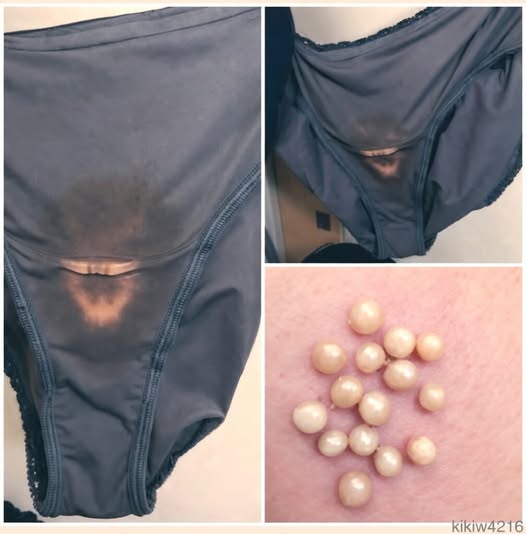
For years, many women have quietly noticed a curious and often puzzling phenomenon: lightened, bleach-like patches appearing in the crotch area of their underwear. These marks, usually found on darker fabrics, can look as though they were caused by harsh chemicals. For some, the discovery sparks confusion. For others, it leads to concern, embarrassment, or even unnecessary worry about hygiene or health.
What most people don’t realize, however, is that these seemingly mysterious stains are not only harmless—they are often a sign that the body is functioning exactly as it should.
This realization has brought relief to countless women around the world, transforming what was once a source of private anxiety into an empowering understanding of natural female biology.
A Common Yet Rarely Discussed Experience
The experience is incredibly widespread, yet rarely talked about openly. Many women first notice these marks during adolescence or early adulthood. They might try changing detergents, switching underwear brands, or even questioning their personal hygiene habits.
Despite these efforts, the marks continue to appear.
Because the topic is not commonly discussed in everyday conversation, many assume they are alone in experiencing it. This silence often leads to misconceptions—some fear infection, while others suspect something is “wrong” with their bodies.
In reality, the opposite is often true.
The Science Behind the Stains
The explanation lies in basic biology—specifically, vaginal pH levels and the natural chemistry of vaginal discharge.
A healthy vagina maintains a slightly acidic environment, typically with a pH between 3.8 and 4.5. This acidity plays a crucial role in protecting the body. It helps prevent the growth of harmful bacteria and supports beneficial microorganisms, particularly lactobacilli.
These “good bacteria” produce substances like lactic acid and small amounts of hydrogen peroxide. Together, they create an environment that defends against infections and keeps the vaginal ecosystem balanced.
When vaginal discharge—completely normal and healthy—comes into contact with fabric, particularly dyed materials, this mild acidity can gradually break down the dye. Over time, this results in the lighter patches many women notice.
In simple terms, the same natural processes that protect the body can also “bleach” fabric.
Why It’s a Sign of Health
Rather than indicating a problem, these marks often signal that the vaginal microbiome is balanced and functioning well.
A properly maintained acidic environment is one of the body’s most effective defense systems. It discourages the growth of harmful bacteria and yeast, reducing the risk of common conditions such as bacterial vaginosis or yeast infections.
In fact, some healthcare professionals note that women who consistently observe these bleaching effects may actually have a strong and stable vaginal environment.
Of course, this does not replace medical evaluation. Any unusual symptoms—such as strong odor, itching, irritation, or unusual discharge color—should always be discussed with a healthcare provider. But in the absence of these symptoms, the presence of lightened fabric alone is not a cause for concern.
Factors That Influence the Effect
Not all women notice these marks to the same degree. Several factors can influence how visible the bleaching effect becomes:
1. Fabric Type:
Natural fibers like cotton tend to show discoloration differently than synthetic materials. Some fabrics are more sensitive to acidic reactions.
2. Dye Quality:
Darker and lower-quality dyes are more likely to react visibly. High-quality or colorfast fabrics may show less change.
3. Hormonal Fluctuations:
Hormones play a significant role in vaginal health. Estrogen levels, in particular, influence the production of cervical mucus and vaginal discharge. During ovulation, discharge typically increases, which can make the effect more noticeable.
4. Hydration and Lifestyle:
Overall health, hydration, and even stress levels can influence the body’s natural secretions.
5. Age and Life Stage:
Younger women and those with active hormonal cycles may notice the phenomenon more frequently, while postmenopausal women may experience it less unless hormone therapy is involved.
Breaking the Stigma
One of the most significant aspects of this topic is not just the science—but the silence that has surrounded it.
For generations, conversations about female bodies have often been limited, filtered, or avoided altogether. As a result, many natural processes have been misunderstood or stigmatized.
The appearance of bleach-like stains in underwear is a perfect example of this gap in understanding.
When something appears unusual and no one talks about it, it’s easy to assume the worst. But when knowledge replaces uncertainty, the perspective shifts entirely.
What was once seen as embarrassing becomes normal. What felt isolating becomes shared.
The Role of Education
As awareness grows, more healthcare professionals and educators are working to normalize discussions around vaginal health.
Accurate information helps women:
- Understand their bodies better
- Recognize what is normal versus what requires attention
- Feel more confident in their daily lives
- Communicate more openly with healthcare providers
This shift is especially important for younger generations. When girls learn early on that their bodies are functioning normally, they are less likely to develop unnecessary anxiety or shame.
Education replaces fear with understanding—and that change can have lifelong benefits.
Practical Considerations
While the bleaching effect is harmless, many women still look for practical ways to manage or adapt to it.
Some common approaches include:
Choosing Darker or Patterned Underwear:
Patterns or multi-toned fabrics can make discoloration less noticeable.
Opting for Higher-Quality Materials:
Better dyes and fabrics may resist visible changes.
Wearing Breathable Fabrics:
Cotton and other breathable materials support overall vaginal health, even if they show marks more clearly.
Avoiding Harsh Cleaning Products:
Trying to “fix” the issue with strong chemicals can actually irritate the skin and disrupt the natural balance.
Importantly, the goal should not be to eliminate the marks at the expense of health. Comfort and well-being should always come first.
When to Pay Attention
Although bleaching is normal, it’s still important to understand when something may require medical attention.
Consult a healthcare provider if you notice:
- Strong or unusual odor
- Persistent itching or irritation
- Unusual discharge colors (green, gray, or very thick white)
- Pain or discomfort
These symptoms may indicate infections or other conditions that need treatment.
The key difference is that healthy discharge—responsible for the bleaching effect—is typically clear or white and does not cause discomfort.
A Shift in Perspective
What makes this topic particularly powerful is how it transforms perception.
Something once misunderstood becomes a symbol of health.
Something once hidden becomes openly discussed.
Something once associated with embarrassment becomes neutral—or even reassuring.
This shift reflects a broader cultural movement toward body awareness and acceptance.
Understanding the body does not just improve physical health—it also supports emotional well-being. When people feel informed and confident, they are less likely to internalize unnecessary shame.
The Bigger Picture: The Body’s Natural Intelligence
The human body is constantly working to maintain balance. Many of its processes happen quietly, without conscious awareness.
The vaginal ecosystem is one of the clearest examples of this natural intelligence. It regulates itself, defends against threats, and adapts to changes—all without external intervention.
The bleaching effect on fabric is simply a visible trace of that invisible work.
Rather than being something to fix, it is something to understand.
Moving Forward with Confidence
As awareness continues to grow, more women are recognizing that they are not alone in this experience.
Conversations are becoming more open. Information is more accessible. And misconceptions are gradually being replaced with facts.
This progress matters.
Because when people understand their bodies, they are better equipped to care for them—and to feel comfortable in their own skin.
Final Thoughts
The presence of bleach-like stains in underwear is not a flaw, a failure, or a hygiene issue. It is a natural result of the body maintaining a healthy internal environment.
What once caused quiet concern is now increasingly recognized as a normal part of female biology.
And perhaps most importantly, it serves as a reminder of something simple but powerful:
The body is not working against you—it is working for you, every single day, often in ways you may not even notice.
Understanding that truth can change everything.