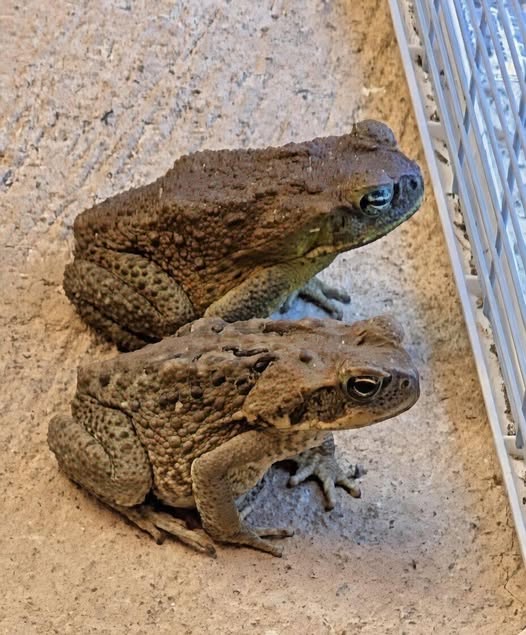
A toad appearing in your home or somewhere in your yard can feel surprising, even a little unsettling at first. It’s not something most people expect to encounter indoors, and the suddenness of the moment can make it seem unusual or symbolic. But in reality, the explanation is almost always simple, grounded in the natural instincts and needs of the animal itself rather than anything mysterious or extraordinary.
Toads are amphibians that rely heavily on moisture to survive. Their skin is permeable, meaning it absorbs water directly from the environment, making damp conditions essential for their well-being. When the weather becomes dry, too hot, or unpredictable, they instinctively seek out spaces that offer a more stable and humid environment. This often leads them closer to human homes, where shaded corners, basements, garages, or even bathrooms can provide the kind of shelter they need.
In many cases, a toad doesn’t intentionally “enter” a home in the way we might imagine. It may simply wander in through an open door, slip through a small gap, or follow a trail of insects that has led it indoors. Outdoor lighting, for example, tends to attract bugs at night, and where insects gather, toads often follow. From the toad’s perspective, your home or yard may just appear as another part of a suitable habitat.
Despite their unexpected presence, toads are harmless creatures. They are not aggressive, and they have no interest in interacting with humans. If anything, they prefer to remain hidden and will often stay still or attempt to retreat when discovered. Their primary concern is survival—finding food, maintaining moisture, and avoiding predators.
In fact, having a toad nearby can be beneficial. Toads are natural pest controllers, feeding on a wide variety of insects that many people consider nuisances. Mosquitoes, flies, beetles, ants, and other small invertebrates make up a significant portion of their diet. A single toad can consume dozens of insects in a single night, quietly reducing pest populations without any need for chemical intervention.
For gardeners, this can be especially valuable. By feeding on insects that might otherwise damage plants or spread disease, toads contribute to a healthier and more balanced ecosystem. Their presence often indicates that the environment supports natural cycles of life, where predators and prey coexist in a way that keeps everything in check.
Beyond their practical role, toads are also considered important indicators of environmental health. Amphibians are particularly sensitive to pollution, pesticides, and habitat disruption. Because their skin absorbs substances directly from their surroundings, they are among the first creatures to be affected by environmental changes. As a result, they tend to thrive only in areas where conditions are relatively clean and balanced.
If a toad has found its way into your yard—or even your home—it can suggest that your environment is capable of supporting life in a sustainable way. It may mean that the soil is not overly contaminated, that water sources are relatively clean, and that there is enough biodiversity to sustain a functioning ecosystem. In this sense, a toad is more than just a visitor; it is a subtle sign that nature is still present and active in your surroundings.
Of course, beyond science and ecology, toads have long held symbolic meanings in cultures around the world. Their unique life cycle, beginning as aquatic tadpoles and transforming into land-dwelling amphibians, has made them powerful symbols of change and adaptation. This transformation reflects the idea that growth often requires moving through different stages, each with its own challenges and opportunities.
In some traditions, toads are associated with renewal and resilience. Their ability to survive in both water and land environments has led to interpretations that they represent flexibility and the capacity to navigate life’s transitions. Seeing a toad, in this context, may be viewed as a gentle reminder that change is a natural and necessary part of life.
In other cultural frameworks, particularly within practices like Feng Shui, toads are linked to prosperity and good fortune. Decorative representations of toads—often depicted with coins—are believed to attract wealth and positive energy. While these interpretations are symbolic rather than scientific, they highlight how deeply animals can become woven into human meaning-making and tradition.
Some people also associate toads with cleansing or balancing energy. Because they inhabit both wet and dry environments, they are sometimes seen as mediators between different states—bringing harmony where there may be imbalance. Whether or not one subscribes to these beliefs, they offer an interesting perspective on how humans interpret encounters with the natural world.
At a more personal level, encountering a toad can be an invitation to pause and observe. In a world that often moves quickly, small moments like this can reconnect us with the slower, quieter rhythms of nature. Watching a toad move deliberately across a garden or sit quietly in a shaded corner can remind us that not all life operates on urgency or constant motion.
If a toad does appear inside your home, the best response is usually simple and gentle. Using gloves or a container, you can carefully guide it back outside to a सुरक्षित, shaded area with access to moisture. There is no need for alarm or harm. The toad is not there to cause trouble—it has simply wandered into a space that temporarily met its needs.
Preventing future visits can also be done without disrupting the environment. Sealing small gaps around doors and windows, reducing excess outdoor lighting, and keeping entryways clear can make it less likely for toads to wander indoors. At the same time, maintaining a garden space that supports natural life—without excessive chemicals—can allow them to remain outside where they are most beneficial.
Ultimately, a toad’s presence is not something to fear or overinterpret. It is a natural occurrence, shaped by environmental conditions and basic survival instincts. Whether viewed through a scientific lens or a symbolic one, it carries a message that is grounded in balance rather than mystery.
It reminds us that our homes are not entirely separate from the natural world.
That even within constructed spaces, nature finds its way in quiet, unexpected forms.
And that sometimes, what seems unusual at first is simply a reflection of life continuing as it always has—adaptable, resilient, and interconnected.
In the end, a toad is not an omen or a problem.
It is a small, living presence that reflects the health of its surroundings, contributes to the balance of its environment, and offers a moment of awareness for those willing to notice it.
And in that sense, its visit—however brief—is not something to question, but something to understand.