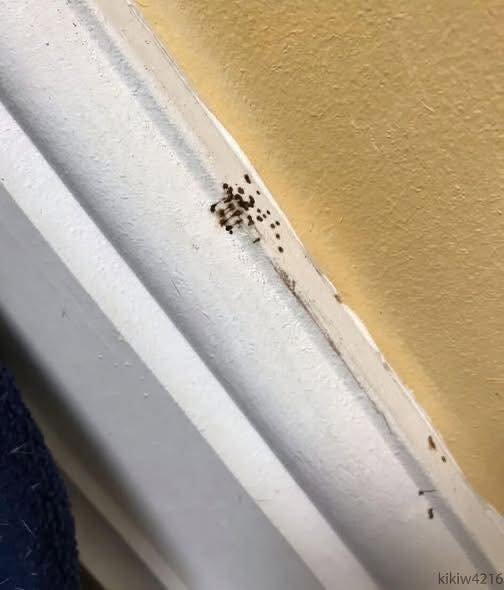
It usually starts with something easy to dismiss.
A few tiny black dots on the counter.
A faint trail along a baseboard.
Specks near a door frame that look like dust, pepper, or crumbs.
Most people wipe them away and move on.
But when those dots reappear—especially in the same spots—it’s worth paying closer attention. Because in many cases, they’re not dirt at all.
They’re a signal.
What Those Tiny Black Dots Often Are
Those small black specks are frequently frass, the technical term for insect droppings.
They’re produced by common household pests such as:
- Pantry beetles (like cigarette or drugstore beetles)
- Cockroach nymphs
- Other small food-infesting insects
At a glance, frass can look like:
- Ground pepper
- Coffee grounds
- Fine black sand
But unlike ordinary debris, it tends to reappear in patterns—along edges, corners, or near food storage areas.
That repetition is the key difference.
Why Kitchens Are a Hotspot
Your kitchen is essentially ideal habitat for pests:
- Food sources: crumbs, flour dust, oils, dry goods
- Moisture: sinks, dishwashers, small leaks
- Shelter: cracks, cabinets, appliance gaps
Even a very clean kitchen can provide enough residue to sustain small insects.
Once they find a food source, they don’t just visit—they settle, feed, and reproduce.
The “Striped Bug” You Might Notice
If you’ve seen a small striped or segmented insect near those dots, it’s often a larval stage—the phase where many pests do the most feeding (and produce the most frass).
This stage is important because:
- It indicates active breeding, not just a random visitor
- It suggests there may be more hidden nearby
- It explains why the dots keep appearing
In other words, the dots aren’t the problem themselves—they’re evidence of something ongoing.
How Infestations Build Quietly
Pests that leave frass tend to multiply quickly under the right conditions.
A typical cycle looks like this:
- Eggs are laid in hidden areas (pantry items, cracks, packaging)
- Larvae hatch and begin feeding
- Frass accumulates as they move and eat
- New adults emerge and repeat the cycle
Because much of this happens out of sight, the black dots are often the first visible clue.
Ignoring them allows the population to grow unnoticed.
Are There Health Risks?
The risk level depends on the pest, but there are a few common concerns:
- Food contamination (from contact with insects or their waste)
- Allergens that may irritate sensitive individuals
- Bacteria transfer if pests move between waste areas and food surfaces
For most households, the immediate issue isn’t severe illness—but rather hygiene, food safety, and preventing the problem from escalating.
Still, it’s not something to ignore long-term.
What You Should Do Right Away
If you notice recurring black specks, take a systematic approach:
1. Inspect Carefully
Check:
- Pantry items (especially flour, rice, cereals)
- Cabinet corners and drawer seams
- Behind and under appliances
Look for movement, damaged packaging, or more speck clusters.
2. Clean Thoroughly
- Vacuum affected areas (especially edges and cracks)
- Wipe surfaces with a mild cleaning solution
- Dispose of vacuum contents outside
Consistency matters more than intensity—repeat cleaning over several days.
3. Check Your Food Storage
- Throw away any suspicious or infested items
- Transfer dry goods into airtight containers
- Avoid leaving open packages in cabinets
4. Reduce Moisture
- Fix small leaks
- Dry sinks and counters regularly
- Improve ventilation if needed
5. Monitor the Situation
If the dots stop appearing, you likely caught it early.
If they continue or increase, the infestation may be established—and that’s when professional pest control becomes worth considering.
Simple Prevention That Makes a Big Difference
Once the issue is under control, prevention is straightforward:
- Clean food prep surfaces daily
- Store food securely
- Take out trash regularly
- Deep-clean hidden areas monthly
- Keep an eye on “quiet” zones (baseboards, corners, behind appliances)
You don’t need perfection—just consistency.
A More Grounded Perspective
It’s easy to jump to worst-case scenarios when you see something unfamiliar in your home. But not every black speck signals a major infestation.
What matters is pattern and persistence:
- One-time specks → likely harmless
- Repeated clusters → worth investigating
The goal isn’t panic—it’s awareness.
Final Thought
Those tiny black dots are easy to overlook.
But they can also be useful.
They’re one of the earliest visible signs that something small—and manageable—is happening behind the scenes.
And if you catch it at that stage, you stay in control.
Ignore it, and it grows.
Pay attention, and it stays a minor fix instead of a major problem.