In a world where smartphones rarely leave our hands, charging them has become such a routine action that it hardly registers as something requiring caution. We plug them in at night, leave them charging on beds or couches, and often use whatever cable happens to be nearby without giving it a second thought. Yet beneath this everyday habit lies a largely overlooked risk—one that has caused house fires, injuries, and significant financial loss for thousands of people worldwide. The problem is not the device itself, but the way we interact with it.
At first glance, charging a phone seems simple: connect the cable, wait for the battery to fill, and disconnect. But this simplicity masks a complex interaction of electrical flow, heat generation, and chemical reactions inside the battery. Modern smartphones rely on lithium-ion batteries, which are incredibly efficient but also highly sensitive to environmental conditions. These batteries store a large amount of energy in a compact space, and while they are designed with safety features, those features can only do so much when external conditions are unsafe.
One of the most common mistakes people make is charging their phone on soft surfaces such as beds, pillows, or couches. These surfaces trap heat, preventing proper airflow around the device. As the phone charges, it naturally generates heat. Under normal conditions, this heat dissipates into the surrounding air. However, when airflow is blocked, the temperature begins to rise. This increase may seem minor at first, but over time, it can lead to dangerous conditions inside the battery.
Heat is the enemy of battery stability. When a lithium-ion battery becomes too hot, it can enter a state known as thermal runaway. This is a chain reaction in which rising temperatures cause internal chemical reactions that generate even more heat. Once this process begins, it can escalate rapidly, leading to swelling, leakage, or even ignition. What starts as a harmless charging session can quickly turn into a serious hazard.
Another overlooked danger comes from damaged charging cables. Many people continue to use cables that are visibly frayed, bent, or worn out. These cables may still function, but their internal wiring is often compromised. Exposed wires can create electrical resistance, which leads to heat buildup at the connection point. In some cases, this can cause sparks or small electrical arcs, especially if the cable is moved while charging.
Cheap, uncertified chargers present an even greater risk. While they may be more affordable, they often lack proper safety mechanisms such as voltage regulation and temperature control. This means they can deliver inconsistent power to the device, increasing the likelihood of overheating. In contrast, certified chargers are designed to maintain stable current flow and shut down if unsafe conditions are detected.
Many incidents occur overnight, when users are asleep and unaware of what is happening. Charging a phone under a pillow or blanket is particularly dangerous because it combines multiple risk factors: restricted airflow, prolonged charging time, and lack of supervision. If something goes wrong, there may be no immediate response, allowing the situation to escalate unchecked.
Beyond the physical risks, improper charging habits can also lead to significant financial consequences. A damaged phone is expensive to replace, especially if it contains important data that has not been backed up. In more severe cases, a fire caused by a charging device can damage furniture, walls, or even entire homes. Insurance claims may not always cover such incidents, particularly if they are deemed preventable.
Environmental impact is another factor that often goes unnoticed. When devices are damaged or destroyed, they contribute to electronic waste, which is already a growing global concern. Lithium-ion batteries contain materials that can be harmful if not disposed of properly, and replacing devices more frequently increases the demand for resource extraction and manufacturing.
Despite these risks, many people continue to charge their phones without considering safety. This is largely due to habit and a false sense of security. Because incidents are relatively rare on an individual level, they are easy to dismiss. However, when viewed on a global scale, the number of charging-related accidents is significant and continues to rise.
Preventing these dangers does not require complicated changes. In fact, the most effective solutions are simple and easy to implement. The first step is choosing the right equipment. Always use the charger that came with your device or a certified alternative. Look for safety certifications and avoid products that seem unusually cheap or poorly made.
Next, pay attention to the condition of your cables. If a cable shows signs of wear, such as fraying or exposed wires, replace it immediately. Continuing to use a damaged cable is one of the most common causes of charging-related issues.
Where you charge your phone also matters. Place it on a hard, flat surface such as a table or desk, where air can circulate freely around it. Avoid charging on beds, couches, or carpets. These surfaces not only trap heat but may also be flammable, increasing the risk of fire.
It is also important to be mindful of your surroundings. Keep your charging device away from flammable materials such as paper, clothing, or curtains. Avoid placing it in direct sunlight, as this can further increase its temperature.
For those who charge their phones overnight, consider using a smart plug or charging device with built-in safety features. Some modern chargers can automatically stop supplying power once the battery is fully charged, reducing the risk of overheating.
Understanding the technical aspects of charging can also help you make better decisions. Fast charging, for example, is convenient but generates more heat than standard charging. While modern devices are designed to handle this, it is still important to ensure proper ventilation and avoid combining fast charging with unsafe conditions.
Wireless charging is another area where caution is needed. While it eliminates the need for cables, it can generate additional heat, especially if the phone is not properly aligned with the charging pad. Foreign objects between the phone and the charger can also cause overheating.
Software updates play a role as well. Manufacturers often include improvements to battery management systems in their updates. Keeping your device up to date ensures that these safety enhancements are in place.
Education is perhaps the most powerful tool in preventing accidents. Many people are simply unaware of the risks associated with improper charging. Teaching children and family members about safe practices can significantly reduce the likelihood of incidents.
Looking ahead, advancements in battery technology may eventually reduce these risks. Researchers are developing new types of batteries that are more stable and less prone to overheating. However, until these technologies become widely available, users must rely on safe habits and awareness.
Ultimately, the key to safe phone charging lies in respect—for the technology, for its limitations, and for the potential consequences of misuse. Smartphones are powerful tools, but they are not without risks. Treating them with care is not just about protecting a device; it is about protecting your home, your safety, and your peace of mind.
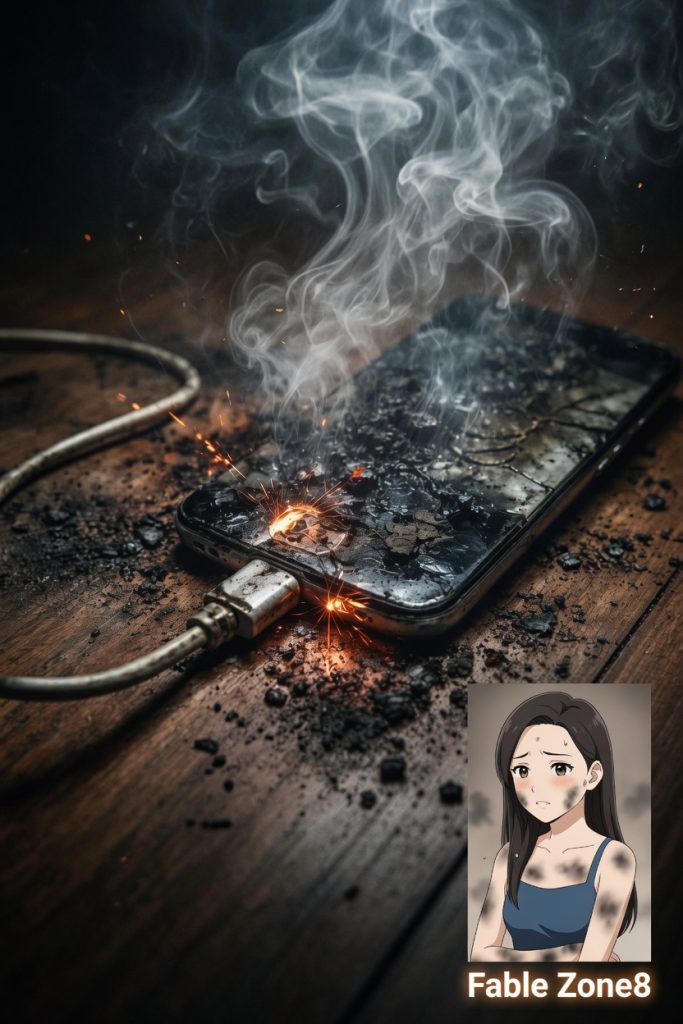
The image of a burned phone or a damaged cable is not just a dramatic warning—it is a reminder of what can happen when small details are ignored. Charging a phone may seem trivial, but it is a process that deserves attention. By making a few simple changes, you can eliminate unnecessary risks and ensure that your daily habits remain safe.
In the end, it is not about fear, but awareness. The goal is not to avoid using technology, but to use it responsibly. A few extra seconds of thought can prevent consequences that last far longer. Safe charging is not complicated—it is simply a matter of doing the right things consistently.
And sometimes, the smallest habits make the biggest difference.