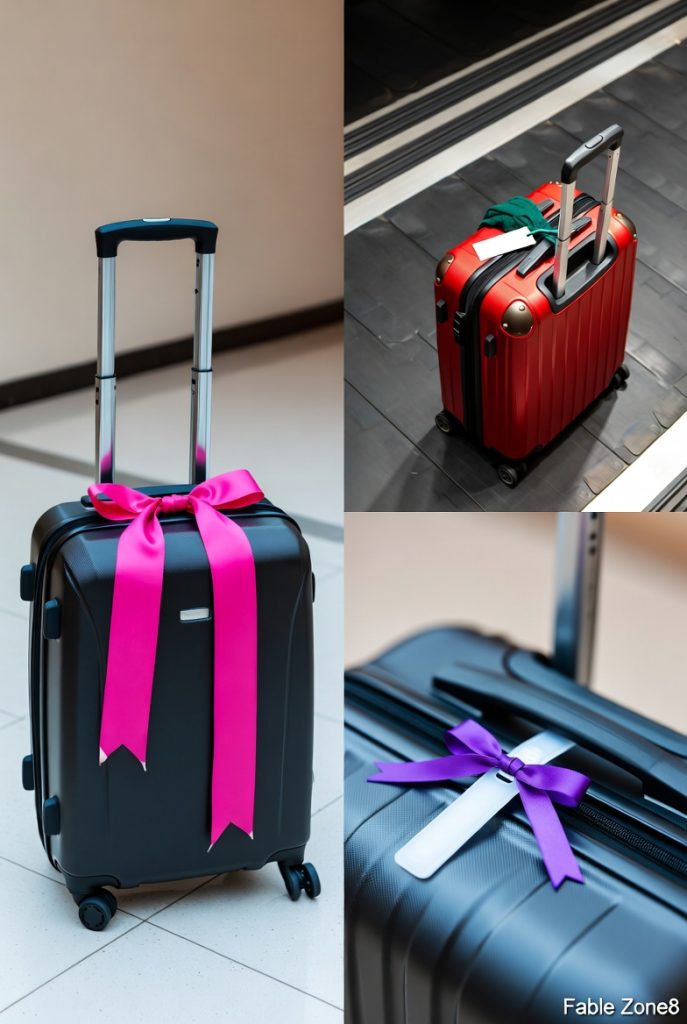
For decades, travelers have relied on small tricks to make their luggage easier to spot at baggage claim. Among the most popular is tying a bright ribbon, scarf, or piece of fabric to the handle of a suitcase. It seems like a harmless and even clever solution—something that helps distinguish your bag from the countless black and navy suitcases circling endlessly on the carousel. But according to experienced baggage handlers, this well-intentioned habit might be doing more harm than good. What appears to be a simple visual aid can actually interfere with the complex systems that airports use to process luggage, potentially causing delays, misrouting, or even lost bags. The warning, shared by a veteran baggage handler named John working at Dublin Airport, has sparked widespread discussion among frequent flyers and travel experts alike. His insight sheds light on a part of air travel that most passengers rarely consider—the intricate and highly automated journey that checked luggage takes behind the scenes.
To understand why ribbons can cause problems, it’s important to look at how modern baggage handling systems operate. Once a suitcase is checked in, it enters a vast network of conveyor belts, scanners, and sorting machines designed to move thousands of bags quickly and accurately. Each bag is tagged with a barcode that contains critical information about its destination, flight number, and routing. High-speed scanners read these barcodes at multiple points along the journey, ensuring the bag is directed to the correct aircraft. However, the system depends heavily on clear visibility. When a ribbon or loose fabric is tied to the bag, it can cover the barcode, twist the tag, or create shadows that prevent scanners from reading it properly. When this happens, the system registers a “no-read,” and the bag is automatically diverted out of the main flow for manual inspection. While this safety measure prevents complete loss, it introduces delays that can be significant—especially during busy travel periods when thousands of bags are being processed simultaneously.
Once a bag is removed from the automated system, it must be handled manually by airport staff. This step not only slows down the process but also increases the likelihood of human error. Baggage handlers working under tight schedules may misinterpret routing information, place the bag on the wrong cart, or simply run out of time to load it onto the correct flight. In some cases, the bag may be left behind entirely, arriving hours or even days later than the passenger. The situation becomes even more complicated when multiple issues occur at once. For example, if a bag has both a ribbon and old airline tags still attached, scanners might pick up conflicting information, sending the suitcase in the wrong direction. John and other handlers strongly advise removing any outdated stickers or tags before each trip to avoid this confusion. What seems like a minor oversight can create a chain reaction of delays that affects not only one passenger but the entire baggage system.
Beyond scanning issues, ribbons can also pose physical risks within the machinery itself. Airport conveyor systems are designed to handle smooth, compact luggage, not items with loose or dangling attachments. A ribbon can easily get caught in gaps between conveyor belts or in mechanical components, causing the bag to jam or even damage the equipment. In rare but serious cases, the force of the machinery can tear the ribbon off entirely, sometimes ripping open the suitcase in the process. This can result in personal belongings spilling out into restricted areas, creating additional delays and complications. Even when no damage occurs, the presence of loose items increases the chances of the bag being flagged for inspection or removed from the system. Ironically, the very feature meant to make a suitcase easier to identify can make it more likely to be delayed, mishandled, or temporarily lost within the airport’s complex infrastructure.
Another surprising drawback is that ribbons are no longer as unique as they once were. As more travelers adopt this method, bright ribbons have become increasingly common on luggage carousels around the world. What was once a distinctive marker can now blend in with dozens of similar-looking bags, defeating its original purpose. Additionally, ribbons can shift or become hidden during transit, making them unreliable as identification tools. Instead of relying on something that moves or changes position, experts recommend choosing luggage that is inherently distinctive. Suitcases in bold colors, unusual patterns, or unique designs are far easier to recognize at a glance. For those who prefer more traditional luggage, alternatives such as tightly secured luggage covers, durable tags, or non-dangling markers provide visibility without interfering with airport systems. Some travelers also use brightly colored zip ties or paint small, permanent markings on their suitcase handles—solutions that remain fixed and do not obstruct barcodes.
Technology has also introduced new ways to track and identify luggage without relying on visual cues alone. Many airlines now offer mobile apps that allow passengers to monitor the status of their checked bags in real time, from check-in to arrival. Taking a quick photo of your suitcase and its luggage tag before handing it over can also be helpful in case of delays or disputes. These modern solutions reduce the need for physical identifiers like ribbons, which can interfere with automated processes. For shorter trips, opting for carry-on luggage eliminates the issue entirely, allowing travelers to keep their belongings with them at all times. Understanding how baggage systems work empowers passengers to make smarter choices—ones that align with the technology designed to keep everything running smoothly.
Ultimately, the advice from baggage handlers like John is not about restricting personal expression but about improving efficiency and reducing risk. Air travel relies on precision, speed, and coordination, and even small disruptions can have significant consequences. By keeping luggage clean, streamlined, and free of loose attachments, travelers can help ensure their bags move seamlessly through the system. The next time you prepare for a trip, take a moment to reconsider that ribbon. While it may seem like a helpful addition, it could be quietly increasing the chances of delay or loss. A few simple adjustments—removing old tags, choosing distinctive luggage, and avoiding dangling items—can make all the difference. In the end, the goal is not just to arrive at your destination, but to have your belongings arrive with you, safely and on time.