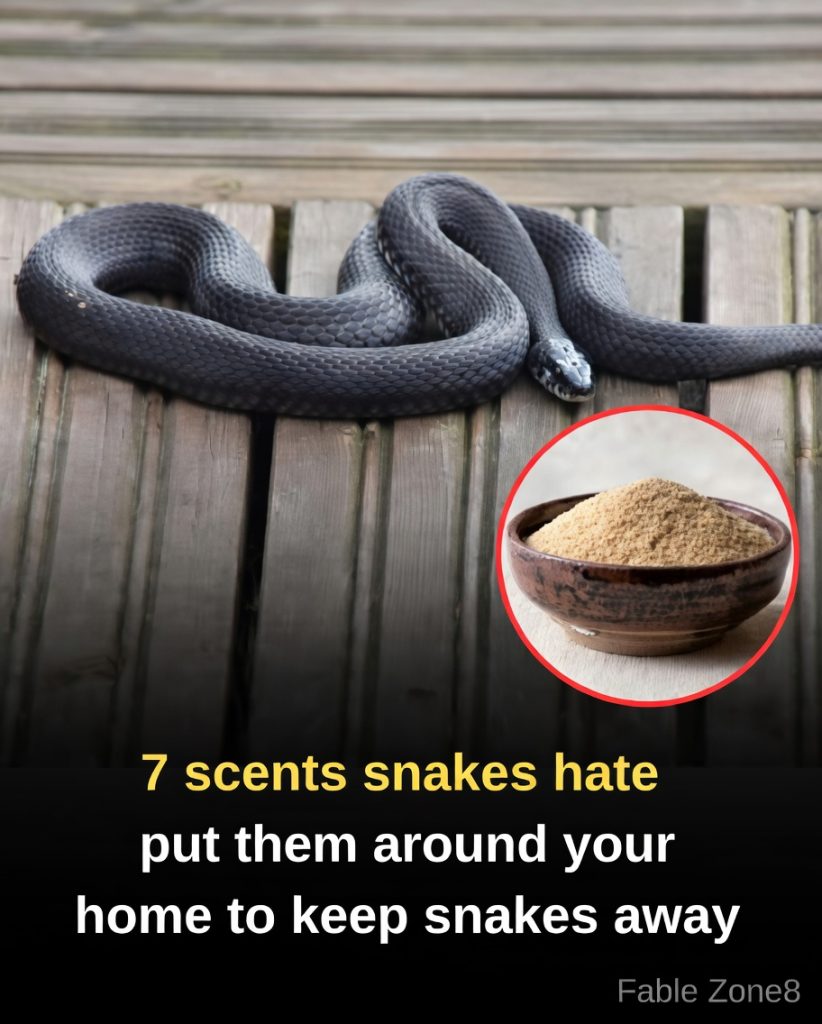
Snakes are often misunderstood creatures—quiet, elusive, and typically far more interested in avoiding humans than confronting them. Yet their presence around homes can cause understandable concern, especially in regions where certain species may pose risks. What many homeowners don’t realize is that snakes rely heavily on their sense of smell to navigate their environment, locate food, and detect danger. Using a specialized organ known as the Jacobson’s organ, they collect scent particles from the air through tongue flicking, making them extremely sensitive to strong odors. This sensitivity creates an opportunity: certain scents can overwhelm or disrupt their perception, encouraging them to stay away without harming them. Instead of relying on toxic chemicals or expensive pest control services, many people are turning to natural scent-based methods to create invisible barriers around their homes. Among the most widely discussed are seven powerful scents—cinnamon, clove, garlic, citrus, peppermint, ammonia, and sulfur—each offering a unique way to deter snakes safely and effectively.
Cinnamon is one of the most accessible and widely used natural repellents. Its strong, spicy aroma comes from a compound called cinnamaldehyde, which can irritate snakes’ sensory systems. When used around entry points, garden borders, or foundations, cinnamon creates a scent barrier that discourages snakes from crossing. It can be applied as a powder or diluted essential oil spray, and many people combine it with clove oil for increased potency. Clove contains eugenol, a compound with a similarly intense scent that enhances the repelling effect. Together, cinnamon and clove form a powerful pairing that targets snakes’ sensitivity to strong, lingering odors. Garlic works differently but just as effectively. When crushed, it releases sulfur-like compounds that can mimic environmental danger signals or simply overwhelm the snake’s ability to process other scents. Spraying garlic-infused water or scattering crushed garlic in strategic areas can make the environment less appealing, particularly near hiding spots like woodpiles or shaded corners.
Citrus scents offer a lighter but still effective approach. The natural oils found in lemon, orange, and lime peels contain compounds like limonene, which can irritate snakes and disrupt their movement patterns. Scattering citrus peels around the yard or using citrus-based sprays can create a fresh-smelling yet repellent boundary. Peppermint adds another layer of defense. Its strong menthol content produces a cooling sensation that can interfere with snakes’ sensory detection, making it harder for them to navigate or locate prey. Many homeowners use peppermint oil sprays or even plant mint varieties around their property as a long-term, living deterrent. These plant-based options are especially appealing because they combine effectiveness with pleasant aromas for humans, turning pest control into a more enjoyable and natural process.
For more persistent situations, stronger substances like ammonia and sulfur are sometimes used, though they require more caution. Ammonia emits a sharp, pungent odor that snakes often associate with danger, similar to predator scents. When diluted and applied carefully in outdoor areas, it can discourage snakes from approaching. However, it should never be used in enclosed spaces or near pets and plants due to its intensity. Sulfur, often available as a powder, produces a distinct odor that many animals, including snakes, find unpleasant. When spread around the perimeter of a property, it can create a more durable barrier, particularly in dry conditions. Because sulfur can irritate skin and lungs, it should be handled with care, using gloves and avoiding inhalation during application.
The true effectiveness of these scents often comes from combining them into a layered approach rather than relying on a single solution. For example, a base layer of sulfur or cinnamon powder can be reinforced with periodic sprays of peppermint, citrus, or garlic mixtures. This creates a dynamic scent environment that reduces the chance of snakes becoming accustomed to one smell. Regular reapplication is important, especially after rain or strong sunlight, which can weaken the potency of natural compounds. Placement also matters—focusing on entry points, shaded areas, and places where snakes are most likely to hide increases the effectiveness of the barrier. Some people use soaked cloths or small sachets filled with these materials to target specific spots like sheds, garages, or garden edges.
While these natural repellents can be highly effective, it is important to understand their limitations. They work best as part of a broader strategy that includes keeping the yard clean, removing debris, trimming tall grass, and eliminating food sources like rodents. Snakes are drawn to environments that provide shelter and prey, so reducing these factors is just as important as applying scents. In cases involving venomous species or repeated sightings, professional assistance may still be necessary. However, for most households, these natural methods provide a safe, affordable, and environmentally friendly way to reduce the likelihood of snake encounters.
In the end, using scents like cinnamon, clove, garlic, citrus, peppermint, ammonia, and sulfur transforms snake prevention into a thoughtful and proactive process rather than a reactive one. These methods respect the role snakes play in the ecosystem while protecting your home and family from unwanted encounters. By understanding how snakes perceive their surroundings and using that knowledge to your advantage, you can create a space that feels secure, balanced, and in harmony with nature. Sometimes, the most effective solutions are not the most complex—they are the ones that work with nature rather than against it.