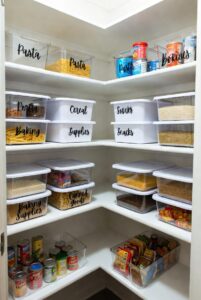
Transforming a pantry from a cluttered, stressful storage zone into a calm and functional part of the kitchen is often perceived as an expensive and time-consuming project, yet the reality is far more approachable when guided by intention rather than perfection. Pantries naturally become overcrowded because they hold a wide variety of items with different shapes, sizes, and usage patterns, and without a clear system, even the most organized home can feel chaotic behind closed doors. A budget-friendly approach built around affordable dollar store bins allows this transformation to happen without financial strain while still achieving a polished and cohesive result.
The process begins not with shopping, but with mindset—understanding that organization is about supporting daily habits rather than creating a picture-perfect display. When the goal shifts from aesthetic pressure to practical clarity, every decision becomes easier, from what to keep to how items should be grouped. An organized pantry reduces friction in everyday life, turning cooking and meal preparation into smoother, more enjoyable experiences. This shift has a psychological benefit as well, as visual order tends to reduce mental overload and promote a sense of control. By committing to a simple, realistic system that prioritizes function, anyone can create a pantry that feels intentional, supportive, and sustainable, regardless of space size or budget.
The foundation of a successful pantry transformation is a complete reset that allows the space to be seen clearly and honestly. Emptying the pantry may feel overwhelming at first, but it is the most important step because it reveals patterns that are otherwise easy to ignore—duplicate purchases, forgotten items, and categories that have grown without intention. This process encourages thoughtful decision-making, prompting the removal of expired products, rarely used ingredients, and items that no longer align with current habits. Cleaning the shelves thoroughly establishes a fresh starting point and reinforces that this is not just a quick tidy-up, but a meaningful reset. Measuring the shelves and understanding their dimensions ensures that future purchases serve the space rather than fight against it, preventing wasted money and frustration.
Dollar store bins play a central role in making pantry organization accessible and flexible, proving that affordability does not have to come at the expense of quality or visual appeal. These bins come in a surprising range of styles—from clear plastic containers to woven textures and neutral-toned designs that blend seamlessly into different kitchen aesthetics. Their low cost allows for experimentation, making it possible to test layouts, refine categories, and make adjustments without pressure. Clear bins work especially well for frequently used items, offering instant visibility that reduces overbuying and helps track inventory at a glance. Handles add convenience for deep shelves, while stackable options maximize vertical space without adding clutter. When used consistently, these simple bins create a uniform look that mimics high-end pantry systems at a fraction of the cost.
Intentional categorization is what transforms a collection of bins into a functional system rather than just contained clutter. Grouping items by use—such as breakfast foods, baking supplies, snacks, or meal prep ingredients—often works better than grouping by type alone. Breaking these into smaller, clearly defined categories prevents overcrowding and makes it obvious where everything belongs. Labels reinforce this clarity, ensuring the system is easy to maintain for everyone in the household. They don’t need to be expensive or decorative—simple, readable labels are enough to create consistency. Strategic placement also matters: frequently used items should be easily accessible at eye level, while heavier or less-used items can be stored lower or higher up. These small adjustments turn the pantry into a practical workspace rather than just a storage area.
Customization is what makes a pantry organization system truly sustainable. Every household has different routines, preferences, and needs, and the system should reflect that reality. Families may prefer accessible snack bins for children, while smaller households might prioritize compact, vertical storage solutions. Aesthetic choices—whether minimal, rustic, or neutral—can enhance the space, but they should never interfere with functionality. Small personal touches, like handwritten labels or subtle decorative elements, can make the pantry feel warm and lived-in rather than rigid or overly styled. Most importantly, the system should remain flexible. As routines change, categories can shift, expand, or simplify without requiring a complete overhaul. This adaptability is what keeps the pantry working long after the initial setup.
Maintaining an organized pantry does not require perfection or constant effort, but rather small, consistent habits. A quick weekly reset—returning items to their bins, checking for clutter, and wiping surfaces—helps preserve order with minimal time investment. Occasional reassessment ensures the system continues to reflect current needs, preventing it from becoming outdated or inefficient. Over time, the benefits extend far beyond appearance. Grocery shopping becomes more intentional, food waste is reduced, and meal preparation becomes quicker and less stressful.
There is also a deeper, often overlooked impact: a sense of calm. Opening a pantry that is clean, structured, and easy to navigate creates a subtle but powerful feeling of control in daily life. It removes unnecessary friction from routines and replaces it with clarity and ease. This is where organization moves beyond aesthetics and becomes a form of practical self-care.
Ultimately, creating a pantry using dollar store bins proves that thoughtful design does not require a large budget or professional help. It requires awareness, planning, and a willingness to work with what is available. By focusing on function first and allowing simplicity to guide decisions, anyone can transform their pantry into a space that supports their lifestyle instead of complicating it.
Because in the end, an organized pantry is not about perfection—it is about making everyday life just a little easier, one small, intentional change at a time.