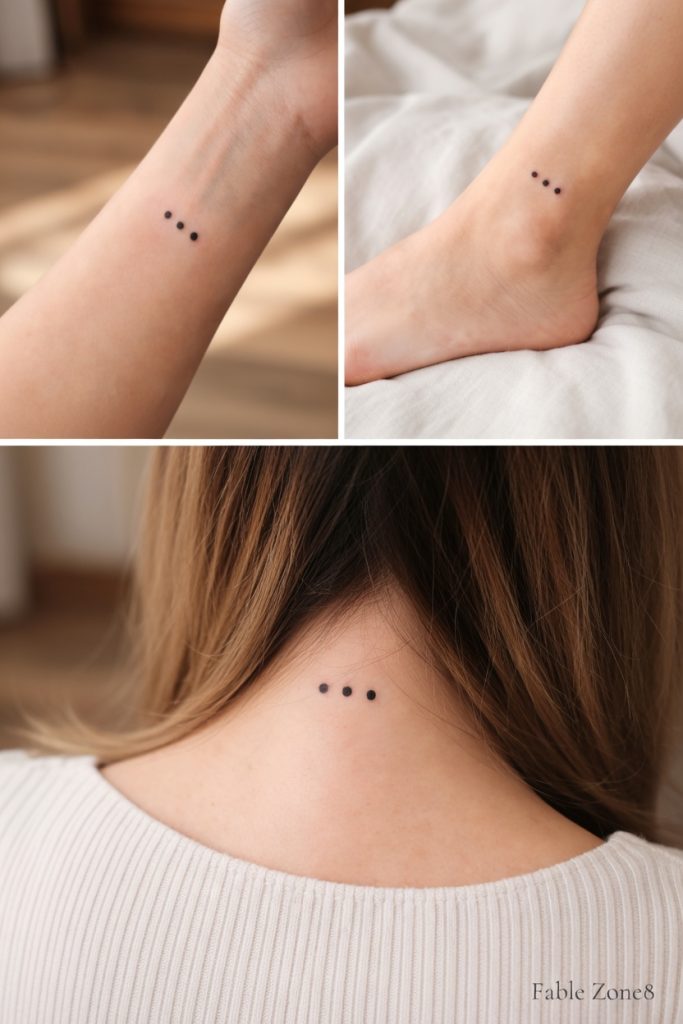
The three-dot tattoo (•••) may appear simple at first glance, but its meanings are layered, complex, and context-dependent. Most often found on the hand—between the thumb and index finger or along the knuckles—this minimalistic design carries interpretations shaped by culture, personal experience, and environment. Assuming a single meaning can be misleading. What looks like a small, decorative mark can, in reality, signify philosophy, identity, or an individual’s life history.
One of the most widely recognized interpretations connects the tattoo to the adage “see no evil, hear no evil, speak no evil.” In this context, the three dots symbolize restraint, discretion, or a conscious decision to avoid wrongdoing. Within prison culture, this meaning evolves further into a code of silence, indicating loyalty, trust, and a refusal to cooperate with authorities. Here, the tattoo is less philosophical and more practical—an emblem of survival and personal integrity in high-stakes environments.
In other contexts, the tattoo expresses brotherhood and belonging. Among close-knit groups—formed through shared experiences, challenges, or environments—it signals unity and mutual understanding. It does not necessarily indicate criminal involvement; instead, it marks membership in a specific lifestyle or shared values. For many wearers, the three dots are a quiet acknowledgment of collective identity, a symbol of connection that outsiders may not fully comprehend.
The tattoo can also serve as a personal timeline, reflecting an individual’s history. Some wearers use the dots to signify periods spent in difficult circumstances, including incarceration. Additional dots may be added over time, turning the tattoo into a visual record of resilience, survival, and personal growth. In this sense, it becomes deeply personal—a symbol of experience rather than a message intended for external observers.
In Spanish-speaking cultures, the three dots often take on a more expressive meaning through the phrase “Mi Vida Loca” (“My Crazy Life”). Here, the tattoo signifies a life lived boldly, embracing risk, rebellion, or intensity. Common among youth subcultures, this interpretation emphasizes lifestyle and personal narrative rather than loyalty or silence. It transforms the minimal design into a statement of individuality, reflecting the wearer’s approach to life.
However, the tattoo is not without potential consequences. Its associations with criminal or prison culture—whether accurate or not—can lead to judgment, misunderstanding, or social barriers. In some settings, it may draw unwanted attention from authorities or complicate professional interactions. This underscores how symbols can acquire meanings beyond the wearer’s intention, shaping social perception in ways that are not always controllable.
Ultimately, the three-dot tattoo is a testament to the contextual power of symbols. Its meaning depends on the wearer, its placement, and the story behind it. For some, it represents strength, loyalty, or personal growth; for others, it may be misunderstood or carry social weight. What remains undeniable is that even the smallest symbols can carry profound significance—stories that deserve understanding rather than assumption.