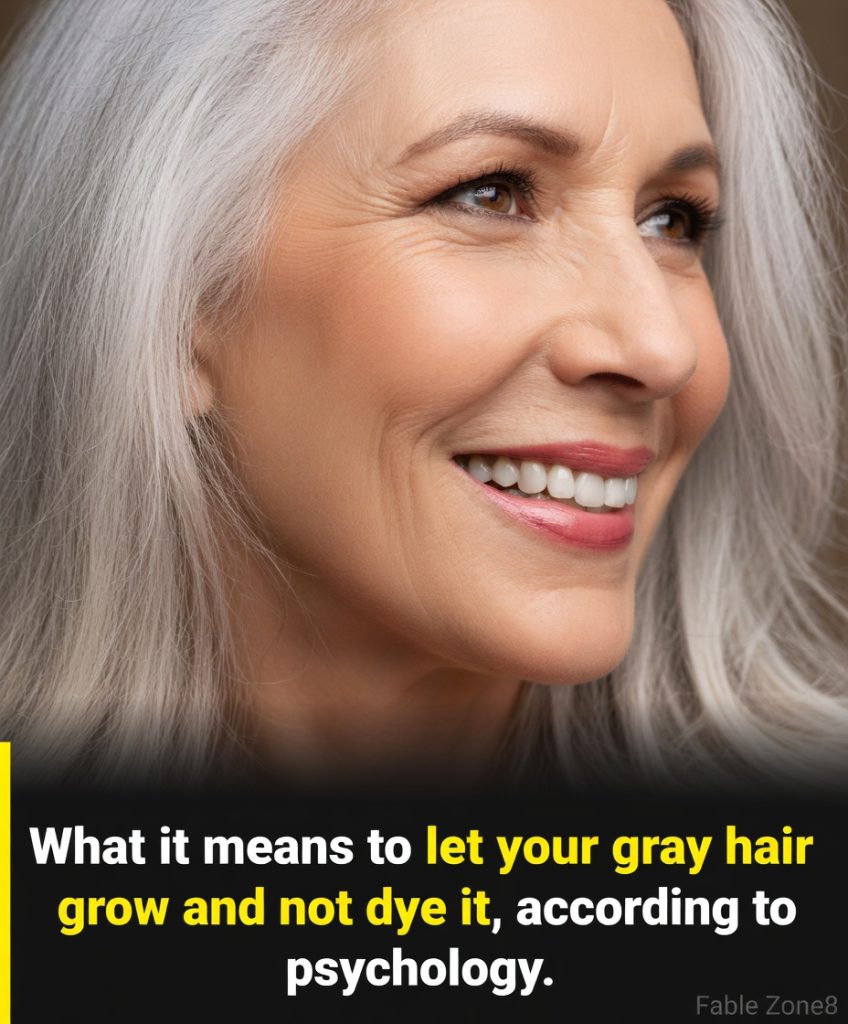
Choosing to let gray hair grow naturally is increasingly recognized as more than a mere aesthetic preference; it is a conscious, symbolic act that reflects emotional awareness, self-acceptance, and a reevaluation of identity in a society obsessed with youth. For decades, gray hair has been culturally framed as a flaw to be corrected, concealed, or delayed. Advertising, media, and societal norms equated youth with beauty, vitality, and social relevance, while aging was coded as decline, invisibility, or even irrelevance. In this context, choosing to stop covering gray hair can feel radical, even rebellious. Psychologically, this decision often emerges during periods of introspection or transition, when individuals begin to question external expectations and place greater value on internal coherence and self-respect. Rather than signaling neglect, indifference, or resignation, allowing gray hair to remain visible often represents an active embrace of reality, a refusal to engage in constant self-correction, and a willingness to live more authentically in one’s own body.
Hair functions as a powerful symbolic tool in shaping identity. Throughout history, how individuals wear and style their hair has communicated age, vitality, personality, and social role. Altering hair color has long served as a method of controlling perception, masking signs of aging, and managing social judgments. Letting gray hair grow naturally can coincide with a broader process of identity redefinition—a period in which people reassess who they are beyond societal expectations. Psychologists note that this type of identity recalibration often occurs during midlife transitions but can happen at any age when values, priorities, and personal beliefs shift. Choosing not to dye hair can indicate that a person no longer seeks validation primarily through appearance. It reflects a more internally grounded self-worth and demonstrates that personal identity need not be tied to others’ judgments. Importantly, this shift is not synonymous with abandoning care for appearance; rather, it reflects a balanced perspective in which beauty, style, and self-expression coexist with authenticity.
Emotionally, letting gray hair grow naturally often brings relief from subtle but persistent pressures. Maintaining dyed hair requires repeated effort, ongoing vigilance, and the management of roots and fading color, creating a cycle that reinforces the notion that aging must be corrected. Psychologically, this cycle can generate anxiety, self-consciousness, or a sense of fighting the natural flow of time. Choosing to embrace one’s gray hair interrupts this pattern, allowing a more harmonious alignment with the body’s natural processes. Many individuals report a sense of lightness, calm, and authenticity after making this choice. This emotional shift represents acceptance not only of external appearance but of impermanence itself. Gray hair transforms from a marker of loss into a visible record of lived experience, resilience, and continuity, symbolizing a life lived fully and honestly.
Social implications further deepen the psychological impact of letting gray hair grow. For women, in particular, societal pressure to conceal gray hair has been historically intense. Men’s gray hair is often framed as distinguished, authoritative, or even attractive, whereas women have been conditioned to view it as undesirable or a sign of diminished value. Psychologically, choosing to resist these expectations becomes an act of empowerment, involving courage, self-trust, and the willingness to challenge norms. This decision can foster greater confidence and strengthen personal boundaries, influencing broader aspects of life beyond appearance, including interpersonal relationships, career choices, and self-expression. In effect, embracing gray hair can serve as a visible manifestation of autonomy, signaling alignment with one’s values even when they diverge from mainstream ideals.
At a deeper cognitive level, allowing gray hair to grow naturally reflects a transformed relationship with time and aging. Modern culture often promotes the illusion that aging can be postponed, reversed, or hidden entirely through products, procedures, or cosmetic interventions. Psychologically, buying into this illusion can create chronic dissatisfaction, as the body inevitably evolves in ways beyond conscious control. Accepting gray hair represents a shift toward realism, compassion, and self-kindness. Rather than treating time as an adversary, individuals begin to view it as a partner in shaping identity and meaning. This mindset fosters emotional resilience, reducing reactive responses to visible signs of aging while promoting engagement with life in the present. Gray hair thus becomes less a symbol of what is lost and more a visible marker of what has been lived, experienced, and embraced.
The decision to go gray naturally can also intersect with other aspects of personal growth and well-being. It encourages reflection on lifestyle, health, and self-care, prompting a more holistic understanding of aging. Individuals may become more attuned to their nutritional habits, stress management, and physical activity—not as an effort to prevent visible aging but to support overall vitality and quality of life. Psychologically, this approach fosters a sense of agency that is not dependent on appearance. By cultivating self-care and authenticity simultaneously, people develop resilience to social pressures and external validation, reinforcing a positive feedback loop in which inner and outer alignment supports well-being.
From a cultural perspective, letting gray hair grow challenges deeply ingrained beauty norms that have been perpetuated for generations. Historically, hair color has been a marker of social conformity, youth, and attractiveness. Choosing to stop dyeing hair may initially provoke questions, comments, or even criticism from peers, family, or colleagues. Psychologically, navigating these reactions requires self-awareness, emotional regulation, and confidence. Individuals who maintain their decision despite external scrutiny demonstrate resilience, boundary-setting, and a growing sense of self-efficacy. Over time, these skills extend beyond hair choices, impacting how people assert themselves in personal and professional contexts. In this sense, embracing gray hair becomes a microcosm of broader life skills: authenticity, assertiveness, and the capacity to prioritize intrinsic values over societal approval.
It is also worth noting that allowing gray hair to remain visible has implications for intergenerational and social modeling. Older adults who embrace their natural hair can influence younger generations by demonstrating that aging is a normal, dignified, and meaningful stage of life. Psychologically, this can reduce anxiety about visible signs of aging among peers and successors, fostering acceptance, and reshaping cultural perceptions of beauty and value. By embodying self-acceptance, individuals contribute to a subtle but significant shift in social narratives, promoting the understanding that worth is not age-dependent but experience-dependent.
Importantly, choosing to go gray is not prescriptive or universal. Some individuals continue to enjoy dyeing hair as a form of self-expression, creativity, or personal pleasure. The psychological meaning of embracing natural gray hair lies not in judgment of others’ choices but in recognizing the symbolic power of autonomy and alignment with self. It is a conscious decision to live with integrity, reduce internal conflict, and allow external appearance to reflect internal reality. In a society that often equates beauty with youth, this choice demonstrates courage, clarity, and emotional sophistication. It represents a shift from externally imposed ideals to self-determined standards of worth.
The practical aspects of embracing gray hair also reinforce psychological benefits. By reducing reliance on chemical dyes, touch-ups, and salon visits, individuals reclaim time, money, and energy. This allows for greater focus on personal priorities, hobbies, relationships, and experiences. Psychologically, this shift can increase feelings of competence, agency, and self-directed purpose. It turns what might be seen as an aesthetic concession into an empowering lifestyle choice, further embedding the act within a broader framework of intentional living.
Ultimately, letting gray hair grow naturally is a multifaceted psychological statement. It embodies acceptance of impermanence, emotional maturity, authenticity, and personal growth. It communicates self-respect, resilience, and a readiness to embrace life fully without apology or disguise. Gray hair becomes a visible testament to experience, knowledge, and continuity, reminding both the individual and society that beauty, relevance, and value evolve alongside life’s inevitable changes. By allowing hair to reflect time honestly, individuals cultivate a sense of inner freedom that extends far beyond aesthetics.
This choice is also deeply symbolic: it challenges societal obsessions with youth, confronts internalized fears of aging, and fosters alignment between inner values and external expression. It highlights the psychological benefits of reducing cognitive dissonance between appearance and identity. When hair is allowed to reflect the natural aging process, individuals experience less mental strain, fewer preoccupations with social judgment, and greater emotional peace. The act of embracing gray hair becomes an integrated practice of mindfulness, self-compassion, and resilience.
In conclusion, the psychological meaning of letting gray hair go natural extends far beyond vanity or style. It reflects conscious self-acceptance, emotional sophistication, identity realignment, and resistance to social pressure. It marks a shift from externally imposed ideals to internal authenticity, encouraging individuals to embrace impermanence, value experience, and cultivate a coherent sense of self. While the world may continue to equate youth with relevance, those who choose to embrace their natural gray hair make a powerful statement: worth is not diminished by time; it is deepened, enriched, and defined by the courage to live authentically. In every silver strand, there is a story of resilience, integrity, and the quiet beauty of alignment between appearance and identity—a visual testament to the psychological freedom gained when one chooses to honor oneself fully.