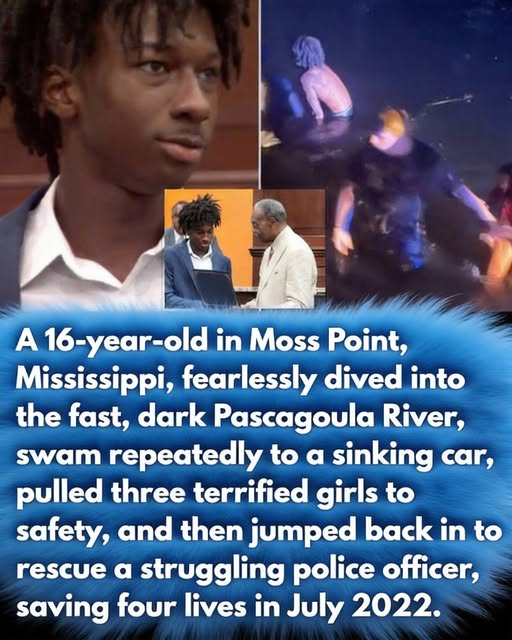
A quiet summer afternoon along the Pascagoula River turned into a life-or-death situation when a vehicle suddenly plunged into the water, sending three teenage girls into immediate peril. The river’s current was swift and unrelenting, the water dark and treacherous, and bystanders watched helplessly as precious seconds ticked away. Panic rippled along the shoreline, and although emergency responders were on their way, the girls had little time. In that critical moment, a 16-year-old bystander named Corion Evans emerged as an unexpected beacon of hope, ready to act when hesitation could have been fatal.
Without a second thought, Corion removed his shoes and dove into the river. He navigated the powerful current with remarkable determination, eyes fixed on the struggling girls. One by one, he reached each teenager, offering physical support and reassurance, guiding them toward the relative safety of the shore. The sheer force of the water and the urgency of the situation left him exhausted, yet he persisted, driven by an instinctive sense of responsibility and courage that seemed far beyond his years. Witnesses later described the scene as surreal, watching a teenager battle the river while saving lives.
As the final girl reached the bank, it appeared the immediate danger had passed, but the ordeal was not yet over. A police officer who had entered the river to assist soon began to struggle against the same relentless current. Without hesitation, Corion swam back into the churning water, this time prioritizing the safety of the rescuer. His courage and composure under extreme stress underscored an extraordinary presence of mind, revealing a maturity and bravery rarely seen in someone so young. The officer survived, pulled to shore by Corion’s steadfast determination, completing a rescue that had seemed impossible just moments before.
The riverbank, once filled with panic and fear, transformed into a place of awe and relief as the rescued girls and the officer reached safety. Emergency personnel arrived shortly afterward, providing care and ensuring the survivors were unharmed. Corion, soaked and fatigued, quietly stepped back, his attention already returning to the wellbeing of those he had saved rather than seeking recognition for himself. The magnitude of his bravery became clear as onlookers processed the events—a single decision made in seconds had altered the course of multiple lives forever.
That night, news of Corion’s actions spread rapidly, capturing the admiration of his community and inspiring people far beyond Mississippi. Local leaders honored him with awards recognizing heroism and selflessness, celebrating not only the lives he saved but also the example he set for courage under pressure. Interviews highlighted his humility, as Corion emphasized that he simply did what anyone should do in the moment. Yet the magnitude of the act resonated universally, reminding communities that true heroism often arises spontaneously, in quiet individuals who confront danger not for glory but because it is the right thing to do.
Corion Evans’ bravery serves as a powerful reminder that ordinary people can perform extraordinary acts when faced with life-threatening situations. His decision to dive into the river, save three young girls, and then return for the struggling officer exemplifies courage, quick thinking, and unwavering compassion. The story encourages reflection on responsibility, the value of decisive action, and the profound impact one person can have in a moment of crisis. Corion’s heroism is now woven into the fabric of his community’s story, a testament to selflessness and the extraordinary potential that lies within the youngest among us.