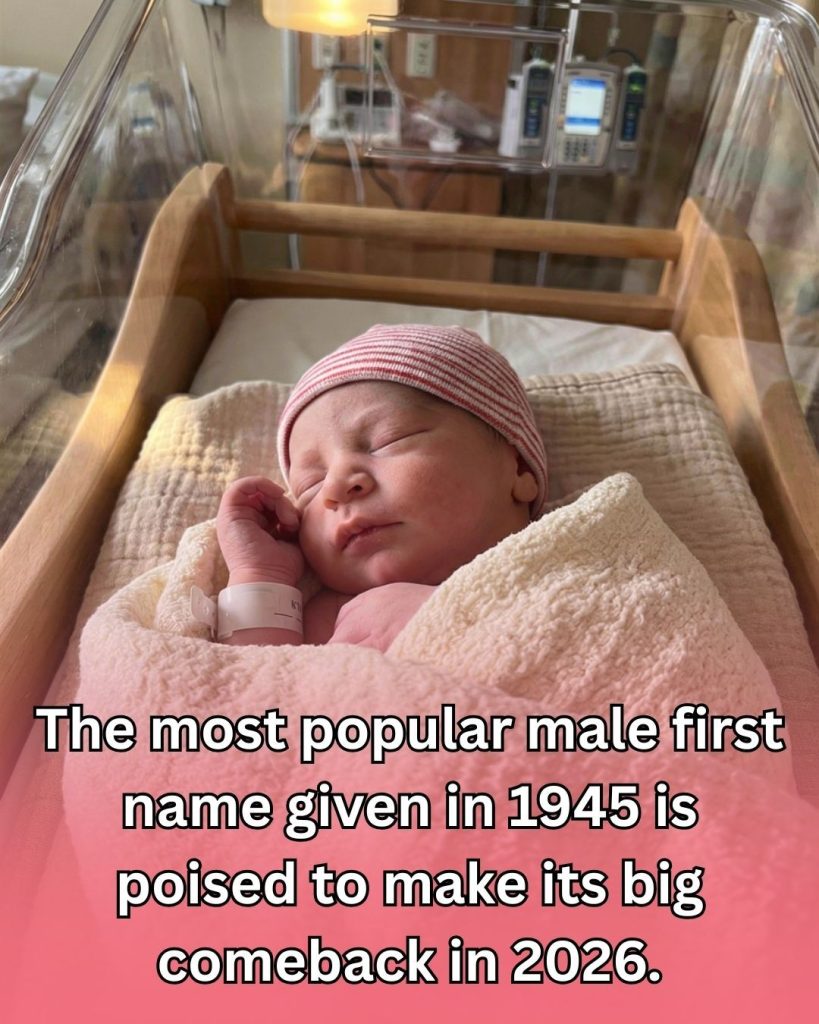
Baby name trends rarely shift with sudden drama; they move like tides—subtle, reflective, and deeply attuned to the cultural moment. As 2026 approaches, registries and experts note a clear movement: many parents are turning away from ultra-modern, invented, or highly stylized names in favor of those rooted in history. This turn is not motivated solely by nostalgia, but by a desire for emotional stability in a world that feels loud, fast, and unpredictable. Names that once seemed old-fashioned are now valued for their depth, resonance, and enduring authenticity. Choosing a name has become less about novelty or attention and more about anchoring a child to continuity, grounding them in something lasting amid social and technological turbulence.
Among the names quietly reemerging is Marcel, a choice that surprises some precisely because it had long faded from mainstream usage. Once associated primarily with older generations—grandparents, great-uncles, or sepia-toned family photos—Marcel now carries renewed charm and power. Freed from recent trends, it no longer feels dated but refreshed. Parents describe it as simultaneously gentle and confident, artistic yet solid, familiar without being common. Its understated elegance and emotional warmth resonate in a way that trendy names often cannot. Marcel communicates calm assurance, offering children a name that feels secure yet flexible, meaningful yet unassuming—a rare balance in an era where names are often expected to carry immediate social significance.
This revival of Marcel is part of a broader “neo-vintage” movement reshaping birth records across multiple regions. Names like Augustin, Léonie, Colette, Eugène, and others once dismissed as outdated are steadily returning. These names share resilience—they have endured generations, cultural shifts, and linguistic evolution. For parents raising children in a world of rapid technological change, social uncertainty, and global interconnectedness, such names offer reassurance and continuity. They represent values, heritage, and permanence rather than fleeting style. Selecting a classic name becomes a quiet statement: that not everything must be new to hold meaning, that some beauty lies in time-tested traditions, and that identity can be anchored in history without limiting individuality.
Marcel stands out for its versatility. It travels well across languages and cultures, maintaining clarity and familiarity while adapting naturally to local pronunciation. Its simplicity in spelling and pronunciation is increasingly valued by globally minded parents who anticipate a child’s mobility and interconnected social life. Beyond practicalities, the name grows gracefully with age, sounding equally fitting for a toddler or an adult professional. It does not demand attention but holds it through understated presence, allowing personality to emerge naturally. In a culture increasingly focused on performance, branding, and social signaling, Marcel offers subtlety, elegance, and room to breathe—a space where identity develops organically rather than being predetermined by a trend.
The emotional resonance of Marcel is another reason it captivates modern parents. It feels human, warm, and unforced. It does not seek to shock or dazzle but to communicate intelligence, creativity, and quiet confidence. Unlike names tightly bound to a fleeting social moment or decade, Marcel’s timelessness gives it a sense of authenticity that modern families increasingly prize. Parents choosing it often describe a desire for something “real,” a name that carries meaning and personality without appearing manufactured. In doing so, the choice of Marcel reflects a broader cultural yearning: for simplicity that is honest, depth that is understated, and beauty that is enduring rather than fleeting.
As 2026 unfolds, the revival of names like Marcel signals a deeper shift in how parents think about legacy, identity, and values. Names are no longer purely aesthetic choices—they are conscious statements about the principles, emotions, and traditions parents wish to pass to their children. By embracing names with history and substance, families convey that stability, authenticity, and intergenerational connection matter in an increasingly complex world. Marcel is not merely a nostalgic comeback; it is a thoughtful reintroduction of a name whose quiet strength, versatility, and warmth make it as relevant to the future as it was to the past, offering children a timeless gift in an unpredictable era.