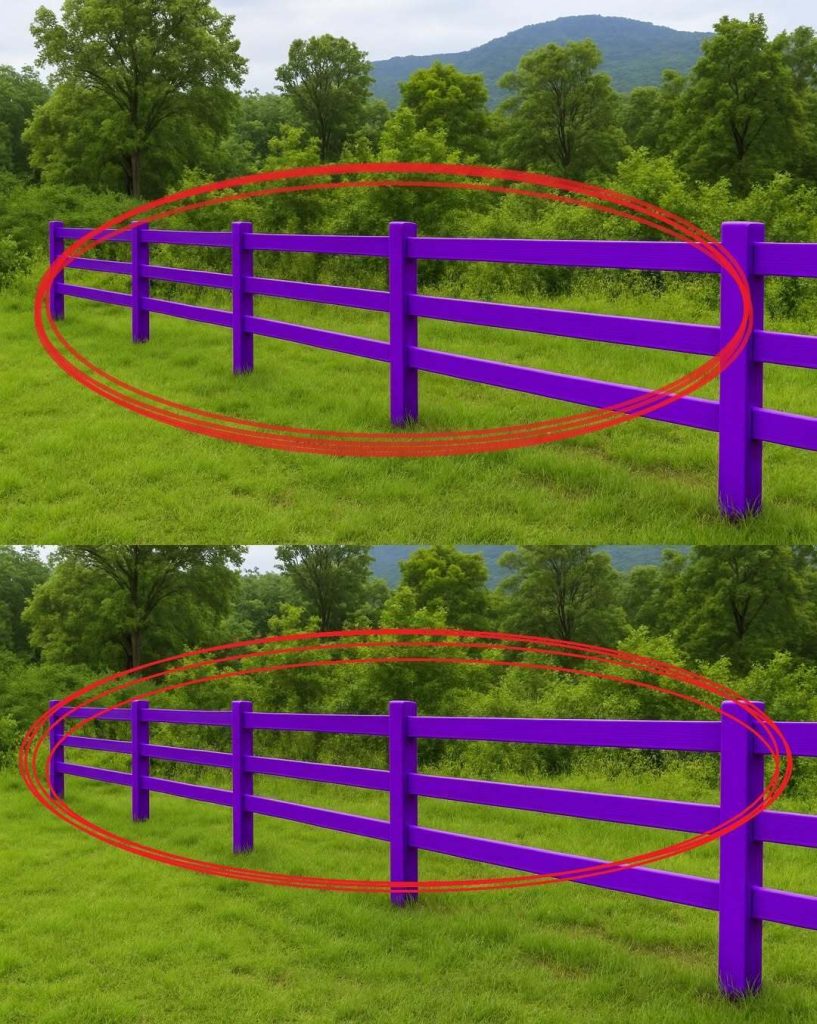
Exploring the outdoors often brings moments of quiet curiosity, when familiar landscapes suddenly present something unexpected. A purple fence cutting through a stretch of trees or lining a rural road can feel oddly out of place, almost whimsical at first glance. Many people assume it is decorative, a personal artistic choice, or an attempt to stand out in an otherwise muted environment. In reality, that bold purple color carries a precise and deliberate meaning that has nothing to do with style. Across many parts of the United States, a fence, post, or tree marked in purple is a legally recognized signal indicating private property and a clear prohibition against trespassing. This system exists to communicate boundaries in a way that is durable, unmistakable, and enforceable without constant upkeep. The color is not arbitrary; it is chosen because it rarely appears naturally in the landscape, ensuring visibility in forests, fields, and along property lines where signs might be overlooked or destroyed. When someone encounters purple paint in these settings, they are not seeing decoration but a message embedded into the land itself, reminding passersby that curiosity must stop at the boundary of another person’s property.
The origins of purple boundary markings are rooted in practicality rather than symbolism. Traditional “No Trespassing” signs have long posed problems for landowners, especially in rural or wooded areas. Signs can be blown down by storms, faded by sunlight, damaged by wildlife, or removed intentionally by people who ignore or resent them. Replacing signs repeatedly is expensive, time-consuming, and often ineffective. Paint offered a solution that was simple, affordable, and long-lasting. Once applied to posts or trees, it could remain visible for years with minimal maintenance. Purple was selected specifically because it stands apart from common warning colors like red or orange, which are frequently used for hunting seasons, construction zones, or trail markers. By choosing a color unlikely to be confused with other signals, lawmakers created a system that could communicate a single, unambiguous message: do not enter. Over time, this approach was formalized into law in multiple states, transforming what might look like a casual paint choice into a standardized legal notice with real consequences.
In states that recognize purple paint laws, these markings carry the same legal weight as posted signage. That means a person who crosses a boundary marked with purple paint can be charged with trespassing even if no traditional sign is visible. The law does not require the landowner to confront intruders or explain their intentions. The paint itself serves as notice. To prevent ambiguity, most states specify exact requirements for how the markings must be applied. The paint is usually required to be placed at a certain height above the ground, often between three and five feet, and applied in vertical stripes of a specific width. There are also rules about spacing, ensuring that markings are frequent enough to be seen clearly along the property line. These details matter because they protect both landowners and visitors. Landowners gain a clear, enforceable method of protecting their property, while visitors are given a consistent visual standard they can learn to recognize and respect. Ignorance of the meaning does not exempt someone from responsibility, which makes awareness especially important for anyone who spends time outdoors.
For hikers, hunters, campers, photographers, and casual explorers, understanding purple paint markings is a matter of both legality and safety. Many people venture into rural or wooded areas assuming that unposted land is open for exploration, especially when there are no fences or obvious barriers. Purple paint exists precisely to eliminate that assumption. Crossing into marked property without permission can result in fines, citations, or arrest, depending on local laws and circumstances. Beyond legal consequences, there are practical risks as well. Private land may contain livestock, agricultural equipment, hunting activity, uneven terrain, or other hazards that landowners are not obligated to make safe for trespassers. Purple markings serve as a quiet warning to stay clear, protecting visitors from entering environments where injury or conflict could occur. Recognizing and respecting these signals allows outdoor enthusiasts to enjoy nature responsibly while avoiding situations that could escalate unnecessarily.
Socially, purple fences and markings communicate a desire for privacy without confrontation. Many landowners prefer not to engage directly with trespassers, especially in remote areas where misunderstandings can quickly become tense. Paint offers a nonverbal boundary, firm but impersonal, that asserts ownership without hostility. It reflects a balance between asserting rights and maintaining peace. From this perspective, purple paint is not aggressive; it is preventative. It tells a clear story: this land is cared for, this boundary matters, and permission is required to cross it. When visitors honor these signals, they contribute to a culture of mutual respect between those who own land and those who seek to enjoy the outdoors. When they ignore them, they undermine that balance, creating frustration and distrust that can ripple through rural communities.
The growing visibility of purple paint also reflects broader changes in how land is managed and protected. As outdoor recreation increases and property lines blur in the public imagination, clear boundary communication becomes more important. Purple markings help reduce ambiguity in places where fences are impractical and signage unreliable. They also shift responsibility toward awareness. The burden is no longer solely on the landowner to warn repeatedly; it is on the visitor to recognize and respect established signals. This shift encourages education and attentiveness, reminding people that freedom to explore does not override private ownership. It reinforces the idea that nature can be both shared and protected, but only when boundaries are acknowledged and honored.
Ultimately, encountering a purple fence or painted post is an invitation to pause and reconsider one’s path. It is a reminder that the landscape is shaped not only by nature but by human stewardship, law, and responsibility. Purple paint is more than a color; it is a legally supported language spoken quietly across fields and forests. For those who know how to read it, the message is clear and respectful: this space is private, entry requires permission, and turning back is the correct choice. By understanding and honoring these markers, outdoor enthusiasts protect themselves, respect landowners, and help preserve a balance between exploration and ownership. The next time a vivid purple line appears along a trail or roadside, it should not spark confusion or curiosity alone, but recognition and restraint, ensuring that outdoor spaces remain safe, orderly, and grounded in mutual respect.