Karoline Leavitt, the White House press secretary, has once again captured public attention—not for a press briefing or political announcement, but for a deeply personal milestone: the revelation that she and her husband, businessman Nicholas Riccio, are expecting their second child. Shared on social media shortly after Christmas, her announcement was imbued with gratitude, family-oriented reflection, and a palpable sense of anticipation for the months ahead. While public responses ranged from celebratory congratulations to casual curiosity, the update inevitably reignited interest in the personal life of a young woman who spends much of her professional life in front of the nation, articulating policy positions, navigating media scrutiny, and managing the pressures of high-profile political communications. The announcement served as a reminder that behind the official role lies a life defined by private joys, commitments, and the ordinary yet profoundly meaningful experiences that shape identity and perspective.
Leavitt, 28, described her pregnancy as a deeply meaningful blessing, emphasizing the excitement and significance of welcoming a daughter while simultaneously watching their 17-month-old son, Nicholas “Niko,” grow into the role of an older sibling. Her reflections conveyed both the emotional resonance of family growth and the practical considerations inherent in balancing parenthood with the demands of public service. She openly acknowledged the professional support she has received, particularly from President Donald Trump and Chief of Staff Susie Wiles, highlighting the significance of a work environment that accommodates and values family responsibilities alongside national service. The couple, who married in January 2025 after announcing their engagement in late 2023, have quickly adapted to the dual pressures of early parenthood and public life, navigating milestones, media attention, and personal development while maintaining a grounded focus on family cohesion and personal values.
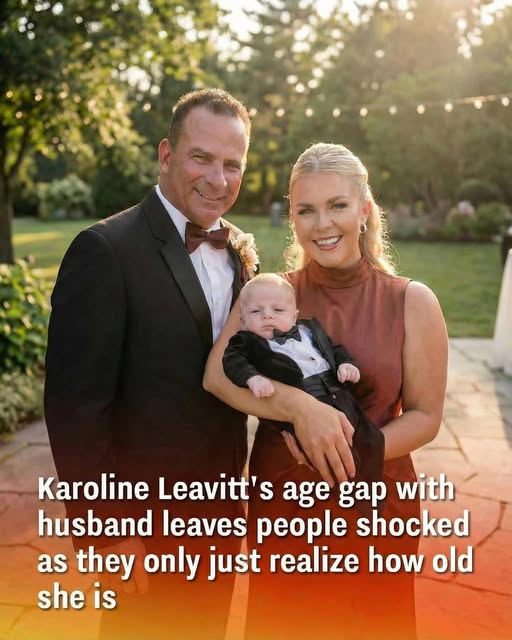
Public curiosity has often extended to the couple’s age difference, which spans more than three decades, a detail that has occasionally drawn heightened attention online and in public discourse. Leavitt, however, has consistently addressed this aspect of her personal life with transparency and pragmatism, emphasizing that relationships cannot be understood solely through numeric comparisons and that personal circumstances defy conventional frameworks. She frames her partnership with Riccio around the pillars of mutual respect, shared values, and steady support, underscoring the importance of emotional connection, compatibility, and shared life goals over societal expectation. This approach highlights a nuanced understanding of personal agency and commitment, demonstrating an awareness that public perception often diverges from the realities and priorities that define a private relationship.
The origins of Leavitt’s relationship with Riccio trace back to her congressional campaign, where introductions through mutual acquaintances led to a gradually deepening connection. She has described their courtship and subsequent marriage as rooted in trust, patience, and shared life vision, with Riccio intentionally maintaining a private profile to allow Leavitt to pursue her demanding professional responsibilities without distraction. In interviews and public statements, Leavitt has spoken positively about Riccio’s role as a father, emphasizing his active participation, emotional presence, and dedication to nurturing a supportive environment for their son. These personal details provide insight into the family dynamics that sustain her, illustrating a partnership structured on shared responsibility, mutual encouragement, and deliberate attention to the emotional and developmental needs of their children.
In addition to the deeply personal dimensions of her life, Leavitt’s story illuminates broader themes about the intersection of professional visibility and private identity. Navigating the scrutiny that accompanies a high-profile public position, she balances the competing demands of public performance and private experience, often emphasizing the value of gratitude, preparation, and deliberate prioritization in both domains. Her reflections on family growth, workplace support, and personal resilience reveal an intentional effort to harmonize professional obligations with life milestones, demonstrating a capacity for reflection, planning, and emotional intelligence that informs her public work. By foregrounding the support systems and intentional strategies that enable her to succeed professionally, Leavitt offers a model of work-life balance in a context where personal and public spheres are constantly under observation.
As the Leavitt-Riccio family prepares to welcome their second child in May 2026, public fascination continues to orbit around questions of personal narrative, private experience, and the ways in which high-profile figures navigate the demands of life in the public eye. Leavitt’s story emphasizes not only the joys of family growth and personal achievement but also the careful negotiation of privacy, public expectation, and media scrutiny. Through candid acknowledgment of personal milestones, deliberate framing of family priorities, and consistent engagement with her professional responsibilities, she demonstrates how a young woman can cultivate stability, purpose, and presence amid the dual pressures of personal life and public duty. Her journey reminds the public that the woman behind the political role carries the same hopes, anxieties, and aspirations as anyone else, even when magnified under national attention, offering both inspiration and insight into the human dimensions of life within the political spotlight.